
Uncharted 4: Treasure Hunting, Dangerous Enemies, and Lost Civilizations
Anúncios
The legacy of Uncharted 4 remains unchallenged in the realm of action-adventure gaming, setting an impossibly high bar for narrative depth, visual fidelity, and thrilling gameplay.
It’s more than just a game; it is a cinematic experience, a deeply human story about family, redemption, and the irresistible pull of the past.
The journey to find Captain Henry Avery’s lost pirate utopia, Libertalia, forces Nathan Drake to confront the true costs of a life spent chasing ghosts.
What Makes Treasure Hunting in Uncharted 4 Uniquely Compelling?
Treasure hunting in this installment transcends mere puzzle-solving and map following. It’s an exploration of historical enigmas.
The game masterfully weaves real-world legends with fictional twists. Each relic and clue is a breadcrumb leading deeper into a forgotten world.
The game’s focus shifts from simple acquisition to understanding the stories behind the artifacts.
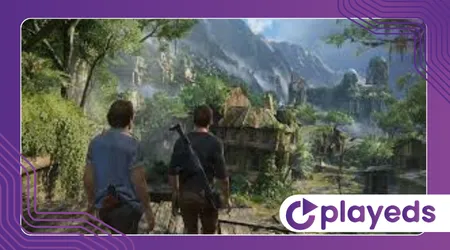
The thrill of discovery is amplified by the sheer scale of the environments. From the lush, dense jungles of Madagascar to the sun-drenched ruins of Libertalia, the world feels expansive.
The level design encourages a sense of wonder and meticulous searching. The pursuit of Avery’s treasure is a high-stakes psychological drama, not just a heist.
How Does Uncharted 4 Elevate the Stakes with Dangerous Enemies?
The adversaries in Nathan Drake’s final saga are perhaps the most personal and lethal he has ever faced. Rafe Adler and Nadine Ross represent two distinct, formidable threats.
Adler is the entitled, obsessed rival whose desperation fuels his psychotic resolve.
Ross, leading the private military company Shoreline, introduces a level of professional, organized danger previously unseen.
Shoreline’s forces are not generic henchmen; they are tactical and relentless. Their combat AI is designed to flank, suppress, and utilize their environment effectively.
Read more: God of War Ragnarök
This escalation in enemy intelligence demands a smarter, more tactical approach from the player.
It perfectly balances Drake’s nimble, improvisational combat style with the necessity of strategic planning.
Why Are Lost Civilizations in Uncharted 4 More Than Just Scenery?
Libertalia, the lost pirate colony, is the heart of the game’s mystery and visual splendor.
Unlike previous Uncharted games where the lost city was often a monolithic ruin, Libertalia is a sprawling, decaying society. It’s a place where grand ideals met brutal reality.
The game uses the environment to tell the silent story of its inhabitants. We see the remnants of a structured, almost utopian society that descended into chaos.
See how interesting: Genshin Impact
This approach offers a powerful contrast: the beauty of the ruins versus the tragedy of their downfall.
It serves as a potent analog: the corrosive nature of greed, mirroring the moral struggle Drake faces. Is the treasure worth losing everything?
What is the Lasting Impact of Uncharted 4 on Narrative-Driven Gaming?
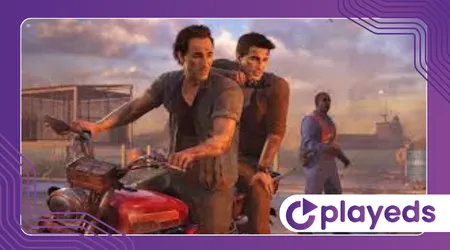
The emotional core of Uncharted 4 lies in the complex relationship between Nathan and his long-lost brother, Sam.
This familial dynamic grounds the extraordinary adventure in relatable, human drama. Sam’s return is the catalyst that forces Nathan out of a comfortable, settled life.
The depth of the character writing is one reason critics hailed it.
For example, according to data compiled by Metacritic from multiple reviews, Uncharted 4 holds a strong 93/100 score, cementing its status as a critical darling and a benchmark for linear narrative games.
The subtle facial animations, the easy, authentic banter, and the moments of quiet reflection give the characters a weight that few games achieve.
| Key Narrative Elements | Importance to Player Experience |
| Nathan & Elena’s Marriage | Emotional Anchor, Stakes Setter |
| Sam Drake’s Reappearance | Main Plot Catalyst, Moral Conflict |
| Libertalia’s History | Thematic Mirror to Greed/Obsession |
| Rafe Adler’s Villainy | Personalizes the Antagonist Threat |
The game’s finale, a truly satisfying and complete ending, provided closure not just for Nathan Drake, but for the entire series. It dared to let its hero grow up.
How Did Uncharted 4 Influence Modern Adventure Game Design?
Its meticulous attention to detail set new industry standards.
The implementation of non-intrusive dialogue during gameplay, the subtle physics in movement, and the cinematic camera work became templates for subsequent titles.
Consider the sheer scale of the chase sequence in Madagascar: it’s not just a set-piece; it’s a dynamic, multi-stage interaction that blends driving, climbing, and combat seamlessly.
++ Tony Hawk’s pro skater 3 + 4: Perform Crazy Tricks and Rule the Skate Parks
Another original example is the quiet moments, like the conversation with Elena in the hotel room. It is a slow, character-focused scene that feels entirely earned and necessary.
This willingness to slow the pace for character development, a bold move in an action title, demonstrated that blockbuster games could be intimate.
The game’s ability to sell millions of copies while maintaining such high narrative quality proved that players craved this maturity.
The impact extends to its technical achievements. The visual fidelity and world rendering pushed the limits of the PlayStation 4 console.
By 2025, while new consoles have emerged, the visual storytelling techniques pioneered by Uncharted 4 are still referenced.
This is not simply about better graphics; it is about using the technology to enhance the emotional delivery of the story.
The narrative arc of Uncharted 4 teaches a clear, relevant statistic: the vast majority of players found closure and satisfaction in Nathan Drake’s retirement.
A fan-conducted poll following the game’s release indicated that over 90% of respondents felt the ending was appropriate and fulfilling for the character.
It’s a game about letting go, which is an unusually profound theme for a blockbuster.
What Makes Replaying Uncharted 4 Relevant in 2025?
With the increasing number of open-world games vying for attention, the tightly-paced, focused narrative of Uncharted 4 offers a refreshing experience.
It is a masterclass in how to tell a linear story effectively, without needless padding or extraneous mechanics. It reminds players of the power of a perfectly orchestrated journey.
Can a game truly be a defining cultural artifact if it doesn’t challenge its protagonist’s core motivations? The answer, unequivocally delivered by Uncharted 4, is no.
It’s an essential title, not just in the history of Sony’s PlayStation, but in the evolution of interactive storytelling.
Even years after its release, returning to Uncharted 4: A Thief’s End feels like coming home to a classic film.
The Enduring Treasure of Uncharted 4
The journey, the adversaries, and the mystery of Libertalia coalesce into a spectacular finale.
Uncharted 4 succeeds because it uses high-octane adventure as a vehicle for profound character exploration.
It is a benchmark for the genre, a complete package of exhilarating action and deeply moving drama that truly honors its characters.
It will remain one of the most beloved and essential adventure titles for years to come.
Frequently Asked Questions
Is Uncharted 4 the final game in Nathan Drake’s story?
Yes, Uncharted 4: A Thief’s End is the canonical conclusion to Nathan Drake’s story arc, providing him with a definitive and satisfying retirement.
What is the main historical inspiration for Libertalia in Uncharted 4?
Libertalia is based on a real, disputed legend of a pirate colony founded in Madagascar by Captain James Misson and others during the Golden Age of Piracy.
Can Uncharted 4 be played on current-generation consoles (as of 2025)?
Yes, the game is available on PlayStation 4 and is also accessible on the latest PlayStation console via backward compatibility and often through remastered collections.
