
Anúncios
Ghost of Tsushima. The allure of a compelling open-world game often lies in its ability to transport players.
When we talk about immersive experiences steeped in historical drama and fluid combat, one title consistently stands out: Ghost of Tsushima.
This masterpiece, set against the brutal backdrop of the 13th-century Mongol invasion of Japan, offers a potent blend of action, stealth, and moral ambiguity, captivating players with its stunning fidelity and deep gameplay systems.
Sucker Punch Productions didn’t just create a game; they forged an experience that resonates with the spirit of the samurai and the desperation of a homeland under siege.
How Does the Ghost of Tsushima Narrative Masterfully Blend History and Fiction?
The year is 1274. Tsushima Island, a critical defense point, falls swiftly to the Mongol invasion led by Khotun Khan.
This historical event forms the dramatic foundation for Jin Sakai’s journey.
Jin, one of the last surviving samurai, witnesses the devastating defeat firsthand. His duty as a samurai—to fight with honor—clashes directly with the need to win.
He must embrace the path of the “Ghost,” using less-than-honorable tactics to save his people.
This internal conflict between honor and necessity is the story’s true genius. The game uses historical accounts as a springboard, weaving a compelling personal fiction.
It’s a testament to the power of narrative when history inspires such profound character development.
The ethical compromises Jin makes drive the player’s emotional investment profoundly.
What Makes Ghost of Tsushima’s Combat System So Visceral and Rewarding?
Combat in this game is a dualistic experience, reflecting Jin’s shifting identity.
The Samurai path focuses on direct confrontation, relying on skill, parries, and lethal sword stances.
A standoff mechanic allows players to challenge enemies in cinematic, one-hit duels.
Mastering the four combat stances (Stone, Water, Wind, and Moon) is essential for efficiency.
Read more: Star Wars Jedi
Each stance excels against a specific enemy archetype, demanding quick, strategic adaptation.
Transitioning between stances mid-fight feels organic and incredibly satisfying to execute.
Conversely, the Ghost path emphasizes stealth, utilizing smoke bombs, kunai, and chain assassinations.
These tools allow Jin to clear entire camps without raising a single alarm.
The freedom to choose the approach for any given encounter is a major strength.
Do you strike fear into your enemies openly, or do you stalk them from the shadows?
This choice isn’t merely cosmetic; it directly affects the islanders’ perception of the Ghost.
Why Did the Game’s Visuals and World Design Set a New Standard for Open-World Games?
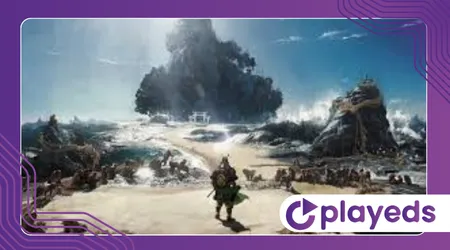
The island of Tsushima is rendered with breathtaking, almost impossibly beautiful detail.
The world design isn’t just large; it’s intrinsically linked to the gameplay and player guidance.
Sucker Punch introduced the “Guiding Wind,” an elegant solution to the cluttered UI problem.
Instead of a minimap, the wind guides the player toward their objective, preserving immersion.
This commitment to environmental storytelling is evident in every scene.
++ Uncharted 4
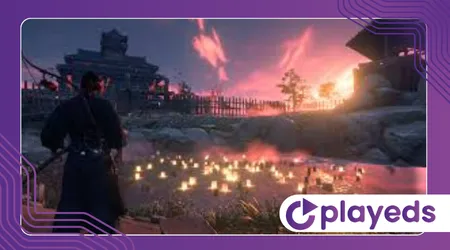
For example, observing fireflies near a hidden shrine is a subtle, magical detail.
Discovering a hot spring or a Haiku spot offers moments of peaceful introspection.
The visual feedback of the world reacting to Jin—leaves scattering, grass swaying—is phenomenal.
It’s an open world that encourages exploration for its own sake, not just for checklist completion.
The cinematic black-and-white ‘Kurosawa Mode’ tribute is a testament to the developers’ artistic vision.
This attention to atmosphere elevates the game beyond a typical action-adventure title.
How Does the Iki Island Expansion Deepen the Ghost of Tsushima Experience?
The Director’s Cut introduced the Iki Island expansion, adding a substantial new chapter.
This expansion wasn’t just more map; it delved deeper into Jin’s troubled past.
The new location introduces a shaman enemy type, whose chants buff nearby foes.
This forces players to prioritize targets and adapt their established combat strategies.
See how interesting: Cooking Mama
It also brings new mythical tales and challenges, expanding the lore considerably.
The content provides a necessary emotional closure to some of Jin’s childhood traumas.
According to a 2021 PlayStation Blog post, player engagement data showed that the average time spent on photo mode screenshots per player dramatically increased following the Director’s Cut release, suggesting an increased appreciation for the visual fidelity.
Can the Moral Choices in Ghost of Tsushima Truly Reflect the Player’s Ethics?
The game is structured as a series of crucial moral decisions with lasting consequences.
The contrast between the samurai’s honorable way and the Ghost’s brutal efficiency is constant.
Consider the analogy of a gardener fighting a sudden, destructive swarm of pests.
The gardener must decide: use the slow, gentle, organic methods or deploy a necessary, quick pesticide.
The latter preserves the garden but forever changes the gardener’s fundamental approach.
Jin’s decisions, while sometimes resulting in the death of innocents, are aimed at a greater good.
This moral grayness prevents the narrative from devolving into a simple hero’s tale.
When you weigh the honor of a single life against the fate of an entire island, what is the right move?
This profound question is constantly posed to the player through Jin’s actions.
The following table demonstrates the comparative shift in player focus:
| Feature | Base Game (Tsushima) Focus | Iki Island Expansion Focus |
| Primary Conflict | Mongol Occupation and Defeating Khotun Khan | Jin’s Personal Trauma and the Eagle Tribe |
| New Enemy Type | Generals/Brutes with specific stance weaknesses | Shamans (Buffs, requires priority assassination) |
| New Abilities | Focus on Lethal Ghost Weapons and Samurai Stances | Horse Charge, New Techniques, Animal Sanctuaries |
| Narrative Tone | Duty, Honor vs. Necessity, Vengeance | Psychology, Guilt, Intergenerational Trauma |
Ghost of Tsushima: An Enduring Legacy in the Open-World Genre
The impact of Ghost of Tsushima on the open-world genre is undeniable. It demonstrated that immersive design trumps excessive map icons.
It proved that a compelling, personal story can elevate historical fiction far beyond simple spectacle.
Ghost of Tsushima continues to be celebrated not just for its flawless swordplay but for the soul it poured into its protagonist and setting.
It’s an adventure that respects both the player’s time and the complex ethics of warfare.
How many games achieve such a perfect balance between brutal action and visual poetry?
Duvidas Frequentes
Is Ghost of Tsushima historically accurate?
The game is based on the 1274 Mongol invasion of Tsushima, but the characters and specific events are largely fictionalized for dramatic purposes.
It accurately captures the aesthetic and code of the samurai but is not a historical simulation.
Does my playstyle (Samurai vs. Ghost) affect the ending?
No, your playstyle mainly affects how non-playable characters (NPCs) talk about Jin and how certain missions are approached.
The core narrative ending remains consistent, focusing on Jin’s final choice.
Is the game suitable for new players to the genre?
Yes, the combat has a high skill ceiling for mastery but is accessible enough for newcomers, especially with the difficulty settings available.
The guiding wind system makes the open world feel less overwhelming.
What is the Kurosawa Mode?
It is an optional visual filter that turns the game black and white, adds film grain, and modifies the audio to emulate the style of classic samurai films directed by Akira Kurosawa.