
Anúncios
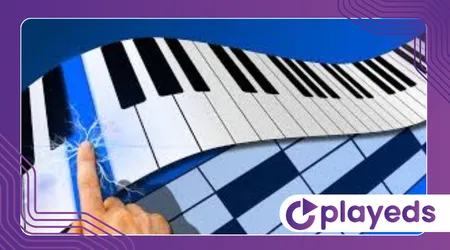
There’s something quietly addictive about Piano Tiles 2. At first glance, it feels almost trivial—just tap the black tiles and avoid the rest.
But a few seconds in, the rhythm tightens, the tempo climbs, and suddenly your attention is fully claimed.
This piece looks beyond the surface of the game—why it still resonates years later, how it subtly trains reflexes, and what separates casual play from real mastery.
What is Piano Tiles 2 and why does it still resonate?
At its core, the game is disarmingly simple: tap in sequence, keep up with the music, don’t make mistakes. Yet that simplicity hides a sharper edge.
The design strips away everything unnecessary. No elaborate menus, no overwhelming mechanics—just a direct line between your reflexes and the screen. That clarity is rare, and part of why it lingers.
There’s also a certain nostalgia baked into it. Many players encountered it years ago, then returned out of curiosity—only to realize it still holds up surprisingly well.
How does the game actually push your reflexes?
It doesn’t just get faster. It gets tighter.
As sequences accelerate, the space between tiles shrinks, forcing quicker decisions with less visual breathing room. You stop reacting and start predicting, almost without noticing when that shift happens.
That’s where the tension lives. One moment you’re in control; the next, a single misstep breaks everything. The game doesn’t punish harshly—it simply resets, which somehow feels worse.
Why does music feel so central here?
Because it is. Every tap corresponds to a note, turning your screen into something closer to an instrument than a game interface. Even without formal training, players begin to “feel” the rhythm rather than chase it.
There’s a subtle psychological effect at play. When timing aligns with sound, actions feel smoother, almost inevitable. Miss a beat, though, and the illusion collapses instantly.
Research from the National Institutes of Health suggests rhythmic interaction can improve coordination and timing accuracy—something players tend to notice long before they read about it.
Which skills does the game quietly develop?
It’s easy to dismiss it as a time-killer, but that undersells what’s happening beneath the surface.
Hand-eye coordination improves almost incidentally. The brain learns to translate visual patterns into immediate action, reducing hesitation over time.
Read more: Flip Master: Perform Crazy Trampoline Tricks and Land Safely
More interesting, though, is pattern anticipation. Experienced players don’t just see tiles—they sense sequences forming, like recognizing a melody before it fully unfolds.
What actually helps you get better?
Oddly enough, trying too hard tends to backfire. Relaxed hands move faster than tense ones. That’s counterintuitive, especially when the screen fills with rapid patterns, but it makes a noticeable difference.
Accuracy matters more than speed, at least early on. Rushing creates sloppy habits that are difficult to unlearn later.
And then there’s the music itself. Players who listen—really listen—tend to perform better. The rhythm becomes a guide, not just decoration.
When should you switch between game modes?
Different modes feel like different moods. Classic mode offers space to breathe. It’s slower, more deliberate, useful for recalibrating when mistakes start piling up.
Arcade mode is where things sharpen. Faster, less forgiving, it demands full attention and rewards consistency.
++ Paper .io 2: Conquer Territory and Outsmart Your Online Rivals
Zen mode sits somewhere else entirely. No pressure, no abrupt endings—just rhythm and repetition. Surprisingly useful when you want to improve without thinking about improvement.
What sets this apart from other rhythm games?
Most rhythm games build complexity through layers—more buttons, more inputs, more systems. Here, everything is reduced to a single action. Tap or don’t tap. That’s it.
And yet, that limitation becomes its strength. Without distractions, every mistake feels personal. Every improvement, earned.
Read here: Kena: Bridge of Spirits – Help Lost Souls and Defend a Magical Land
There’s also the matter of accessibility. No controllers, no setup—just a screen and your reflexes. That immediacy still gives it an edge.
A quick comparison with other rhythm games
| Feature | Piano Tiles 2 | Traditional Rhythm Games | Advanced Music Games |
|---|---|---|---|
| Input Complexity | Single tap | Multiple buttons | Multi-input systems |
| Learning Curve | Low | Medium | High |
| Session Length | Short | Medium | Long |
| Accessibility | High | Moderate | Low |
| Skill Ceiling | High | High | Very High |
| Device Requirement | Smartphone | Console/PC | Specialized setups |
It’s a rare balance—easy to start, difficult to exhaust.
Why does it still feel relevant in 2026?
Part of it is timing. Short, intense experiences fit naturally into how people use their phones now.
But there’s also something more subtle. In a landscape full of complex systems and constant updates, a game that knows exactly what it is—and doesn’t try to be more—stands out.
Players return because it feels consistent. Familiar, but not stale.
What mistakes trip up new players?
Speed obsession is the most common one. New players often rush, assuming faster taps equal better performance. In reality, it leads to erratic timing and frequent errors.
Ignoring the music is another. Treating it purely as a visual challenge strips away half the feedback the game provides.
Then there’s fatigue. After a few intense runs, focus dips. Reaction time follows. Pushing through rarely helps.
Final thoughts
What makes Piano Tiles 2 endure isn’t innovation in the usual sense. It’s restraint.
By doing very little—and doing it well—it creates a loop that feels immediate, demanding, and oddly satisfying. Each session is brief, but rarely forgettable.
For a deeper look at how music interacts with cognition and performance, see this analysis from
Harvard Health Publishing.
FAQ (Frequently Asked Questions)
What is the main objective of the game?
Tap the black tiles in sync with the music and avoid mistakes. The challenge increases as the tempo rises.
Is it free to play?
Yes, with optional in-app purchases and ads depending on the version.
Can it really improve reflexes?
With consistent play, many users notice better timing, quicker reactions, and improved coordination.
Do you need musical experience?
Not at all. A natural sense of rhythm helps, but the game teaches timing through repetition.
Is it suitable for all ages?
Generally yes, though later stages can become surprisingly demanding.
++ Test your reflexes – this time with Piano Tiles on BlackBerry 10