
Anúncios
The liberation of Dahna in Tales of Arise represents a sophisticated evolution for the JRPG genre, blending breathtaking watercolor aesthetics with a visceral combat system.
By stripping away outdated mechanics, Bandai Namco delivered a mature narrative centered on systemic revolution and shared trauma.
It remains a technical benchmark in 2026, offering a polished, high-stakes journey through a world defined by beauty.
Summary of the Journey
- The Conflict: Breaking down the 300-year friction between Dahna and Rena.
- The Gameplay: A deep dive into the evolution of the Linear Motion Battle System.
- Technical Prowess: Why the “Atmospheric Shader” changed the series’ visual DNA.
- Character Dynamics: The friction and fire between Alphen and Shionne.
- Modern Legacy: Evaluating its standing in the genre as of 2026.
What is Tales of Arise and Why Does it Still Matter?
When Bandai Namco launched this title, it wasn’t just another sequel; it was a survival tactic. The franchise needed to shed its “niche” skin to compete globally.
By adopting Unreal Engine 4 and the “Atmospheric Shader,” the developers created a world that feels less like a digital map and more like a sequence of hand-painted canvases brought to life.
The game thrives on a stark, uncomfortable contrast. You have the Renans—technologically superior, floating in clinical luxury—against the Dahnans, who have spent three centuries in medieval squalor.
It’s a story about systemic collapse and the messy reality of revolution, moving far beyond the “friendship conquers all” tropes that often haunt the genre.
How Does the Combat Redefine the Action RPG?
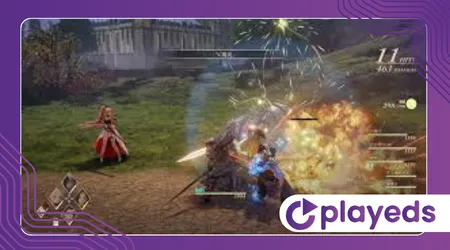
Combat here is a dance of aggression. The shift away from traditional MP toward the “AG” (Artes Gauge) system was a stroke of genius, removing the anxiety of resource management.
Instead of hoarding power, you are encouraged to spend it, chaining strikes together until the screen explodes in a “Boost Strike.”
There is a tactile weight to the “Counter Edge” mechanic. In previous entries, defense was often a passive affair—holding a button and waiting. Here, it is active.
A perfectly timed dodge doesn’t just keep you alive; it positions you for a devastating teleportation strike that turns the enemy’s momentum against them.
The synergy between characters feels earned rather than forced.
++ Kena: Bridge of Spirits – Help Lost Souls and Defend a Magical Land
Calling in Shionne to shoot a monster out of the sky or using Rinwell to “steal” an enemy’s casting spell provides a level of tactical interruption that keeps even the most chaotic boss fights from feeling like mindless button-mashing.
Which Features Actually Drive the Experience?
Dahna is a world of extremes. You’ll find yourself trudging through the waist-deep snow of Cyslodia one hour and navigating the suffocating heat of Calaglia the next.
These aren’t just cosmetic changes; the environment dictates the rhythm of your exploration, hiding “Gigant” monsters that act as brutal gear checks for the unprepared.
Progression is handled via Skill Panels, which feel more like a personal resume than a standard stat tree.
You choose titles based on how you actually play—whether that’s focusing on Shionne’s status-afflicting bombs or Alphen’s high-risk, high-reward flaming sword techniques. It rewards specialization without locking you into a rigid build.
For a granular look at how these systems hold up under pressure, the technical benchmarks at Digital Foundry highlight just how much heavy lifting the engine does to maintain 60 FPS during the more particle-heavy “Mystic Artes” sequences.
Technical Specifications and Performance Data
| Feature | Specification / Detail | Impact on Gameplay |
| Engine | Unreal Engine 4 | Fluid physics and dynamic lighting |
| Art Style | Atmospheric Shader | Removes the “plastic” look of 3D models |
| Playtime | 45–60 Hours | A dense, no-filler narrative arc |
| Combat | AG-based Action | High-speed, combo-oriented flow |
| Resolution | Native 4K Support | Crisp details on modern 2026 displays |
Why Does the Relationship Between Alphen and Shionne Work?
The narrative pivot of Tales of Arise rests on a cruel irony: a man who cannot feel pain paired with a woman whose “Thorns” cause agony to anyone she touches.
This isn’t just a plot device; it’s a constant, aching barrier that prevents the very intimacy they both clearly crave.
Unlike the supporting casts of the past, who often felt like interchangeable archetypes, the crew here—from the conflicted Lord Dohalim to the vengeful Law—bring genuine baggage.
Their conversations during the “Skits” feel less like tutorials and more like weary travelers trying to make sense of a world that has been broken for 300 years.
Read here: Sea of Thieves: Become a Pirate and Conquer the High Seas with Friends
The move to 3D models for these vignettes was controversial for purists, but it allowed for subtle facial expressions that 2D portraits simply couldn’t convey. You see the hesitation in a character’s eyes, not just the text in their speech bubble.
When is the Right Time to Dive into Dahna?
If you missed the initial wave, 2026 is arguably the best time to start. With the “Beyond the Dawn” expansion now part of the ecosystem, the game feels like a complete odyssey.
The expansion addresses the “what happens after the revolution” question, which is a rare and welcome bit of narrative housekeeping in RPGs.
The patches released since launch have smoothed over the early-game inventory hurdles and balanced the “CP” (Cure Points) management, which was notoriously tight in the original release.
It is now a much more refined, intentional experience that respects the player’s time while still demanding their full attention during its high-stakes encounters.

Which Secrets Wait in the End-Game?
The credits are just a checkpoint. The post-game content is where the developers clearly had the most fun, throwing in “Otherworldly Visitors” that bridge the gap between various Bandai Namco universes.
These are not just reskinned enemies; they are complex, multi-stage encounters that require a mastery of every mechanic you’ve learned.
Hunting for the hidden owls across the world might seem like a whimsical distraction, but it’s the primary way to unlock the most expressive cosmetic gear.
++ What the Shift to Cloud Gaming Means for Console Culture
Meanwhile, the ultimate weapons are gated behind the “Unreachable Spirit” quests, demanding that you revisit previous zones to face terrors that make the final boss look like a training dummy.
Reflections on the Journey
Tales of Arise succeeded because it wasn’t afraid to grow up. It took the DNA of a thirty-year-old franchise and injected it with a level of cinematic grit and mechanical polish that the series desperately needed.
It’s a game about the weight of history and the terrifying cost of starting over.
By the time you reach the final cinematic, the journey feels earned. The combat remains exhilarating, the world stays beautiful, and the characters feel like people you’ve actually suffered alongside.
It isn’t just a highlight of its own series; it is a benchmark for how to modernize an aging genre without losing its soul.
FAQ
Is this a good starting point for the series?
Absolutely. It was designed as a soft reboot for the franchise. You don’t need any prior knowledge of the older “Tales” lore to dive into the conflict between Dahna and Rena.
How does the DLC “Beyond the Dawn” affect the main game?
It acts as a substantial epilogue. While it is accessed separately, it carries over your progress and provides about 20 hours of new story content focusing on the aftermath of the main campaign’s massive societal shifts.
What makes the combat different from Final Fantasy or Kingdom Hearts?
While those series lean into menu-based shortcuts or rhythmic timing, this game focuses on the “Linear Motion” philosophy—keeping you on a fixed plane relative to your target, which makes high-speed aerial combos and character-switching feel much more deliberate.
Is there a way to avoid the grind for levels?
The game is surprisingly well-paced. If you engage with side quests and avoid skipping too many field encounters, you will rarely find yourself hitting a wall that requires hours of repetitive fighting.
Where can I see more about the game’s development?
The Bandai Namco Official Site features developer diaries and behind-the-scenes looks at how the Atmospheric Shader was developed to bridge the gap between anime and realism.
++ Tales of Arise: Uncover Secrets and Fight for Freedom in a Fantasy Realm