
Hades II Review: Why the Combat System is a Masterclass in Modern Action Gaming (2026)
Anúncios
Hades II serves as a fascinating case study in how a sequel can dismantle its own successful foundation to build something more cerebral.
While the first game felt like a desperate, frantic sprint toward the surface, this successor demands a different kind of discipline, trading pure twitch-reflex for a sophisticated dance of resource management and magical intent.
Strategic Overview
- The Arcane Shift: Moving from Zagreus’s physical aggression to Melinoë’s tactical sorcery.
- Omega Dynamics: Analyzing the risk-reward loop of the new channeling mechanics.
- Visual Language: How environmental storytelling informs combat split-second decisions.
- Comparative Data: Quantifying the shift in mechanical depth between titles.
- Reflections: Why this iteration redefines the ceiling for action-roguelikes in 2026.
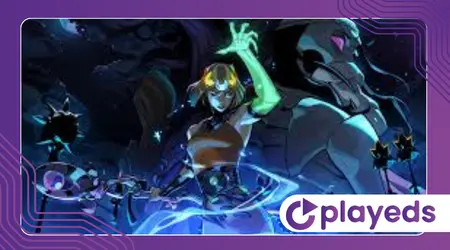
Why is the combat system in Hades II considered a masterpiece?
The brilliance here isn’t just in the fluidity—that’s expected from Supergiant—but in the friction.
By introducing the “Omega” system, the developers forced a rhythmic pause into the chaos, requiring players to commit to charged actions that leave them momentarily vulnerable.
It’s a gutsy move that elevates the game from a button-masher to a high-stakes tactical exercise.
Every strike feels grounded in a specific physical weight, yet the movement remains ethereal.
The haptic feedback and acoustic cues do more than provide “juice”; they serve as vital data points, telling you exactly when a spell is primed or a dash is exhausted.
It’s a rare instance where the game’s sensory output is just as functional as its input.
This isn’t about power fantasies; it’s about mastery over specific, often hostile, constraints.
The enemy design reinforces this, presenting patterns that feel less like obstacles and more like puzzles to be solved through positioning.
It’s a sophisticated evolution that respects the player’s intelligence as much as their reflexes.
How does the Magick system change the gameplay loop?
By tethering Melinoë’s most potent abilities to a Magick pool, the game introduces a constant, low-level anxiety that was absent from the original. You aren’t just managing health; you’re managing potential.
This creates a fascinating “push and pull” where your strongest moves require the very thing you’re often shortest on: time.
This shift naturally discourages the “spamming” of abilities, forcing a more deliberate engagement with the environment. Recovery isn’t just a passive stat—it’s an active part of the combat choreography.
You find yourself weaving through projectiles not just to survive, but to find the half-second window needed to regenerate enough energy for a counter-attack.
Ultimately, this turns every encounter into a series of micro-decisions. Do you spend your last bit of Magick on a defensive circle, or do you bet everything on a massive Omega strike?
This constant evaluation keeps the loop from ever feeling truly “solved,” even after dozens of hours in the Underworld.
For those interested in the technical architecture of these systems, Gamasutra’s technical archives offers an incredible look at how modern action logic is scripted.
Which weapons provide the most tactical variety?
Melinoë’s arsenal feels like a collection of distinct philosophies rather than just “tools for damage.”
The Moonstone Axe, for example, is a heavy, almost cumbersome commitment that rewards players who can predict enemy movement three steps ahead.
It’s a sharp contrast to the Sister Blades, which demand a frantic, backstabbing proximity.
The Argent Skull is perhaps the most “alien” addition, requiring a rhythmic retrieval of ammunition that turns the battlefield into a game of lethal catch.
It’s a mechanic that keeps you moving toward danger rather than away from it, fundamentally altering your spatial awareness.
These weapons aren’t static; they evolve through Boons that change their core identity.
++ Mortal Kombat 11: Execute Fatalities and Prove You’re the Strongest Fighter
A weapon that starts as a precision tool can, by the mid-game, become a chaotic engine of area-of-effect destruction.
The variety is staggering, yet it never feels like there’s a “right” way to play—only your way.
Combat Evolution: The Shift in Philosophy
| Feature | Hades (2020) | Hades II (2026) | Impact on Gameplay |
| Core Resource | Bloodstones (Ammo) | Magick (Energy Pool) | Shift from limit to management |
| Movement | I-Frame Dashing | Sprinting & Channelling | Focus on sustained positioning |
| Special Utility | Standard Specials | Omega Moves | Higher commitment, higher reward |
| Combat Rhythm | Reactive / Twitch | Proactive / Rhythmic | Rewards patience and foresight |
| Enemy AI | Direct Aggression | Spatial Denial & Zoning | Requires better “battlefield reading” |
What are the key technical improvements in the sequel?
Technically, the game is a marvel of clarity within chaos. Running on an upgraded proprietary engine, it handles an immense amount of visual data without the clutter that usually plagues the genre.
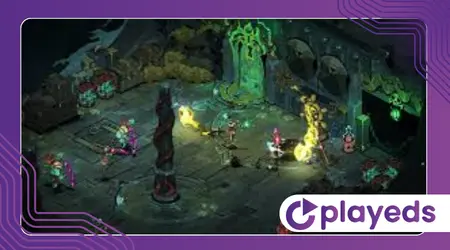
The “visual noise” is meticulously curated; even when the screen is a kaleidoscope of hexes and fire, you never lose sight of Melinoë’s hitbox.
The precision here is surgical. There’s a distinct lack of the “softness” found in many 3D action titles; if you take damage, you know exactly why.
The telegraphing system uses a sophisticated language of color and light that communicates danger across the entire screen, allowing for those “near-miss” moments that make the genre so addictive.
Beyond performance, the environmental interaction has been deepened.
Read more: Dying Light 2: Shape a Broken World While Fighting Mutants and Humans
Surfaces and shadows aren’t just aesthetic; they play into how spells propagate and how enemies track you. It’s a holistic approach to design where the tech serves the mechanics, rather than just showing off.
When did the balance of Boons become so intricate?
The synergy in this sequel feels less like a lucky roll of the dice and more like architectural planning.
Boons from the gods now interact with your Magick regeneration and sprint speed in ways that make the “meta-game” feel incredibly deep. You aren’t just looking for more damage; you’re looking for a specific mechanical harmony.
A boon from Apollo might increase your attack range, but it also forces you to rethink your positioning to maximize the new “Daze” effect.
It’s a layers-on-layers approach where every upgrade carries a weight of consequence. This complexity ensures that the game remains evergreen, as the sheer number of viable builds is mathematically enormous.
There’s a certain thrill in finding a “broken” combination, but the game is balanced enough that these moments feel like personal discoveries rather than design flaws.
++ How Game Preservation Projects Are Saving Lost Digital Classics
It encourages a level of experimentation that makes every run a unique experiment in magical combat theory.
Why does the storytelling enhance the combat experience?
Supergiant has mastered the art of making the narrative “bleed” into the mechanics.
The bosses aren’t just HP sponges with patterns; they are characters with grudges, memories, and evolving dialogue.
When a boss mocks your specific choice of weapon, it bridges the gap between player and character in a way few games achieve.
This creates a sense of stakes that goes beyond the “Game Over” screen. You feel the weight of Melinoë’s mission because the world reacts to your failures and successes in real-time.
The combat becomes a form of dialogue—a violent conversation between the protagonist and the forces trying to stop her.
The finality of a successful run feels earned because the story demands it.
You aren’t just checking off a list of objectives; you are pushing a narrative forward through sheer mechanical skill. It’s a rare synthesis where the “why” of the fight is just as compelling as the “how.”
The Legacy of the Craft
Hades II manages to avoid the “more of the same” trap by being fundamentally more thoughtful. It’s a game that respects the original while having the courage to complicate its legacy.
The combat isn’t just about speed; it’s about the elegance of a perfectly executed plan in the midst of total disorder.
We see a developer at the height of their powers here, refusing to play it safe.
By centering the experience around Magick and deliberate movement, they’ve created a system that feels vital and modern. It’s a benchmark for what action gaming can be when it dares to be a little more complex.
In the end, the game succeeds because it understands that the best action comes from a place of tension.
By giving the player more power—but making them work harder for it—Supergiant has crafted an experience that remains as rewarding on the thousandth run as it was on the first.
For a deeper dive into the technical performance and frame-pacing of modern titles, Digital Foundry remains the gold standard for analysis.
FAQ: Frequently Asked Questions
How does Melinoë differ from Zagreus mechanically?
Melinoë is a specialist rather than a brawler. Her kit focuses on area denial and magical “channeling,” whereas Zagreus relied more on raw speed and physical dashing.
Is the Magick system restrictive for aggressive players?
Not at all. While it requires management, many Boons reward aggressive play with Magick restoration, allowing high-skill players to maintain a near-constant flow of Omega Moves.
What makes the boss fights different this time?
The bosses utilize more “bullet-hell” and “zoning” mechanics, forcing you to use your Cast and Sprint strategically rather than just dodging through every attack.
Is the game accessible for newcomers to the genre?
Yes. While the ceiling is higher, the “God Mode” returns to help players who want to focus on the story, and the early game does an excellent job of teaching the new resource rhythms.
++ Hades II’ Is a Lavishly Excessive Sequel, Fit for the Gods
++ Hades 2 overcomplicates a perfect formula
