
How Neural Networks in Games Improve NPC Realism and Behavior
Anúncios
The integration of Neural Networks in Games marks a pivotal shift from scripted logic to dynamic, learning entities that redefine how we perceive digital inhabitants.
This isn’t just an incremental update; it’s a fundamental divorce from the predictable patterns we’ve endured for decades.
Summary
- Moving beyond the rigid ghost-train logic of Finite State Machines.
- How Reinforcement Learning builds agents that actually “think.”
- Hardware breakthroughs allowing for real-time cognitive simulations.
- The death of the dialogue tree through Transformer models.
- Why the future of gaming is unscripted and inherently messy.
What is the Role of Neural Networks in Games Today?
Gaming used to be an elaborate clockwork mechanism, but the arrival of Neural Networks in Games has introduced a touch of genuine chaos.
We are finally moving away from NPCs that simply wait for a player to trigger a specific coordinate on a map.
Modern architectures now function by mimicking cognitive patterns, allowing digital entities to dissect player behavior and improvise.
It’s no longer about a programmer anticipating every move; it’s about the AI recognizing a flank and deciding, on its own, how to counter it effectively.
This shift means developers are focusing on deep neural layers to process environmental noise.
Every interaction begins to feel like a bespoke moment rather than a recycled animation loop, creating an atmosphere where the world feels like it’s actually watching you back.
Studios are increasingly fostering ecosystems where NPCs learn from their own tactical blunders.
By stripping away the “if-then” safety net, we get enemies that improve their efficiency across sessions, subtly raising the stakes without needing a manual patch from the developers.
How does Reinforcement Learning Enhance NPC Behavior?
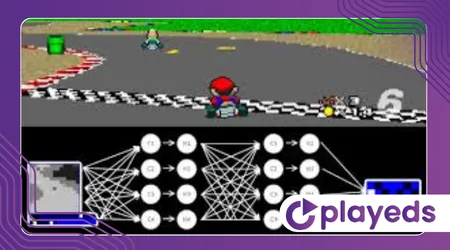
Reinforcement Learning (RL) acts as a digital evolution chamber. By rewarding agents for success and penalizing them for inefficiency, the game’s physics engine becomes a training ground where NPCs “practice” their survival skills millions of times before a player even hits “Start.”
Through these relentless simulations, agents stumble upon optimal pathways and combat tactics that a human designer would likely never conceive.
There is something fascinatingly alien about how these neural models solve problems—they don’t think like we do, which makes them harder to read.
This trial-and-error approach births “emergent behavior.” We are seeing entities solve complex environmental puzzles using creative methods that weren’t in the original design document.
++ The Rise of Subscription Gaming Models Beyond Xbox Game Pass
It’s the difference between a scripted encounter and a living opponent that adapts to your specific habits.
Consequently, players encounter characters that feel genuinely sharp. These agents analyze your preferred weapons and movement quirks, forcing you to ditch repetitive strategies.
It transforms the game from a test of reflexes into a psychological tug-of-war between two different types of intelligence.
Why is Real-Time Inference Crucial for Modern Realism?
For these systems to work, the “thinking” has to happen in the blink of an eye. If an NPC hesitates for a second too long while processing a command, the illusion of life shatters instantly, replaced by the cold reality of a lagging processor.
Recent hardware jumps in dedicated AI tensors have saved us from this latency.
Modern consoles can now run heavy models locally, crunching NPC reactions without cannibalizing the frame rate or causing the GPU to scream for mercy during high-action sequences.
This localized power allows for microscopic details in social simulation. Characters can now react to things we used to take for granted—a flickering light, a distant footstep, or a change in weather—adjusting their behavior with a speed that feels instinctively human.
As noted in the technical archives of the IEEE Xplore Digital Library, the art of weight quantization is what makes this possible.
It’s the invisible engineering that allows high-level intelligence to coexist with fluid, 4K visuals without the whole system grinding to a halt.
Which Models Drive Natural Language in NPCs?
The era of the “Press X to Talk” dialogue tree is dying, replaced by Transformers and Large Language Models.
Players are beginning to engage in fluid conversations where the NPC actually grasps context, emotional weight, and the history of your past interactions.
Instead of a pre-recorded line, you get a response that aligns with the character’s unique history and current mood.
It’s a terrifyingly effective way to grant players agency; what you say matters just as much as where you point your sword.
These models generate dialogue that feels grounded in the world’s lore. It maintains narrative cohesion while allowing for spontaneity.
If you’ve been a villain for ten hours, the town guard isn’t just going to give you a generic greeting; they might sound genuinely intimidated.
By fusing generative text with emotional synthesis, developers are creating companions that remember your choices.
Read more: Why AI Upranks Game Narratives with Dynamic Personalized Stories
This isn’t just “branching” content—it’s a living story where the characters hold grudges, feel gratitude, and react to the nuance of your specific playstyle.
Technical Comparison: Scripted AI vs. Neural AI
| Feature | Traditional Scripted AI | Neural Network AI (2026) |
| Logic Core | Static “If-Then” Loops | Dynamic Pattern Recognition |
| Adaptability | Predictable and Rigid | Learns and Evolves |
| Development | Manual Labor Intensive | Training/Data Dependent |
| Memory | Resets Every Encounter | Persistent Experience |
| Vibe | Robotic/Cyclical | Uncanny/Human-like |
What are the Performance Costs of Neural Integration?
We have to be honest about the hardware tax. Running sophisticated intelligence requires massive VRAM and compute cycles.
It’s a balancing act; you can have a genius NPC, but not if it turns your console into an expensive space heater.
To solve this, many developers utilize “Cloud-to-Edge” hybrid models. The heavy lifting of training happens on massive server farms, while the lighter, optimized “brain” of the NPC runs on your local machine, keeping things snappy and responsive.
This strategy prevents the AI from becoming a CPU bottleneck. It’s what allows for the creation of massive crowds where every person in the street isn’t just a background prop, but an individual with their own distinct neural footprint and daily routine.
As we move deeper into 2026, the efficiency of these models is skyrocketing.
++ Marvel’s Spider-Man: Swing Through the City and Defeat Powerful Villains
High-level AI is no longer a luxury for top-tier PCs; it’s being squeezed into mobile platforms and mid-range hardware, democratizing the feeling of playing against a “real” opponent.
How do Neural Networks Improve Procedural Animation?
Motion matching has finally killed the “skating” NPC. By using neural layers to predict limb placement, characters transition between animations with a fluidity that was once impossible.
It’s about the way a character’s weight shifts when they turn a corner on a slope.
The network calculates how a foot should land on uneven rocks or a slippery surface in real-time.
This groundedness changes the feel of a game; when a character looks like they occupy physical space, the stakes of the movement feel much higher to the player.
This results in a presence that feels anchored. The AI is constantly making micro-adjustments to posture and balance based on the environment.
If an NPC gets hit, they don’t just play a “hurt” animation; they react based on the force and direction of the impact.
Automating these micro-interactions frees up artists to focus on the broader creative vision.
The math handles the tedious physics of a knee joint, while the humans focus on the soul of the character and the atmosphere of the world.
When will Neural AI Become the Industry Standard? Neural Networks in Games
The transition is already over. We are firmly in an “AI-first” era where the old, rigid structures are being gutted and replaced.
By the end of this year, a major release without some form of machine learning will feel like a relic from a different century.
The most exciting part isn’t just the AAA space. Open-source models are allowing indie developers to punch way above their weight class.
A three-person team can now build a world with NPCs as smart as those in a multi-million dollar blockbuster.
This democratization means the next few years will be defined by experimental, unpredictable storytelling.
We are moving away from games that we “beat” and toward worlds that we live in, where every interaction is a genuine, unrepeatable moment of digital life.
The line between a scripted puppet and a thinking entity is blurring into irrelevance.
To understand the deep learning foundations that make these virtual lives possible, you can dive into the research hosted by the Stanford Artificial Intelligence Laboratory, where the future of these cognitive models is being written.
FAQ
What is the biggest change for the average gamer?
The biggest shift is the end of predictability. You can no longer “cheese” an AI by standing in a specific spot, because the NPC will eventually figure out what you’re doing and find a way to stop you.
Does this make games too difficult?
Hardly. The beauty of a neural system is its ability to scale. Developers can instruct the AI to learn at a slower pace or “play down” to a beginner’s level, making the experience more tailored and less frustrating.
Is my hardware going to struggle with this?
Optimization is the current frontier. While these systems are demanding, developers are getting better at “quantizing” models, which essentially means making them smarter while using less power, ensuring they run on standard setups.
Are these NPCs actually learning about me?
In many cases, yes. Short-term memory buffers allow NPCs to recognize your tactical patterns within a single session, adjusting their behavior to keep you on your toes and prevent the gameplay from becoming stale.
Is this the start of true artificial consciousness?
No. These are still incredibly complex mathematical functions. They are very good at simulating behavior and conversation, but they lack actual intent or self-awareness. They are mirrors of data, not thinking souls.
++ Evolving Neural Networks in NPCs in Video Games
++ How AI is Revolutionising NPC Design in Modern Games
