
Anúncios
The dark atmosphere of Little Nightmares II captivates players by blending psychological horror with brilliant cinematic platforming puzzles.
This comprehensive guide explores the deep secrets, gameplay mechanics, and lore hidden within the Pale City.
What to Expect in This Guide
- Core Mechanics: Understanding Mono and Six’s unique cooperative dynamic.
- Lore Breakdown: Analyzing the Signal Tower and the Thin Man.
- Survival Strategies: Practical tips to escape the game’s terrifying antagonists.
- Technical Data: Official performance metrics across major gaming platforms.
What is the Core Story of Little Nightmares II?
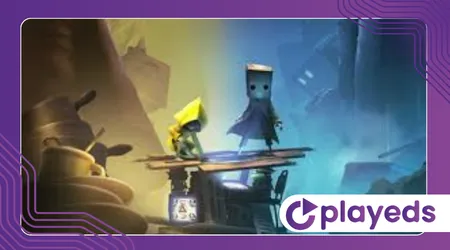
The narrative follows Mono, a young boy wearing a paper bag, who awakens in a distorted world heavily corrupted by mysterious television broadcasts.
He soon rescues Six, the raincoat-wearing protagonist from the original game, who acts as his AI-controlled companion.
There is something fundamentally unsettling about watching these two fragile figures navigate a landscape explicitly designed to crush them.
Together, they journey across the decaying Pale City to reach the Signal Tower, which emits a malignant transmission.
This signal warps the minds and bodies of the remaining citizens, turning them into mindless, television-obsessed monsters.
It is a bleak commentary on consumerism, but the game lets you feel that dread rather than lecturing you about it.
Expert storytelling relies entirely on environmental cues, subtle character animations, and eerie sound design rather than traditional dialogue.
Players must piece together the tragic lore by observing the haunting remnants of this dying, surreal civilization. It forces a rare kind of player focus, where a discarded toy tells more than a cutscene.
How Does the Gameplay Evolve From the First Game?
The most significant gameplay evolution is the introduction of dual-character puzzles, requiring seamless cooperation between Mono and Six.
While Six is controlled by the game’s artificial intelligence, her actions feel incredibly organic, responsive, and deeply helpful.
She holds doors, catches you after desperate leaps, and points out environmental hazards naturally.
Mono can also pick up small weapons like pipes or axes to fight back against smaller enemies.
This adds a tense, heavy combat mechanic that requires precise timing, contrasting with the pure stealth of the previous title.
It alters the vulnerability dynamic, making you feel dangerous yet fragile simultaneously.
Environmental puzzles demand greater spatial awareness, forcing players to utilize light, shadows, and sound to distract grotesque pursuers.
++ The Long Dark: Survive Harsh Winters and Discover Human Stories
The level design feels much larger in scale, offering multiple layers of vertical exploration and hidden paths.
This scale works brilliantly to make the children look impossibly small against their surroundings.
Who Are the Most Terrifying Antagonists in the Game?
The Teacher is arguably one of the most memorable threats, featuring an unnaturally long, stretching neck that hunts you through classrooms.
Read more: Ratchet & Clank Rift Apart: Travel Through Dimensions with Crazy Weapons
Her section requires absolute stealth, careful timing, and strategic hiding beneath dusty school desks.
It plays brilliantly on childhood anxieties, subverting the concept of school authority into pure, waking nightmare fuel.
| Enemy Name | Primary Location | Core Danger Behavior |
| The Hunter | The Wilderness | Ranged attacks with shotgun |
| The Teacher | The School | Long neck scouting, alerts |
| The Doctor | The Hospital | Ceiling crawling, fast speed |
| The Thin Man | Pale City / Tower | Teleportation, distortion |
In the dark hospital corridors, the Doctor crawls along the ceiling, managing patients who move only when light shines on them.
Managing your flashlight beam while navigating these twitching mannequins creates an incredibly stressful, high-intensity gameplay sequence.
It forces an erratic rhythm of movement that leaves players completely breathless.
Why is the Signal Tower Controlling the Citizens?
The Signal Tower acts as a massive, pulsing entity that broadcasts an addictive, distorting frequency across the entire world.
This transmission preys on the escapism of the Viewers, who completely lose their faces and identities to the screens.
They are literal hollow shells, driven violent only when their hypnotic trance is interrupted.
According to deep narrative analysis on Bandai Namco Entertainment, the tower represents the consuming nature of modern technology and isolation.
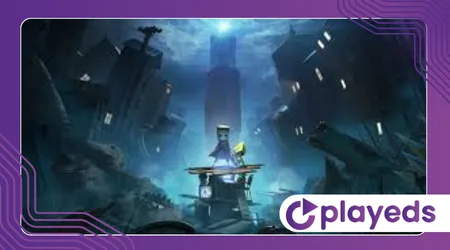
It distorts physical reality, bending buildings and stretching streets into impossible, surreal architectural nightmares. The city itself feels alive, warping around the tower’s absolute, inescapable influence.
Reaching the top of this monolithic structure reveals the cyclical nature of Mono’s journey and his tragic connection to history.
The final revelation fundamentally changes how players perceive the relationship between Mono, Six, and the world itself. It is a devastating emotional gut-punch that lingers long after the credits roll.
Which Secrets and Collectibles Are Hidden in the Pale City?
Glitching Remains are ghostly silhouettes of children scattered throughout secret rooms, offering crucial context to the world’s tragic downfall.
Finding all eighteen ghostly apparitions unlocks a secret ending scene that bridges the narrative timeline beautifully. These echoes represent the lost innocence of a world that consumes its youth.
Collectible hats are hidden across various levels, allowing players to customize Mono’s appearance with unique headwear, like a raccoon cap.
These cosmetic items encourage thorough exploration of dark corners, breaking away from the linear path. They provide brief, whimsical relief in an otherwise oppressive and decaying environment.
++ Bulletstorm: Use Creative Weapons and Score Points with Crazy Kills
Achieving 100% completion requires keen observation, as many doorways are obscured by clever camera angles and deceptive shadows.
Investigating every open vent or loose floorboard usually rewards curious players with these fascinating, hidden narrative elements.
The environment rewards patience, proving that the best details hide just outside your immediate view.
What Are the Performance Differences Across Platforms?
The game runs beautifully across multiple generations of hardware, boasting enhanced visual modes for newer home consoles and computers.
Ray-tracing features, improved volumetric shadows, and faster loading times significantly heighten the overall atmospheric immersion.
The wet streets of Pale City gleam with terrifying clarity under these high-end settings.
On high-end PCs and current-generation consoles, the game maintains a crisp resolution while targeting a smooth sixty frames per second.
This fluid performance ensures that precise platforming sequences and split-second combat encounters feel incredibly responsive.
Input lag is non-existent, which is vital when a single mistimed jump means instant death.
Portable versions offer excellent optimization, allowing players to experience the haunting atmosphere on smaller screens without sacrificing artistic detail.
The visual scaling ensures that the dark, foggy streets of the city remain terrifyingly beautiful everywhere.
Compression artifacts are minimal, preserving the artistic integrity of the original aesthetic.
Final Thoughts
This masterpiece redefines atmospheric horror platforming through its incredible world-building, clever environmental puzzles, and deeply unsettling character designs.
Navigating the distorted streets leaves a lasting impression on anyone brave enough to uncover its darkest secrets. It stays with you, forcing you to question every shadow.
FAQ
Is Little Nightmares II a prequel or a sequel?
Narrative clues and the secret ending strongly indicate that the game functions as a prequel to Six’s original adventure.
Can you play Little Nightmares II with two players?
The game is strictly a single-player experience where the second character is intelligently controlled by the computer.
How long does it take to beat the main story?
A standard playthrough takes roughly five to seven hours, depending on how thoroughly you search for hidden collectibles.
Do I need to play the first game before starting this one?
While the gameplay stands perfectly on its own, playing the first title offers vital context for Six’s behavior.
Discover deeper gameplay insights and official franchise updates directly on the verified Tarsier Studios official website.