
The Creation of Pac-Man and Its Pizza Inspiration
Anúncios
The iconic arcade game Pac-Man has been a cultural phenomenon since its release in 1980. Created by Toru Iwatani, the game’s unique design was inspired by everyday objects, including a pizza with a missing slice.
This creative spark led to the development of a game that would captivate audiences worldwide. The character’s simple yet engaging design made it an instant hit, paving the way for its enduring popularity.
Key Takeaways
- The creation of Pac-Man was inspired by a pizza with a missing slice.
- Toru Iwatani’s design was influenced by everyday objects.
- Pac-Man’s simple design contributed to its widespread appeal.
- The game’s release in 1980 marked the beginning of its cultural impact.
- Pac-Man’s influence extends beyond the gaming world.
The Birth of a Gaming Icon
The birth of Pac-Man is attributed to the creative vision of Toru Iwatani and the evolving landscape of video games. In the late 1970s, the gaming industry was dominated by space-themed shooters, but Iwatani sought to create something different.
Pac-Man was designed to appeal to a broader audience, including women, which was a departure from the typical demographic for video games at the time. Iwatani’s vision was to create a game that was easy to understand and play, focusing on a character that could navigate a maze and eat pellets.
“I wanted to create a game that would be enjoyable for everyone, not just the usual gamers,” said Toru Iwatani, reflecting on his inspiration for Pac-Man.
The game’s development was influenced by the pizza culture of the time, with Iwatani drawing inspiration from a pizza with a missing slice. This unique concept contributed to Pac-Man’s widespread appeal.
- Pac-Man was first released in Japan on May 22, 1980.
- It quickly gained popularity worldwide, becoming a cultural phenomenon.
- The game’s success paved the way for sequels, merchandise, and even a top 40 hit single.
| Year | Event | Impact |
|---|---|---|
| 1980 | Pac-Man Release | Gained massive popularity |
| 1981 | Global Distribution | Became a cultural icon |
| 1982 | Merchandising | Expanded brand presence |
Pac-Man’s influence on the gaming industry cannot be overstated. It not only revolutionized gameplay mechanics but also changed the way games were marketed and consumed. Today, Pac-Man remains an enduring symbol of gaming culture, continuing to inspire new generations of gamers and developers alike.
Meet Toru Iwatani: The Mind Behind Pac-Man
Toru Iwatani’s journey to creating Pac-Man began with a simple yet bold idea: to move away from the conventional space shooter genre. At the time, the gaming industry was dominated by space-themed games, and Iwatani wanted to create something different.
Moving Away from Space Shooter Dominance
Iwatani, a young game designer at Namco, was tasked with creating a game that would appeal to a wider audience. He drew inspiration from everyday life, particularly from pizza. “I was inspired by the image of a pizza with a missing slice,” Iwatani recalled. This unique inspiration led to the creation of Pac-Man’s iconic character design.
By moving away from the space shooter genre, Iwatani aimed to create a game that was more relatable and accessible to a broader audience. This decision marked a significant shift in the gaming industry, paving the way for more diverse game designs.
Targeting a Broader Audience
Iwatani’s vision for Pac-Man was not only to create a game that was different but also to target a broader audience, including women. At the time, the gaming community was predominantly male, and Iwatani sought to change this by designing a game that was simple, intuitive, and fun for everyone.
“The idea was to create a game that could be enjoyed by everyone, regardless of age or gender,” Iwatani said. Pac-Man’s success was a testament to Iwatani’s innovative approach, as it became a cultural phenomenon, appealing to a wide range of players.
Iwatani’s design philosophy and innovative approach played a crucial role in Pac-Man’s success. By targeting a broader audience and moving away from the dominant space shooter genre, Iwatani created a game that was not only unique but also groundbreaking.
Pac-Man’s impact on the gaming industry was significant, and it continues to be celebrated as a classic arcade game.
The Pac-Man Pizza Inspiration Revealed
The design of Pac-Man was influenced by a simple yet intriguing image: a pizza with a slice removed. This inspiration is deeply rooted in the creator’s observation of food and its potential to be transformed into a character.
The Missing Slice Moment
The idea struck Toru Iwatani when he saw a pizza with a missing slice. The remaining slices formed a shape that resembled a character, sparking the idea for Pac-Man. This moment was crucial as it combined simplicity with recognizability.
Translating Food into Character Design
Translating the pizza image into a character involved simplifying and adapting its form. Pac-Man’s design retained the essence of the pizza’s circular shape and the missing slice, which became his mouth. This design made him relatable and easy to understand.
Pac-Man’s movements and actions were also inspired by the pizza analogy. His ability to consume “pellets” was akin to eating pizza slices. This mechanic was intuitive and engaging, making Pac-Man a classic arcade game that stood the test of time.
| Design Element | Inspiration | Result |
|---|---|---|
| Character Shape | Pizza Circle | Pac-Man’s Circular Form |
| Mouth | Missing Pizza Slice | Pac-Man’s Mouth |
| Gameplay | Eating Pizza Slices | Consuming Pellets |
Pac-Man became a gaming icon because of its simple yet engaging design. The pizza inspiration was key to this success, making the character both memorable and endearing to players worldwide.
From Concept to Creation: Developing the Game
The development of Pac-Man was a meticulous process that transformed a simple concept into a gaming phenomenon.
As the game began to take shape, designer Toru Iwatani focused on creating an engaging experience that would appeal to a wide audience. The initial concept was simple: a character that could eat pellets in a maze. However, the development process involved much more than just basic gameplay mechanics.
The Strategic Maze Design
The maze design was a critical component of Pac-Man’s success. Iwatani designed the maze to be strategically complex, with pellets placed in a way that required players to think ahead. The maze’s layout and the placement of power pellets were designed to create a challenging yet enjoyable experience.
| Maze Feature | Design Purpose |
|---|---|
| Narrow pathways | Encourage strategic movement |
| Power pellet placement | Create opportunities for counterattacks |
| Maze corners | Provide safe zones |
Balancing Challenge and Fun
Balancing challenge and fun was crucial in Pac-Man’s development. Iwatani aimed to create a game that was easy to learn but difficult to master. The ghosts’ behaviors were programmed to be challenging but not frustratingly so, adding to the game’s appeal.
The final product was a result of careful tuning and testing, ensuring that Pac-Man was both engaging and challenging. The game’s development process, from concept to creation, laid the foundation for its enduring popularity.
The Ghosts: Personalities in Pursuit
Toru Iwatani’s ingenious design introduced four distinct ghost characters, each with its own AI, making Pac-Man a challenging arcade game. The ghosts, named Blinky, Pinky, Inky, and Clyde, were designed to pursue Pac-Man, making the game exciting and unpredictable.
Each ghost has a unique behavior that contributes to the game’s challenge. For instance, Blinky is the most aggressive, directly chasing Pac-Man, while Pinky tries to ambush Pac-Man by positioning himself ahead of Pac-Man’s path. Inky and Clyde have more complex behaviors, with Inky sometimes helping Blinky to corner Pac-Man and Clyde occasionally wandering off, only to return to the chase. This diverse AI was a key feature in making Pac-Man engaging.
Creating the Perfect Challenge
The designers aimed to create a game that was fun yet challenging. By giving the ghosts different personalities and AI behaviors, they achieved a balance that kept players engaged. The ghosts’ behaviors are outlined in the table below:
| Ghost Name | Behavior |
|---|---|
| Blinky | Aggressive, directly chases Pac-Man |
| Pinky | Ambushes Pac-Man by positioning ahead |
| Inky | Helps Blinky to corner Pac-Man |
| Clyde | Occasionally wanders off, then returns |
The combination of these ghost behaviors requires players to think strategically, adding depth to the game. Toru Iwatani’s innovative approach to game design, particularly in creating the ghosts’ AI, played a crucial role in Pac-Man’s success as an iconic arcade game.
From Puck-Man to Pac-Man: The Naming Journey
Originally known as “Puck-Man,” the game’s name was later changed to Pac-Man, marking a significant shift in its identity. When Namco, the Japanese video game development company behind Pac-Man, first released the game in Japan, it was titled “Puck-Man.” However, for international releases, the name was changed to Pac-Man.
The reason behind this change was largely due to concerns about vandalism. The name “Puck-Man” was deemed potentially vulnerable to alteration by scratching off part of the “P” in “Puck” to create an obscene word. Namco decided to change the name to Pac-Man for the international market to avoid any potential issues.The significance of the name change cannot be overstated.It not only reflected the game’s global ambitions but also marked a pivotal moment in its history. The name Pac-Man became synonymous with the character and the game, appealing to a broader audience worldwide.
The original “Puck-Man” name was closely related to the game’s Japanese origins and the concept of eating or “pucking” objects. However, the change to Pac-Man was seen as a more universally acceptable title.
Here are some key points about the naming journey:
- The original name “Puck-Man” was inspired by the Japanese word “paku-paku,” which imitates the sound of eating.
- Namco’s decision to change the name was influenced by the potential for vandalism.
- The name Pac-Man was chosen for its simplicity and universal appeal.
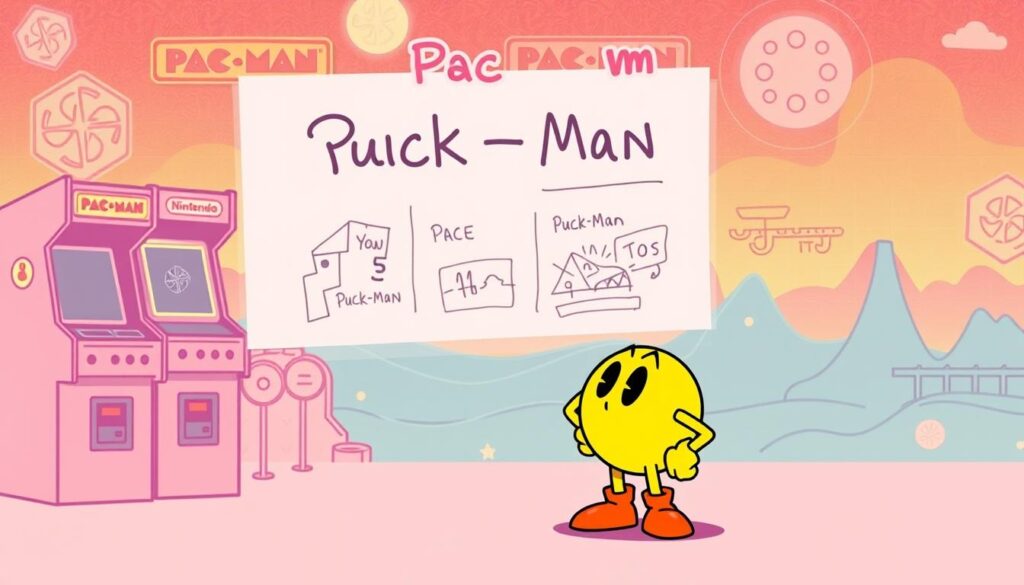
The transformation from “Puck-Man” to Pac-Man was a strategic move that contributed to the game’s global success, making it a beloved character around the world.
Pac-Man’s Global Release and Unprecedented Success
Pac-Man’s global debut was a resounding success, captivating gamers of all ages. Released in 1980, this classic arcade game quickly became a cultural phenomenon, spreading across the globe and cementing its place as one of the most iconic gaming icons of all time.
The game’s simple yet addictive gameplay made it accessible to a wide audience, contributing to its massive popularity. As a result, Pac-Man became a staple in arcades worldwide, with its influence extending beyond the gaming community to impact popular culture.
Record-Breaking Earnings
Pac-Man’s commercial success was unprecedented, with the game generating over $3.5 billion in revenue by 1990. This made it one of the highest-grossing arcade games of all time, with its earnings equivalent to over $10 billion in today’s currency. The game’s financial success was a testament to its enduring appeal and its status as a classic arcade game.
The “Pac-Man Fever” Cultural Movement
The “Pac-Man Fever” cultural movement was a phenomenon that swept the nation, with the game’s characters and imagery appearing in various forms of media, from television shows to merchandise. The game’s impact on popular culture was significant, with Pac-Man becoming a household name and a symbol of the burgeoning video game industry. Some key aspects of the “Pac-Man Fever” include:
- The game’s influence on music, with artists incorporating Pac-Man sounds and imagery into their work.
- The proliferation of Pac-Man merchandise, from toys to clothing.
- The game’s appearance in television shows and films, further cementing its place in popular culture.
In conclusion, Pac-Man’s global release and unprecedented success marked a significant milestone in the history of video games. The game’s impact on popular culture and its enduring legacy as a gaming icon continue to be felt today.
How Pac-Man Revolutionized Gaming Culture
With its release, Pac-Man not only became a gaming icon but also a cultural phenomenon. The game’s impact was not limited to the arcade; it permeated various aspects of society, from television to merchandise.
One of the significant ways Pac-Man influenced culture was through Saturday morning cartoons. The show brought the game’s characters to life, entertaining a new generation of fans.
The Saturday Morning Cartoon
The Pac-Man cartoon series aired on Saturday mornings, captivating audiences with its blend of adventure and humor. This show was instrumental in cementing Pac-Man’s place in the hearts of many, making it a staple of 80s pop culture.
Toys, Clothing, and Collectibles
In addition to television, Pac-Man’s influence extended to a wide range of toys, clothing, and collectibles. Fans could find Pac-Man merchandise everywhere, from t-shirts to posters.
The merchandise associated with Pac-Man was vast and varied, including toys, clothing, and other collectibles. This merchandise not only reflected the game’s popularity but also contributed to its widespread cultural impact.
Pac-Man’s influence on gaming culture is still felt today. The game’s legacy can be seen in many modern games that have followed in its footsteps, adopting similar concepts or paying homage to the classic arcade game.
The Technical Innovation Behind the Classic Arcade Game
Behind the simple yet addictive gameplay of Pac-Man lies a complex web of technical achievements that were groundbreaking for its time. Toru Iwatani’s innovative design not only captivated players but also pushed the boundaries of what was thought possible in arcade games.
The audio in Pac-Man was a critical component of its success. Despite the technological limitations of the time, the game’s sound design was able to create a memorable and engaging experience. The use of sound effects and music was carefully crafted to enhance gameplay, with sounds like the iconic “wakka wakka” noise becoming synonymous with the game.
- Simple yet distinctive sound effects
- Music that complemented the gameplay
- Innovative use of limited audio technology
The Psychology Behind Pac-Man’s Sounds
The sounds in Pac-Man were not just aesthetically pleasing; they also played a crucial role in the game’s psychology. The different sounds for eating pellets, encountering ghosts, and other actions helped to create a sense of tension and reward, enhancing the player’s emotional engagement. This psychological manipulation through sound contributed significantly to the game’s addictive nature.
- The “wakka wakka” sound associated with Pac-Man eating
- Ghostly sounds that signaled danger
- The use of silence to create anticipation
In conclusion, the technical innovation behind Pac-Man, particularly in its audio design, was a key factor in its success. Toru Iwatani’s understanding of how to leverage technology to create an engaging experience helped to establish Pac-Man as an iconic arcade game.
Conclusion: The Enduring Legacy of a Pizza-Inspired Gaming Icon
Pac-Man’s impact on the gaming industry is still felt today, with its pizza inspiration remaining a fascinating aspect of its creation. As a gaming icon, Pac-Man continues to be celebrated for its simple yet addictive gameplay, and its influence can be seen in many modern games.
The story of Pac-Man’s development, from its pizza inspiration to its global release, is a testament to the power of innovative game design. Toru Iwatani’s creation has become an integral part of gaming culture, with Pac-Man remaining one of the most recognizable characters in the world.
As a cultural phenomenon, Pac-Man’s legacy extends beyond the gaming industry, representing a nostalgic era for many. Its continued relevance is a tribute to the timeless appeal of this beloved gaming icon, and the Pac-Man pizza inspiration that sparked its creation.
FAQ
Who created Pac-Man?
What inspired the creation of Pac-Man?
What was Pac-Man originally named?
Why did Pac-Man become a gaming icon?
What is the significance of the ghosts in Pac-Man?
How did Pac-Man impact popular culture?
What was “Pac-Man Fever”?
How did Pac-Man influence the gaming industry?
