Cloud Gaming Explained: Play Without a Console or PC Anywhere You Go
Anúncios
Cloud gaming. The world of gaming is experiencing a profound shift. The familiar cycle of saving up for the latest console or a high-end PC is being challenged by a revolutionary technology.
It’s called cloud gaming, and it’s making hardware barriers a thing of the past.
Imagine having access to the most visually stunning, technically demanding games without ever needing to download, install, or update them.
This isn’t science fiction anymore; it’s a modern reality that is democratizing how and where we play. The question isn’t whether it’s the future, but how soon that future will fully arrive.
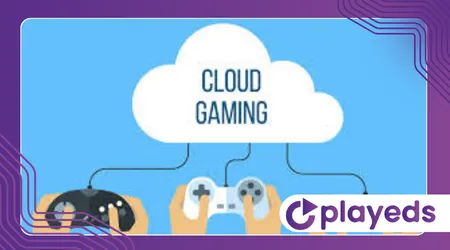
The core concept is surprisingly simple yet incredibly powerful. You’re not running the game on your device. Instead, the game is running on a powerful remote server in a data center.
Your device, whether it’s a smartphone, a tablet, or a smart TV, acts as a window. This window streams the game’s video output to you in real-time.
Simultaneously, your controller inputs are sent back to the server in milliseconds. This process creates a seamless, interactive experience.
It’s an analog to streaming movies, but with a critical difference. You’re not just watching; you’re actively participating and controlling the action.
How Cloud Gaming Works: A Digital Symphony
To truly appreciate the magic of cloud gaming, you need to understand the technology behind it.
The process is a digital symphony of hardware and software working in perfect harmony.
When you press a button on your controller, that signal is compressed and sent through your internet connection to the cloud server.
The server, a massive rack of high-performance GPUs and CPUs, processes your input instantly. It calculates the next frame of the game and renders it.
That newly rendered frame is then encoded into a video stream. It’s sent back to your device at lightning speed.
All of this happens faster than the blink of an eye. The entire sequence, from your button press to the on-screen reaction, takes mere milliseconds.
The biggest hurdles have always been latency and network congestion. As 5G and fiber-optic networks become more widespread, these issues are steadily being minimized.
A stable and fast connection is truly the lifeblood of this technology. Without it, the experience can become a pixelated, laggy mess.
Think of it like being a remote painter. You are telling the artist in a studio what to do.
He paints on his canvas and shows you his work a second later. With cloud gaming, that conversation is so fast you feel like you’re holding the brush yourself.
Read more: Unlock Rewards Fast: How to Get Free Diamonds and Skins in Free Fire Safely
The experience is becoming virtually indistinguishable from playing on local hardware. This is the promise that is finally being delivered.
The Main Players and Their Unique Approaches
The landscape of cloud gaming is more diverse and competitive than ever.
Major tech and gaming companies are vying for dominance. Each platform offers a unique proposition to attract players.
NVIDIA’s GeForce NOW, for example, is built for PC gamers. It allows you to stream games you already own from digital storefronts like Steam and Epic Games Store.
Microsoft’s Xbox Cloud Gaming is a natural extension of their ecosystem. It is seamlessly integrated into the Xbox Game Pass Ultimate subscription.
This gives subscribers access to a huge library of titles on demand. It is the perfect blend of streaming and a traditional game library.
See how interesting: The Witcher 3: Hunt Monsters, Make Choices, and Shape Your Own Destiny
Then there is Sony with PlayStation Plus. Their cloud streaming service provides access to a selection of classic and modern games.
The competition is a boon for consumers, driving innovation and pricing down. The rise of these services indicates a major shift in how games are monetized and distributed.
The market for cloud gaming is projected to be valued at an impressive USD 9.32 billion in 2025. This shows incredible growth from just a few years ago.
This growth is fueled by a perfect storm of factors. Advancements in network technology, a focus on subscription models, and the convenience factor.
| Platform | Business Model | Best For | Device Compatibility |
| NVIDIA GeForce NOW | Free (limited), Paid Tiers | PC gamers who own their games | PC, Mac, Android, iOS, TV |
| Xbox Cloud Gaming | Subscription (Game Pass) | Xbox fans, playing on the go | Xbox, PC, Mobile, Smart TV |
| PlayStation Plus | Subscription (Premium Tier) | PlayStation fans, console players | PS5, PC, Mobile, TV |
| Amazon Luna | Channel Subscription | Amazon Prime members, casual gamers | Fire TV, PC, Mobile, Tablet |
This table illustrates the diverse approaches being taken. The industry is no longer a one-size-fits-all model.
Why Now? The Convergence of Technology Cloud Gaming
The vision for cloud gaming isn’t new. It has been a dream for over a decade.
Previous attempts stumbled, primarily due to insufficient network infrastructure. The technology just wasn’t ready to handle the demands of interactive, real-time streaming.
Today, the widespread adoption of fiber-optic and 5G networks has been the game changer. Low latency and high bandwidth are no longer a luxury.
++ Block Blast: Clear the Grid with Smart Moves and Fast Thinking
A report by the SQ Magazine in 2025 indicated that 78% of users reported a “satisfactory” experience with cloud gaming. This shows the improvements are resonating.
The experience is smoother and more responsive than ever. This reliability is making skeptics reconsider.
One example of this evolution is the ability to play a visually demanding game like Cyberpunk 2077 on a smartphone. A few years ago, this would have been a laughable concept.
Today, it’s a seamless reality for millions of people. The game runs on a powerful server in a distant data center, while you play it in the palm of your hand.
Another example is the accessibility for casual gamers. They can try a huge library of games without buying expensive hardware.
They can sample dozens of titles before deciding what they like. This is changing player habits and content discovery.
The Future is Already Here
The old model of gaming tied to a single, expensive box is slowly fading.
It’s being replaced by a more flexible, accessible, and connected future. The promise of cloud gaming is finally being realized.
You will no longer need to consider hardware specifications. You can play anywhere, on any compatible device.
The game is no longer a physical item but a service. This shift changes everything, from distribution to accessibility.
It is a revolution in every sense of the word. Is it time to say goodbye to the console as we know it?
The current trend suggests we are already on that path. The question for gamers is simply which service to choose.
Frequent Doubts Cloud Gaming
What is the minimum internet speed required?
Most services recommend a minimum of 15 Mbps for 720p streaming and 25-35 Mbps for 1080p. A stable connection is just as important as speed.
Does this mean I don’t need a powerful computer at all?
For cloud gaming, you need a device capable of streaming video and a reliable internet connection. A simple laptop, phone, or smart TV is often enough.
What about input lag?
Input lag, or latency, has been drastically reduced thanks to advancements in network infrastructure (fiber, 5G) and optimized streaming technology.
For most single-player and casual multiplayer games, the delay is minimal and often imperceptible to the average player.
