
Dressmaker: Build a Cozy Fashion Studio One Stitch at a Time
Anúncios
Whether you are converting a spare bedroom or refining a cozy corner in your living room, becoming a successful dressmaker requires balancing ergonomics, workflow efficiency, and inspiring aesthetics.
Designing a dedicated creative space is one of the most rewarding steps you can take as a garment creator.
A well-planned home workspace minimizes physical fatigue, protects equipment, and speeds up garment construction.
Designing a studio that scales with your skills involves deliberate choices about layout, equipment, lighting, and storage systems.
- Space Allocation: How to optimize small footprints for pattern drafting, cutting, and garment assembly.
- Essential Equipment: The foundational tools needed for a high-performing domestic fashion studio.
- Ergonomics & Lighting: Preventing repetitive strain injury and visual fatigue during long sessions.
- Storage & Organization: Systems for fabric inventory, notions, and ongoing projects.
What Is a Modern Home Fashion Studio Layout?
A modern fashion atelier functions around a three-zone workflow model: cutting, sewing, and pressing.
Separating these three tasks physically prevents clutter from spilling across active work areas and maintains a clean production line.
Cutting Zone: Counter-height table equipped with rotary cutters, grid mats, and drafting rulers.
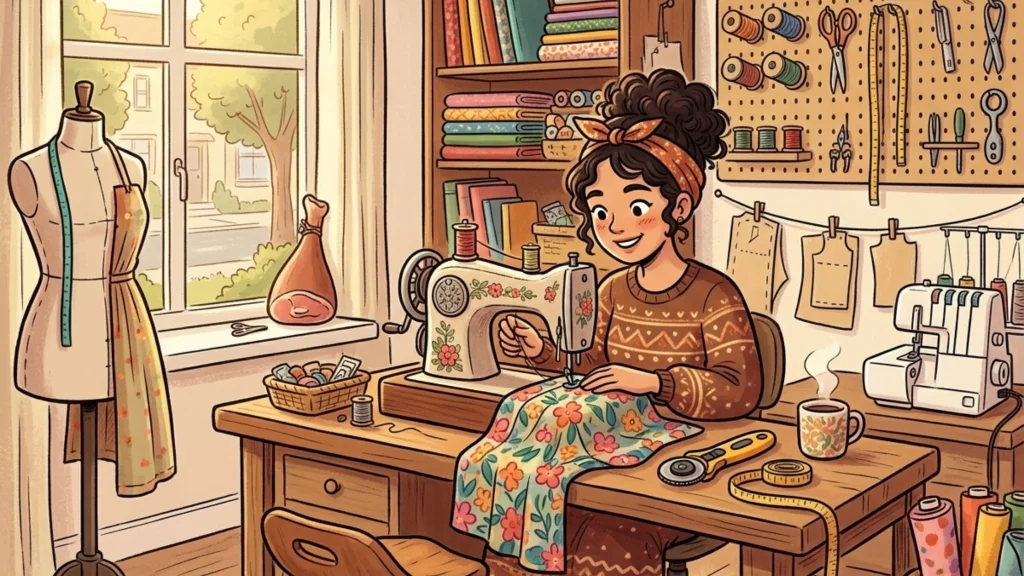
Sewing Zone: An ergonomic setup featuring your primary lockstitch machine and a 4-thread overlocker side by side.
Pressing Zone: A sturdy steam station equipped with a tailor’s ham, sleeve board, and hardwood clapper.
Your primary sewing station forms the core of the layout. Placing your main lockstitch machine alongside an overlocker (serger) on a heavy, vibration-dampening table at a right angle allows you to pivot between seaming and edge-finishing without getting up from your chair.
Cutting tables require a higher surface height than standard desks to prevent lower back strain during long drafting sessions.
A dedicated cutting area should ideally stand between 36 and 38 inches high, allowing you to walk around the perimeter freely when manipulating large pattern pieces.
Pressing stations demand a sturdy, heat-resistant surface placed within easy reach of an electrical outlet.
++ Best Fiends: Collect Unique Creatures and Defeat Puzzle Enemies
Keep a gravity-feed steam iron or a high-pressure steam generator unit paired with a firm, wool-padded pressing board to set seams precisely as you construct each garment.
How Do You Select Essential Equipment for a Small Workspace?
Choosing tools for a cozy studio requires prioritizing versatility, durability, and space efficiency.
Read more: Happy Color: Relax While Bringing Stunning Artwork to Life One Color at a Time
Investing in high-quality foundational equipment yields far better results than filling shelves with single-purpose gadgets.
| Tool Category | Essential Item | Key Specification | Primary Function |
| Sewing Machines | Heavy-Duty Mechanical or Computerized Machine | Metal internal frame, adjustable presser foot pressure | Precision stitching across diverse fabric weights |
| Edge Finishing | 4-Thread Overlocker (Serger) | Differential feed control | Seam finishing, stretch fabric assembly, rolled hems |
| Cutting Tools | 45mm Rotary Cutter & 8″ Shears | High-grade Japanese stainless/carbon steel | Clean fabric preparation and precision trimming |
| Pressing Tools | Steam Generator Iron & Tailor’s Ham | Minimum 3.5 bar steam pressure, hardwood clapper | Shaping seams, setting darts, pressing curved structured seams |
| Fitting Tools | Adjustable Form or Custom Mold | Linen/canvas cover with pinnable foam body | Garment draping, fitting adjustments, hem leveling |
Precision cutting equipment protects your wrists from chronic fatigue.
Pair a self-healing grid mat with ergonomic rotary cutters for straight lines, keeping sharp, high-carbon steel shears reserved exclusively for detailed notches and intricate curves.
Tailoring tools elevate homemade garments into professional-quality pieces.
++ Crime Boss: Rockay City: Build Your Empire Through High-Stakes Heists
Hardwood seam clappers absorb heat and moisture instantly to create crisp edges on collar points and trousers without scorching delicate textiles.
Why Is Ergonomics Critical in a Home Sewing Workspace?
Repetitive strain injuries, back pain, and eye fatigue frequently affect garment makers who spend long hours at their workstations.
Designing your studio with ergonomic principles in mind preserves your physical health and prolongs creative endurance.
Proper seating forms the foundation of ergonomic garment construction.
Choose an adjustable task chair featuring lumbar support, a waterfall seat edge, and smooth-rolling casters that move effortlessly across hard floors or low-pile mats.
Maintain an upright posture with your elbows bent at a 90-degree angle, your back supported, and your feet flat on the floor.
Task lighting directly prevents optical fatigue and precision errors. Combine ambient room lighting with daylight-balanced LED desk lamps offering a high Color Rendering Index (CRI 90+) to ensure accurate color matching during stitching and pressing.
Adjusting table heights protects shoulder joints during repetitive tasks.
According to workplace health standards published by the Occupational Safety and Health Administration, maintaining neutral joint angles minimizes physical strain and long-term musculoskeletal risk during repetitive physical work.
Which Storage Systems Best Protect Fabric and Notions?
Textiles and sewing notions degrade rapidly when exposed to direct sunlight, dust, and excess humidity. Implementing structured storage systems preserves material quality while keeping your workspace organized.
Clear Modular Bins: Store fabric yardage categorized by fiber type (wool, linen, cotton, synthetics) in semi-transparent containers to shield fibers from dust while keeping inventory visible.
Pegboards & Wall Grid Racks: Mount thread spools, bobbins, rulers, and scissors vertically near sewing machines to clear desk space while keeping everyday tools instantly accessible.
Vertical Pattern Archiving: Hang drafted patterns on heavy paper using pattern hooks attached to closet rods or wall bars rather than folding them into envelopes.
Mobile Drawer Carts: Dedicate rolling drawer units to current work-in-progress (WIP) projects, keeping cut fabric pieces, matching threads, and zipper closures gathered in one mobile spot.
Humidity control protects natural fibers like silk and wool from deterioration and pests.
Store high-value textiles with cedar blocks or silica gel packets, keeping them away from damp basements or uninsulated attic spaces.
Organizing thread by fiber type prevents costly tension issues during sewing.
Cotton threads age differently than polyester spools; keep older cotton thread away from direct sunlight to preserve tensile strength over time.
How Can You Optimize a Budget for Studio Equipment?
Building an efficient home studio does not require massive upfront capital. Allocating funds toward core machinery while sourcing auxiliary furniture secondhand stretches your budget significantly.
Prioritize spending on high-grade sewing machinery and pressing equipment first.
A reliable, vintage mechanical machine or a sturdy modern computer-controlled unit handles heavy layers far better than an ultra-cheap machine packed with decorative stitches you rarely use.
Economical alternatives exist for cutting tables and storage units.
Standard height-adjustable office desks, sturdy counter-height dining tables, or modular cube storage units topped with a thick plywood board create excellent, low-cost cutting stations.
Sourcing secondhand tailoring equipment yields professional tools at a fraction of retail prices.
Look for vintage cast-iron pressing irons, solid hardwood tailor’s hams, and commercial dress forms through estate sales, local auctions, and specialized secondary markets.
Researching garment construction methodologies through educational institutions provides structured learning.
Industry insights available through the Fashion Institute of Technology offer valuable context on traditional techniques, material selection, and professional studio standards.
What Daily Habits Keep a Small Studio Functional?
Maintaining order in a small fashion studio requires disciplined daily maintenance habits. A quick clean-up at the end of every sewing session prevents mess from accumulating into overwhelming clutter.
Clean Machinery: Clear loose thread scraps and vacuum lint from the bobbin case after every project.
Safe Pressing Shutdown: Unplug pressing equipment and drain water reservoirs to avoid mineral buildup and safety hazards.
Secure Sharps: Return shears, pins, and rotary cutters to magnetic docks or protective sheaths immediately.
Organize Inventory: Fold and label unused fabric pieces before returning them to storage bins.
Archive Patterns: File away drafted paper patterns onto vertical hooks or specialized hangers.
Wiping down machine surfaces and vacuuming lint out of bobbin cases prevents thread jams and mechanical wear.
Fine textile fibers accumulate rapidly inside feed dogs, drying out essential lubrication over time.
Safely turning off heating elements prevents accidental fires or damage to delicate pressing surfaces.
Always drain steam reservoirs on irons before stepping away for the day to minimize mineral buildup inside internal heating chambers.
Turn Your Creative Vision into Reality
Building your dream fashion studio isn’t about having a massive budget or a massive room—it is about creating a space that respects your craftsmanship, your body, and your creative process.
By setting up functional zones, prioritizing ergonomic comfort, and keeping your materials organized, every stitch you sew becomes smoother, faster, and far more satisfying.
Now it is time to take that first step, set up your space, and start crafting your next masterpiece, one stitch at a time!
Frequently Asked Questions
What is the minimum room size needed for a home fashion studio?
A functional home studio can be established in a space as small as 50 to 70 square feet.
Utilizing vertical wall storage, folding cutting tables, and compact machine layouts maximizes utility in tight bedrooms, alcoves, or converted closets.
Should I choose an industrial sewing machine or a heavy-duty domestic model?
Industrial sewing machines offer unmatched speed, durability, and stitch quality for heavy production or thick materials like denim and leather.
However, high-end domestic heavy-duty machines take up far less space, offer portable storage options, and provide multiple stitch patterns suited for versatile garment building.
How do I prevent my fabric from fading while stored in a bright studio?
Store fabric yardage inside opaque plastic bins, closed cabinets, or under UV-blocking window covers.
Direct sunlight breaks down natural dyes and weakens delicate textile fibers like silk and wool over prolonged exposure periods.
What is the single most important pressing tool for tailor-quality seams?
A heavy wooden seam clapper paired with a high-pressure steam iron is the most transformative pressing combination.
The hardwood absorbs heat and steam from freshly pressed seams, locking flattened edges instantly into place without scorching the fabric surface.
++ Dressmaker Stitches Together Creativity and Cozy Gameplay in a Charming Tailoring Simulation
++ Why is everyone suddenly playing Dressmaker on Steam?
