
Warframe: Forma equipo en línea y domina a los ninjas en el combate espacial.
Anuncios
Warframe doesn’t announce its complexity—it lets you trip over it. At first, everything feels immediate: speed, impact, motion.
Then, gradually, the systems begin to reveal themselves, not as layers, but as something more intertwined, almost alive.
Tabla de contenido
- How does Warframe gameplay work?
- Why is cooperative play essential?
- What systems drive progression?
- How does Warframe compare to similar games?
- Preguntas frecuentes
- Conclusión
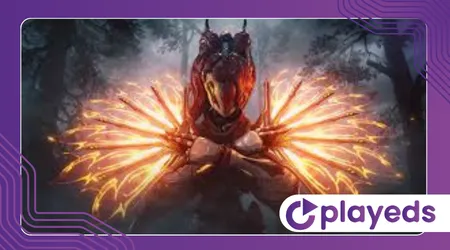
How does Warframe gameplay work?
Movement isn’t just central—it’s expressive. Sliding into a jump, chaining into a wall run, landing already in motion again.
It feels less like control and more like fluency, as if the game rewards thinking ahead by milliseconds.
At a superficial level, it resembles a shooter. That impression fades quickly. Each Warframe reshapes how you approach space itself: some encourage precision, others chaos, others something in between that resists easy classification.
Players often begin cautiously, using cover, hesitating. Then something shifts. The game quietly nudges you forward, away from hesitation, toward momentum. Eventually, standing still starts to feel like a mistake.
There’s an elegance here that’s easy to miss. Combat isn’t about dominance—it’s about continuity.
Break the rhythm, and everything falters. Maintain it, and encounters begin to dissolve almost effortlessly.
Why is cooperative play essential?
Solo play works, but it feels like reading only one chapter of a longer story.
Warframe is structured around interaction, even when it doesn’t explicitly demand it. The design assumes presence—other players, other roles, other rhythms.
Not all contributions are visible. A support frame holding energy levels steady rarely gets attention, yet without it, everything slows. Crowd control can look passive, but often it’s the difference between order and collapse.
There’s also a subtle psychological shift in group play. Efficiency starts replacing individual expression.
Players begin anticipating movement, positioning themselves in ways that suggest familiarity, even without communication.
++ Borderlands 3: Saquea, dispara y ríete en un salvaje mundo de ciencia ficción.
This is where the game becomes something else entirely—not just cooperative, but interdependent. Success stops belonging to individuals and starts emerging from alignment.
What systems drive progression?
Progression here refuses to behave neatly. It spreads outward instead of forward, offering multiple paths that rarely converge into a single “correct” direction. For some, that’s frustrating. For others, it’s the point.
Mastery Rank gives structure, but it can be misleading. Real progression happens in understanding—how mods interact, how scaling works, how small changes ripple across an entire build.
Leer más: Batman Arkham Knight: Limpia las calles de Gotham con miedo y artilugios.
Mods themselves feel almost like a language. At first, they’re just upgrades. Over time, they become tools for expression. A well-tuned build says something about how a player thinks, not just how they play.
Crafting introduces friction, and that friction divides opinion. Waiting can feel artificial. Yet there’s a counterargument worth considering: forced pauses create space, encouraging players to explore instead of rushing.
How does Warframe compare to similar games?
Placed next to Destiny 2 or The Division 2, Warframe feels less constrained—sometimes to its own detriment.
++ El crecimiento de las funciones de accesibilidad en los juegos y la inclusión.
Structure exists, but it rarely insists on itself. Players are given room, and not everyone knows what to do with it.
| Característica | Warframe | Destino 2 | The Division 2 |
|---|---|---|---|
| Modelo de negocio | Free-to-play | Paid + expansions | Paid |
| Movement System | High mobility | Moderado | Grounded |
| Build Complexity | Very high | Moderado | Moderado |
| PvE Focus | Fuerte | Fuerte | Fuerte |
| PvP Emphasis | Limitado | Alto | Moderado |
Mobility changes expectations in subtle ways. Encounters stop being about positioning behind safety and start revolving around motion. Standing still becomes vulnerability, not protection.
There’s something else, too—something less mechanical. The free-to-play model here doesn’t feel like a limitation so much as a design philosophy.
Systems stretch to accommodate time investment in ways premium models often don’t.
Engagement data from platforms like statista.com continues to reflect the staying power of cooperative free-to-play games. Longevity, in this context, isn’t accidental—it’s engineered.
How does customization influence performance?
Customization sits at the center of everything, but it doesn’t present itself loudly. A weapon without mods functions, technically, but feels unfinished—like a sentence missing its ending.
There’s a particular satisfaction in discovering synergy unexpectedly. Combining elements, adjusting energy flow, fine-tuning survivability—these choices accumulate, slowly transforming capability into identity.
Some players chase optimal builds. Others drift toward experimentation.
Both approaches work, though neither remains stable for long. Balance updates disrupt certainty, forcing players to reconsider what they thought they understood.
That instability can frustrate. It can also sharpen awareness. When nothing stays dominant, attention shifts from results to process. Understanding deepens, almost by necessity.
What keeps players engaged long-term?
Sustained engagement here doesn’t rely on urgency. Updates arrive, but rarely with the pressure of disappearance. Content tends to remain, creating a sense of continuity that many live-service games struggle to maintain.
Narrative has evolved quietly. Early fragments have expanded into something more deliberate, occasionally ambitious in ways that feel unexpected. Storytelling doesn’t dominate—it lingers, revealing itself gradually.
There’s also the role of the community, which feels less like an audience and more like an ongoing participant. Feedback doesn’t just echo—it shapes direction. That relationship introduces a kind of unpredictability into development.
Over time, the game accumulates rather than replaces. Systems build on systems. For returning players, this creates both familiarity and disorientation—a strange but compelling combination.
Preguntas frecuentes
Is Warframe beginner-friendly?
Not immediately. Systems overlap, interfaces crowd the screen, and direction isn’t always clear. Still, persistence reveals structure. What feels chaotic early on begins to organize itself with time.
Can you play Warframe solo?
Yes, and many players prefer it. Even so, certain missions subtly encourage cooperation. Efficiency improves in groups, but more than that, the experience gains depth.
Does Warframe require spending money?
Spending accelerates access, not possibility. Every system remains reachable through play. The trading economy complicates things further, allowing time to substitute for currency.
How often is Warframe updated?
Updates arrive frequently enough to maintain interest without overwhelming players. Official details remain available through digitalextremes.com, offering a level of transparency that builds long-term trust.
Conclusión
There’s something quietly unusual about how Warframe sustains attention over time.
It doesn’t simplify itself to remain accessible, nor does it rely entirely on spectacle to maintain interest. Instead, it asks for engagement—real engagement.
For those willing to stay, to experiment, to adapt, the experience shifts. What begins as fast action gradually reveals structure, then depth, then something harder to define.
Mastery doesn’t arrive cleanly. It accumulates. And somewhere along the way, almost without noticing, players stop reacting to the game and start moving with it.
++ Warframe, Still A Space Ninja Game (Technically), Is Now Drawing Inspiration From World War I
++ Warframe Empyrean – Space Combat with a Full Crew
