
Living Inside Games: An Immersive Journey
Anúncios
Many treat H5 games as simple browser pastimes. However, a closer look at the genres and experiences they offer reveals a rich, creative, and engaging diversity. Imagining what it would be like to truly step into these digital worlds provides a new perspective on how interactive entertainment influences human behavior.
This article explores what it would be like to live inside different types of H5 games, feeling firsthand the pace, challenges, and unique sensations each genre offers. Prepare for a sensory journey where logic, emotion, adrenaline, and strategy blend into profoundly distinct experiences—even when running directly from your browser.
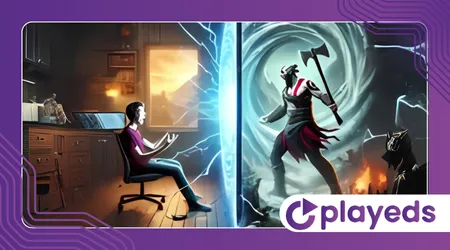
Exploring the Mind Within an H5 Puzzle
Imagine waking up in an empty room with four white walls. On the floor, geometric symbols slowly spin. A metallic voice says: “Connect the sequence. Time is running.”
Stepping into an H5 game of logic and reasoning, like 2048 or Little Alchemy, your mind transforms into the primary tool. Living this experience in the first person would demand maximum concentration, quick memory, and lateral thinking.
Sensations:
- With every correct move, a wave of cerebral satisfaction pulses.
- When you make the wrong combination, the environment shifts—lights flicker, sound distorts.
- Time flows differently. A minute feels like an hour as you approach the magic number or the rare combination.
Even under pressure, the pleasure of solving mental challenges dominates the experience. It’s like walking inside a Rubik’s Cube that changes with every step, forcing you to constantly rethink your logic.
Diving into a Runner: The Race Never Ends
Suddenly, you awaken running. The landscape changes in seconds: a desert, a tunnel, a neon forest. Your body reacts by instinct. Leap, slide, double jump, spin. All in sync with the rhythm of the electronic background music.
Inside an endless runner H5 like Temple Run H5 or Subway Surfers Web, there’s no pause. The sensation involves continuous action, absolute reflexes, and split-second decisions.
What you’d feel:
- Adrenaline pulses constantly, as if an invisible predator follows your steps.
- Each overcome obstacle increases speed and risk.
- Your brain enters a state of flow, where you don’t think—you just react.
Still, addiction appears: you need to beat your own record. Every “game over” creates an intense desire to try again. Living in this universe would push your mental endurance to the limit.
Living an H5 RPG: The Protagonist of a Fluid Story
You awaken in a medieval village. NPCs whisper your name. Swords gleam in market stalls. A hooded stranger hands you a quest: “The fate of the kingdom depends on you.”
Within an H5 RPG, like Kingdom of Loathing or Mythos World, time slows down. The narrative takes center stage. The experience is based on choices, dialogues, exploration, and identity building.
Elements that would dominate your life in this universe:
- Every conversation alters the course of the story.
- The map expands with your curiosity.
- Collectible items have real value—not just in the game, but emotionally.
Unlike classic RPGs, H5 versions prioritize lightness and quick interaction. Still, living this reality, the immersed player would feel part of an interactive novel where everything depends on the next line.
The Reality of an H5 Life Simulator
Now imagine waking up in a small house. You control every detail: water the plants, make coffee, answer messages. Time passes slowly, but pleasantly. With each completed task, a new reward appears.
In H5 simulators like BitLife Web or H5 My Life Simulator, the focus is on experiencing multiple lifestyles—professions, relationships, possessions, moral choices. Living in this universe would mean experimenting with various versions of yourself, testing alternative destinies.
Unique experiences:
- Create families, marry, fail, restart—all without permanent consequences.
- Change careers, styles, countries—with a click.
- Build your own narrative, from scratch, with complete freedom.
Consequently, this genre attracts creative, curious, and introspective minds. Life becomes a board game, where each round reveals something new about yourself.
The Daily Life Within an H5 Multiplayer
Suddenly, you find yourself in an arena. Other avatars run, shoot, build, or fly. There’s no single central command. Everything revolves around human interaction, each with their own style.
In H5 multiplayers, like Slither.io or Game of Bombs, reality is defined in real time by the actions of other players. Entering this world demands constant adaptation, social reading, and quick reflexes.
The feeling of daily life:
- Trust never lasts. Today’s ally becomes tomorrow’s enemy.
- Real emotions take over—from frustration to collective euphoria.
- Achievements depend less on luck and more on social strategy.
Still, the community sets the rules. You would need to understand collective dynamics, play with emotional intelligence, and accept that the world around you changes with each new session.
Exploring the Reality of an Educational H5 Game
You wake up in a room full of holograms, animated graphics, and interactive mini-games. A panel says: “Solve this challenge and unlock the next level of knowledge.”
In games like Math Playground, Duolingo Stories Web, or educational gamification platforms, reality blends with learning. Living in this reality would mean absorbing content while having fun.
Perceptions throughout the journey:
- Every mistake brings a clear and immediate lesson.
- Progress depends on content mastery—not just speed.
- The reward translates into knowledge applicable in the real world.
Consequently, spending time in this universe helps the player acquire gamified study habits, better memorization, and enjoyment in learning.
Inhabitants of an H5 Music Game
Imagine walking on tracks that flash to the rhythm. Your steps trigger notes, the scenery vibrates with your synchronization. If you miss the beat, the melody falls apart.
In rhythmic H5 games like Piano Tiles or Beat Racer Web, sound commands everything. Living within this reality would require almost perfect auditory and motor coordination.
Sensations and challenges:
- With each correct beat, your body vibrates in harmony with the scenery.
- Errors cause sonic frustration—as if the world goes out of tune.
- Music functions as both motivation and punishment.
Still, the pursuit of sonic perfection is addictive. Time in this universe is defined by the beat, not by minutes.
Survival Within an H5 Battle Royale
You land on an island. Nothing in your inventory. Ten seconds later, another player appears on the horizon. Run. Hide. Fight. Win or fall. Restart.
Despite their simplicity, H5 versions of survival games already offer intense experiences with compact maps and quick rounds. Entering this universe means living with constant tension and life-or-death decisions at every step.
Daily life in this reality:
- The sound of footsteps causes fear. Silence too.
- Victory depends on calculation, observation, and luck.
- Each death redefines the strategy for the next round.
Still, the feeling of victory generates such a strong dopamine rush that many prefer to lose dozens of times rather than abandon the chance to win just once.
Immersion in the Universe of Absurd Minigames
Imagine a world where a red button can explode a planet, where ducks pilot tanks, and bananas solve mysteries. You understand nothing—and yet you have fun.
In the universe of experimental H5 minigames, like those found on platforms such as CrazyGames, logic disappears. Living this type of game would mean accepting the absurd as the rule.
What to expect:
- Vibrant colors, bizarre sounds, and meaningless challenges.
- Unexpected endings or a complete lack of purpose.
- Raw fun, without context, just instinctive reaction.
Despite the lack of coherence, these games generate laughter and relief. Living there would serve as a mental escape valve—a digital carnival where anything goes.
Consequences of Living in H5 Games: Reflections and Realities
Stepping into the reality of each type of H5 game would have profound effects. It’s worth exploring the psychological and behavioral impact such an immersion would have on someone.
Positive impacts:
- Improved attention and logical reasoning.
- Training of reflexes and motor coordination.
- Enhancement of social skills in multiplayer games.
- Stimulation of creativity and experimentation.
Possible risks:
- Sensory overload in very fast games.
- Anxiety in survival games or high competition.
- Adoption of impulsive behaviors in frantic experiences.
- Disconnection from real time when living repetitive loops.
However, with balance, each world offers a playful version of real-world skills. Consequently, experiencing these would broaden awareness, reinforce emotional repertoires, and bring the player into contact with different versions of themselves.
Conclusion: The Web Becomes the Portal to Interactive Imagination
H5 games have ceased to be mere pastimes. They have evolved, diversified, and conquered formats as varied as human behavior itself.
Therefore, by imagining what it would be like to live inside these games, you understand that each genre offers not just mechanics, but a distinct emotion. The logic of a puzzle, the adrenaline of a runner, the empathy of an RPG, and the chaos of mini-games represent different layers of the human mind.
Still, the browser remains the entry point. Without needing installation, complex logins, or advanced hardware, anyone with a click can access worlds that provoke, thrill, and transform.
Experiencing H5 games, even if in imagination, reveals the power of technological simplicity combined with the emotional depth of interactivity.
The Future of Gaming: An Irreversible Leap Towards Total Immersion?
For decades, humanity has sought to make the digital experience more real. The question now driving players, developers, and investors is clear: in the future, will games reach a level of immersion that blurs the senses with reality?
This article will explain how technology is already paving this path, what experiences are emerging in this new scenario, and what to expect when games stop feeling like games and start feeling like an extension of life. Prepare for a journey where control is no longer the keyboard, but your mind, your body, and, perhaps, your consciousness.
What Does It Mean for a Game to Be Immersive?
Before diving into the future, it’s worth answering precisely: what defines a truly immersive game?
It’s not enough to have realistic graphics or 3D sound. Total immersion is born when:
- The player forgets they are playing.
- The world reacts with coherence and depth.
- Decisions provoke real consequences.
- The senses blur between the physical and the digital.
Therefore, an immersive game goes beyond the screen. It enters the mind, alters sensations, and even provokes physical reflexes. Contrary to what many think, this immersion doesn’t just depend on virtual reality—but on technological and psychological convergence.
Trend 1: Virtual Reality with Full Body Tracking
Today, VR still faces limitations. However, giants like Meta, Sony, Apple, and HTC are investing billions to address these bottlenecks. New prototypes already include:
- Eye tracking with emotional interpretation.
- Haptic gloves with sensory response to pressure and temperature.
- Omnidirectional treadmills that allow running without moving.
- Digital scent filters integrated into headsets.
Therefore, in the near future, players will not only see the digital universe but also feel textures, smells, and impacts.
Still, the greatest technical advance will come from the integration of non-invasive brain sensors. Devices like Neuralink (Elon Musk) and NextMind’s BCIs promise direct thought control. Avatar movement, object interaction, and even emotional responses could flow directly from brain activity.
Trend 2: Behavioral and Emotional Artificial Intelligence
While graphics impress, true immersion depends on the behavior of surrounding characters. Therefore, the second trend focuses on emotional AI, which learns from the player.
Imagine:
- An NPC that remembers your past conversations.
- A villain who changes strategy when they perceive your fears.
- An ally who develops affection, jealousy, or anger based on your choices.
This advance has already begun with models like ChatGPT and Sora. However, in the future, these models will process facial expressions, voice patterns, and respiratory rhythms of the player to adapt dialogues and narrative events.
Consequently, the feeling of “playing with a machine” disappears. The player interacts with digital entities with real personalities, creating emotional bonds as deep as human ones.
Trend 3: Holography and Spatial Projections
The third wave of immersion abandons screens and invades the environment. Companies like Light Field Lab, Looking Glass, and Leia Inc. are already developing floating 3D projections, without glasses or additional devices.
Therefore, players will be able to see creatures emerging from the table, maps unfolding in the air, and weapons floating within reach. With depth sensors and environment mapping, the physical space transforms into part of the game.
Additionally, these technologies work in public spaces. Classrooms, shopping malls, and squares could offer shared experiences where everyone views the same projection, transforming events like battles or concerts into immersive spectacles.
Trend 4: Biofeedback and Games That Feel You
Until today, games only reacted to your commands. However, the new generation reacts to your body, heart rate, sweat, muscle tension, and skin conductivity.
This means gameplay adapts in real time to your physiological state. Imagine:
- A horror game that increases intensity when it detects your calmness.
- An RPG that adjusts dialogues according to your stress level.
- A shooter that limits your field of vision if your pulse rises too much.
Therefore, games become biological experiences. The player not only controls but is also controlled, creating ties between mind, body, and the virtual universe.
Trend 5: Persistent Interactive Worlds
The concept of a “game session” will cease to make sense. Instead, players will access persistent worlds, active 24 hours a day, where time doesn’t stop, even if you disconnect.
Still, immersion doesn’t arise only from time. It flourishes when:
- The world remembers your actions.
- NPCs comment on your past decisions.
- Global events unfold even without your presence.
This trend already appears in games like EVE Online and Dual Universe, but Web5 and edge computing will take this to the next level. Therefore, the player will be part of a living timeline, where every action carries historical weight.
Trend 6: Extended Senses and Expanded Perception
Technology allows humans to experience senses they don’t naturally possess. Future games will include:
- Infrared or ultraviolet vision in nocturnal environments.
- Sonic hearing with imperceptible frequency capture.
- Sensation of speed without movement, via vestibular stimulation.
These abilities redefine what we call immersion. The player begins to experience the world with senses beyond the biological, creating a hybrid identity.
Consequently, games become portals for living realities that challenge physics, time, and human limits themselves.
Trend 7: Adaptive Games by Psychological Profile
Future AI will understand your personality. Therefore, each player will receive a tailor-made game, adapted not only to difficulty but also to their psychological profile.
For example:
- Anxious people will receive more focused and predictable mechanics.
- Explorer players will have rich and branching maps.
- Competitive users will face challenges with immediate global rankings.
Additionally, games will be able to diagnose cognitive patterns, suggesting mental training, breathing activities, or even strategic breaks—all in a playful and integrated way.
Therefore, the future will merge behavioral psychology, mental health, and entertainment into a single experience.
Trend 8: Living Avatars with Simulated Consciousness
Many developers are already discussing the creation of avatars with emotional memory, their own routines, and opinions.
These characters will live even when the player disconnects. They will form bonds with other NPCs, evolve on their own, and may even confront the player based on memories of past events.
Therefore, in the future, playing will also mean nurturing digital relationships with psychological depth, where every action builds (or destroys) an invisible bond.
Still, ethical dilemmas will arise: what happens when a player “abandons” their avatar? Does the world react? Does the character suffer? The answer may change the limits of emotional responsibility with digital beings.
Trend 9: Hybridization with Real Life
Games like Pokémon GO have already proven that games can extend beyond the screen. In the future, the boundary between “playing” and “living” will disappear.
Imagine:
- A spy game where real missions arrive via SMS.
- An ARG (alternate reality game) that uses drones as characters.
- An MMORPG where physical tasks generate digital currency.
Additionally, wearable sensors could capture your routine (sleep, steps, diet) and transform everything into variables for your character. Therefore, life influences the game—and the game influences your life.
This intersection creates transformative experiences but will also require new design ethics to avoid addiction, burnout, and sensory overload.
Trend 10: Collective Creation of Immersive Universes
The player of the future will no longer just consume games. They will create, modify, and expand universes with ease.
With generative AI, anyone will be able to:
- Create entire planets with a phrase.
- Design creatures with personalized characteristics.
- Invite friends to live stories created from scratch.
Therefore, games will transform into tools for collective creation, where developer and player merge. The boundary between player, narrator, and character disappears.
Still, maintaining narrative coherence, balance, and rules in collaboratively created universes will require new social roles within games—such as curators, diplomats, and even reality moderators.
What if One Day It Becomes Impossible to Distinguish Game from Reality?
With all these advancements, an inevitable question arises: at some point, will we lose the ability to separate game from reality?
- If touch feels real…
- If smells deceive the brain…
- If characters respond like humans…
- If the world’s logic follows perfect rules…
…then what differentiates a game from a new life?
Consequently, this doubt doesn’t represent a technical problem—but a philosophical one. The future of immersive games raises questions about identity, consciousness, and freedom.
These questions, though complex, are already emerging today—and will gain even more force as technology continues to dissolve boundaries.
Conclusion: The Game Will Cease to Be an Escape—and Become an Extension of Reality
The immersive games of the future will not merely entertain. They will challenge our perception, amplify our senses, and provoke deep emotions. The screen will cease to be a barrier. Physical control, a tool. The digital experience will become an emotional mirror, a psychological testing ground, and often, a second home.
Therefore, the answer leaves no doubt: yes, future games will be more immersive—to the point of redefining what we call reality.
Still, this evolution needs to be accompanied by reflection, ethics, and care. Technology provides the means. Humanity decides the limits.
