
Anúncios
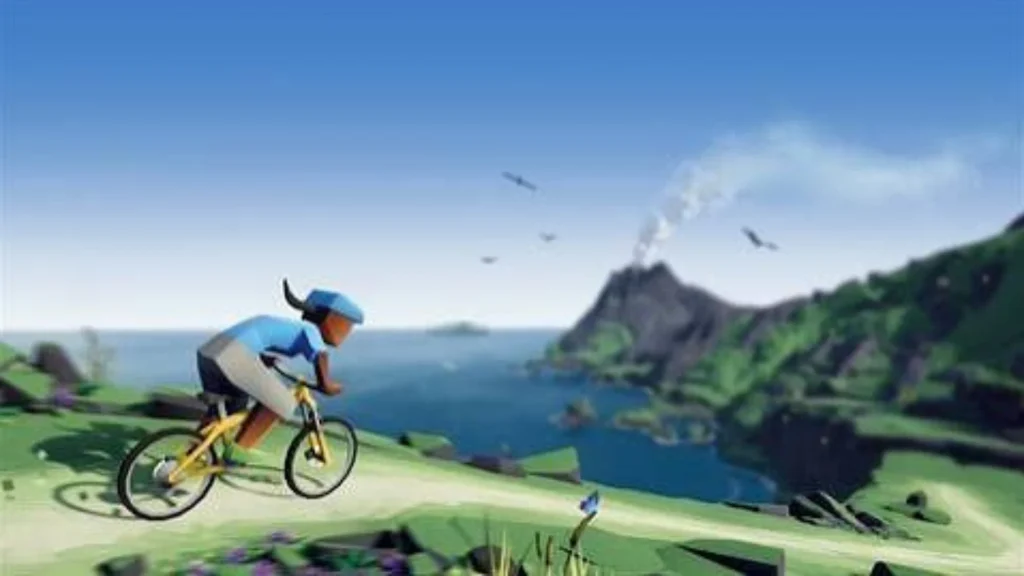
Lonely Mountains Downhill demands a precise balance between raw downhill speed and cautious bike handling across treacherous, low-poly mountain terrain.
Developed by Berlin-based indie studio Megagon Industries, this physics-driven mountain biking title presents a deceptively tranquil environment where a single miscalculated corner or poorly timed jump sends your rider tumbling down a steep canyon.
While the scenic wilderness and natural audio atmosphere invite relaxed exploration, surviving each mountain descent without crashing requires consistent mechanical discipline, route awareness, and sharp steering reactions.
Key Takeaways
- Prioritize Momentum Over Pure Speed: Modulating your brakes and coasting through sharp turns prevents tire skidding and maintains bike control on loose gravel or wet surfaces.
- Select the Right Bike for the Terrain: Different bikes feature distinct stats for speed, suspension absorption, turning agility, and ground traction, making frame selection critical for specific trail obstacles.
- Leverage Environmental Shortcuts Safely: Off-trail paths cut valuable seconds off your run time, but taking them safely requires controlled bunny hops and careful drop management.
- Master Micro-Adjustments: Rhythmic tapping of direction inputs rather than continuous full-stick steering preserves tire traction and minimizes wipeouts on narrow cliff ledges.
What Makes Navigation Challenging in Lonely Mountains Downhill?
Navigating the untouched peaks of Lonely Mountains Downhill is far more complex than it initially appears.
The game intentionally omits on-screen speedometers, glowing track barriers, and directional mini-maps.
Instead, players must rely entirely on visual cues from the landscape, natural path markers, and audio feedback from tire ground friction.
The primary difficulty stems from the dynamic physics engine paired with a fixed isometric camera view.
As your bike accelerates downhill, small rocks or unexpected roots can launch your rider into high-speed airtime.
While airborne, directional control is virtually non-existent, making your entry trajectory before takeoff the sole factor determining landing stability.
Furthermore, surface variations—such as hardpack dirt, wet mud, river stones, and scree—drastically alter both braking distance and cornering grip.
Understanding how gravity affects weight distribution is vital. Descending steep gradients places heavy weight on the front wheel, causing immediate, catastrophic forward flips if you hit even minor obstacles.
++ SnowRunner: Overcome Harsh Terrain with Skill and Precision Driving
Staying upright requires looking far ahead of your rider and anticipating incline changes before entering high-risk sections.
Key Biking Controls and Steering Techniques
Consistent survival begins with mastering physical control inputs. Whether using a gamepad or a keyboard, input precision dictates whether your rider carves smoothly around a hairpin turn or flies over an edge.
1. Screen-Relative vs. Character-Relative Controls
Lonely Mountains Downhill provides two distinct control styles in the settings menu:
Screen-Relative (Default): Directing your control stick to the left turns the bike toward the left side of your screen, regardless of which direction the rider is facing.
Read more: AO Tennis 2: Create Your Champion and Win Grand Slam Titles
This scheme drastically reduces directional confusion during swift camera transitions.
Character-Relative (Left/Right): Directing inputs left turns the handlebars to the rider’s left.
While offering a traditional vehicle control feel, it requires advanced spatial orientation when the bike rides down toward the front of the camera.
2. Feathering and Brake Modulation
Holding down full acceleration continuously leads directly to crash sequences. Skilled riders use brief throttle bursts and carefully feather the rear brake to control momentum.
Pre-Braking: Always apply brakes before entering a turn while traveling in a straight line.
Applying heavy brakes midway through a turn locks the rear tire, initiating an uncontrollable side-skid.
++ Palia: Build Friendships and Discover a Cozy Fantasy Adventure
Counter-Steering out of Skids: If the rear wheel loses grip on wet mud or scree, release the brake immediately and gently steer into the direction of the slide until the tire regain traction.
Coasting: Allow gravity to carry momentum through moderate inclines.
Free-rolling without throttle or brake input yields maximum steering response because tire rubber is not actively slipping under drive force or lockup friction.
How to Find Shortcuts Without Crashing
Every mountain trail includes a clearly marked main route, but achieving fast finish times and completing tough seasonal challenges requires leaving the main trail.
Identifying effective shortcuts involves assessing risk versus reward: cutting time off the clock without introducing fatal drop risks.
When evaluating an off-trail route, consider these practical options:
- Forest Gaps (Low Risk): Cutting between tightly packed trees saves two to four seconds with minimal vertical drop, requiring only smooth, precise handlebar adjustments.
- Rock Slide Drops (Medium Risk): Sliding down boulder fields bypasses long switchback corners, shaving four to seven seconds off a segment when managed with light pre-braking.
- Ravine Jumps (High Risk): Jumping over wide chasms yields huge time savings of eight seconds or more, but demands maximum approach speed and perfect jump timing.
- River Bed Paths (Medium-High Risk): Riding directly through shallow creeks cuts corners, but river rocks can cause sudden stops if hit head-on.
To execute shortcuts safely, follow these core practices:
- Scout in Un-Timed Modes: Use Free Ride or casual exploration runs to locate hidden rock ledge connections and safe landing zones without timer pressure.
- Manage Vertical Fall Heights: Dropping directly off high cliffs results in instant fatal impacts. Look for stepped rock ledges or sloping dirt banks to break long falls into smaller, manageable drops.
- Master Bunny Hops: Executing a properly timed jump lifts both wheels clean off the ground. Use this technique to clear fallen logs, exposed root networks, and small creeks without losing forward momentum.
Bike Selection and Configuration Guide
Unlocking new bikes fundamentally changes handling characteristics across four key attributes: top speed, agility, traction, and shock absorption.
Selecting a frame tailored to a specific mountain layout dramatically lowers crash frequency.
Overview of Core Bikes
Pace (Balanced Starter): Features well-rounded attributes across all categories. It offers ideal stability for learning trail layouts, negotiating moderate slopes, and maintaining predictable traction.
Grasshopper (Agility Specialist): Provides extremely responsive steering input and higher jump clearance.
Excellent for technical trails featuring rapid switchbacks and frequent bunny-hop sections.
Wyvern (Downhill Speedster): Built for maximum top speed and high suspension travel on steep drop-offs.
It absorbs heavy landings well, but its wide turning radius requires early braking on narrow tracks.
Enduro (Traction Master): Delivers maximum tire grip on wet mud, loose rocks, and slippery soil surfaces.
It strongly resists skidding, making it a reliable choice for technical cliffside ledge trails.
Common Mistakes That Lead to Wrecks
Even seasoned players encounter frequent crashes when attempting to set personal records. Avoiding these common tactical errors will significantly reduce your restart count:
Over-Correcting Directional Inputs: Panic steering by holding directional controls fully to one side causes severe fishtailing. Use light, tapping inputs to adjust direction smoothly.
Ignoring Audio Feedback: The game’s sound design offers critical surface information.
A sharp tire screech signals total loss of traction, while rough crunching sounds indicate heavy drag from deep mud or gravel. Adjust speed upon hearing these cues.
Carrying High Speed into Blind Crests: Cresting hilltops at full speed often conceals sharp right-angle turns or sudden cliffs immediately over the ridge. Reduce speed slightly before passing over blind crests.
Fixating on the Rider: Watching only your bike reduces reaction time to impending hazards.
Keep your eyes focused two to three bike-lengths ahead on the trail to prepare for upcoming rocks, roots, and sharp bends.
Frequently Asked Questions
What is the best control setup for beginners in Lonely Mountains Downhill?
Most new players find the default Screen-Relative control scheme the easiest to use.
It maps steering directly to your view on the screen, avoiding the need to mentally invert left and right controls when riding toward the camera.
How do I unlock new mountains, bikes, and cosmetic items?
Unlocking additional game content requires completing specific trail objectives.
These include beating target finish times, reaching checkpoints under strict crash limits, and finishing complete mountain descents in Night Ride mode.
Can you complete all trail challenges without taking shortcuts?
Yes. All standard trail time targets and checkpoint challenges can be met using the marked main path.
Shortcuts are primarily necessary for competing on global speedrun leaderboards and unlocking expert-tier time trial achievements.
How do I stop my bike from sliding on wet rocks and mud?
To preserve grip on low-traction surfaces, refrain from holding acceleration or brake inputs down completely.
Coast smoothly through wet patches, keep your wheels aligned straight, and feather the brakes lightly only when the bike is in a straight line.
Final Steps for Smooth Descents
Navigating the untouched peaks of Lonely Mountains Downhill without crashing requires patience, trail memorization, and measured control adjustments.
Rather than pressing for high leaderboard positions on your initial attempts, focus on establishing a smooth riding rhythm.
According to developer insights on the official Megagon Industries site, utilizing lower-speed practice runs allows you to memorize braking zones and identify safer lines before committing to high-speed time trials.