

Anúncios
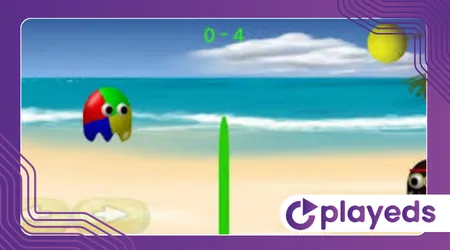
The digital shoreline has undergone a quiet revolution. While AAA titles chase hyper-realism that often feels clinical, Beach Volleyball Online 2D thrives in the space between nostalgic arcade simplicity and the cutthroat precision of modern eSports.
It isn’t just a game about hitting a ball over a net; it is a calculated dance of geometry and timing that captures the frantic energy of a coastal afternoon without the sunburn.
Anatomy of the Sand: What defines this experience?
- The Physics of Friction: Why 2D movement feels more “weighted” than 3D counterparts.
- Tactical Geometry: Leveraging screen space to manipulate your opponent’s positioning.
- Latency as Gameplay: How 2026 server architecture changed the defensive meta.
- Social Friction: The rise of localized “beach clubs” in a global digital space.
- Skill Ceilings: Moving beyond the “button masher” label into professional play.
What is Beach Volleyball Online 2D and why is it trending?
There is something inherently honest about a two-dimensional plane. By 2026, the gaming community hit a saturation point with complex simulations, leading to a massive migration toward titles like Beach Volleyball Online 2D.
This shift isn’t about a lack of processing power; it’s a deliberate choice to prioritize “game feel” over visual noise.
In this environment, every pixel matters. The trend persists because the learning curve is deceptively welcoming, yet the gap between a casual player and a veteran is vast.
You aren’t fighting a camera angle or a clunky 3D rig; you are engaging in a pure test of reflexes and psychological warfare.
It is the digital equivalent of a pick-up game at the park—easy to join, but bruising if you take your eyes off the ball for a second.
How does the physics engine simulate realistic sand gameplay?
Most developers get sand wrong. They treat it like a yellow version of grass, but in a high-tier Beach Volleyball Online 2D build, the “sand” is a variable of resistance. Your avatar doesn’t just move; it displaces weight.
The 2026 engines calculate “startup frames” for every sprint, mimicking the way a human foot sinks before finding purchase.
This mechanical depth means that your defensive stance is everything. If you commit to a dive too early, the recovery frames are punishing.
The ball physics, too, follow a parabolic curve influenced by simulated coastal wind—a subtle touch that prevents the gameplay from feeling like a repetitive loop.
For those interested in how these professional standards are mirrored in reality, the FIVB remains the gold standard for technical regulations that these digital engines strive to replicate.
Which features make competitive play with friends engaging?
The brilliance of modern lobbies lies in their transparency. Gone are the days of clunky invite codes; the current ecosystem thrives on “Drop-in” culture.
You see your friends on a virtual boardwalk, check their recent win-loss ratios, and challenge them to a set in seconds.
Character builds have also evolved. Instead of generic skins, we now see “Attribute Weighting.” You might encounter a duo where one player acts as a “Wall”—high jump, slow movement—while the other is a “Scrapper” designed for court coverage.
++ Volleyball Unbound: Jump, Block, and Spike in Exciting Volleyball Games
This asymmetry creates a meta-game that feels more like a tactical RPG than a simple sports sim. It’s about finding the specific chemistry that turns a pair of players into a cohesive defensive unit.
When is the best time to join global tournaments?
Timing your entry into the tournament circuit is a bit of an art form. While the servers are active 24/7, the “Golden Hour” usually aligns with the weekend “Open Brackets.”
This is when the developers roll out experimental court modifiers—think higher winds or lower nets—that force even the veterans to rethink their entire strategy.
Participating during these peaks isn’t just about the rewards; it’s the only way to witness the evolution of the game’s tactics in real-time.
Read here: Out of the Park Baseball: Manage Teams and Shape Baseball History
You’ll see “The Short-Serve Meta” one week and “The Deep-Corner Lob” the next. It’s a living, breathing laboratory for sports strategy where the stakes feel surprisingly high for a 2D experience.
Comparing Technical Performance Standards
The following table breaks down the technical benchmarks that separate a mediocre browser game from a professional-grade competitive platform.
| Technical Pillar | 2026 Standard | Practical Reality |
| Input Buffer | 1-2 Frames | Near-instantaneous response to spikes |
| Refresh Rate | 144Hz Optimized | Eliminates ghosting during fast serves |
| Netcode | Rollback | Predictions ensure smooth play despite lag |
| Hitbox Precision | Pixel-Perfect | No “ghost touches” or unfair points |
Why do players prefer 2D aesthetics over 3D realism?
There is a certain “visual honesty” in 2D. In a 3D space, depth perception can be betrayed by lighting or camera clipping.
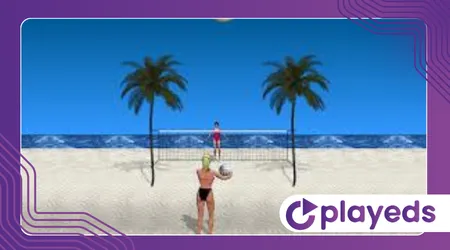
In a Beach Volleyball Online 2D match, the information is absolute. You know exactly where the ball is in relation to the sand and your opponent’s hands. This clarity allows for a much higher level of intentionality in every move.
Furthermore, the “minimalist” aesthetic is a shield against hardware elitism. When the game runs at a locked 120 FPS on a five-year-old tablet, the winner is determined by skill, not by who has the most expensive GPU.
++ Bayonetta 3: Use Magic and Weapons in Fast, Over-the-Top Battles
It democratizes the competition, ensuring that the global leaderboard is a true reflection of talent rather than a list of people with high-end rigs.
What are the essential strategies for winning matches?
Winning consistently requires you to stop chasing the ball and start predicting the space. The most common mistake is “ball-watching”—following the sphere with your eyes while losing track of your player’s positioning.
The elite players watch their opponent’s shoulders. The angle of the avatar often dictates the direction of the spike before the animation even fully triggers.
Another overlooked tactic is the “Tempo Reset.” Occasionally, sending a high, slow lob to the back of the court is more effective than a 100mph spike. It forces the opponent to wait, breaking their rhythm and giving you time to reposition.
In the high-speed world of online play, being the person who controls the clock is usually the person who controls the scoreboard.
A Final Perspective
The appeal of the virtual beach isn’t about replacing the real thing; it’s about distilling the sport into its most addictive, competitive form.
As we move further into 2026, the success of these platforms highlights a universal truth in gaming: we don’t need a thousand polygons to feel the tension of a match-point serve.
We just need responsive controls, a fair court, and a worthy opponent on the other side of the net. To see how these digital strategies align with the global stage, check the latest updates on the Olympic Beach Volleyball circuit.
FAQ (Frequently Asked Questions)
Does the 2D perspective affect my ability to block?
Actually, it enhances it. By removing the z-axis confusion, you can line up your player’s “block-box” with the trajectory of the ball much more reliably than in 3D titles.
Are there different types of sand surfaces?
Yes. Modern versions often include “Deep Sand” (slower movement, higher jump) and “Packed Sand” (faster sprints, lower bounce) to vary the tactical requirements of each match.
Can I play solo against AI?
While the focus is on the “Online 2D” aspect, most platforms offer a “Pro-Circuit” AI mode. It’s an excellent way to practice your timing before risking your rank in the live lobbies.
Is there a way to counter high-power spikes?
Positioning beats power every time. If you anticipate the spike and “soft-block,” the ball will pop up into a perfect set-up for your teammate, turning their offense into your advantage.
How do seasonal rewards work?
Rewards are usually performance-based rather than time-based. Reaching certain “Tier” milestones unlocks unique gear that signifies your status within the community.
++ App Store