
Angry Birds: Knock Down Towers with Smart Aim and Perfect Timing
Anúncios
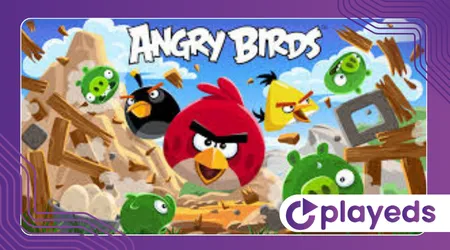
Few mobile games have had the cultural impact of Angry Birds. Since its release in 2009, this puzzle-based slingshot adventure has captured players worldwide with its deceptively simple mechanics: launch birds, topple towers, defeat pigs.
Yet beneath this playful exterior lies a deep strategy game that rewards precision, timing, and creative problem-solving.
More than a casual distraction, Angry Birds has become a case study in game design, physics-based entertainment, and even marketing innovation.
This article explores how Angry Birds evolved, why its gameplay still resonates, and what players can learn about strategy, patience, and timing from knocking down those seemingly fragile towers.
Summary
- The origins and cultural boom of Angry Birds.
- Why physics-based puzzles keep players engaged.
- The art of aiming: strategy, practice, and timing.
- Insights from game designers on why Angry Birds works.
- How new versions of the game expanded its mechanics.
- What casual gamers and professionals can learn from it.
- Frequently asked questions for fans and newcomers.
The Birth of a Mobile Gaming Icon
When Rovio Entertainment launched Angry Birds, the studio didn’t expect it to become a billion-dollar franchise.
What made the game explode was its combination of tactile physics and short, rewarding play sessions.
In a pre-Instagram and pre-TikTok world, Angry Birds was built for short bursts of attention—yet with endless replay value.
By 2012, the game had already surpassed one billion downloads. Researchers in mobile entertainment have since pointed to Angry Birds as a cornerstone in the rise of casual gaming, showing that complexity wasn’t necessary for global success—accessibility was.
+ EA Sports FC 25: Build Your Ultimate Team and Compete Against the Best Players
Why Physics-Based Gameplay Feels So Rewarding
The magic of Angry Birds lies in its physics engine. Unlike games with scripted outcomes, every launch feels unique.
The way blocks topple, pigs bounce, and structures collapse creates unexpected moments of triumph—or frustration.
According to interviews with mobile game designers, unpredictability keeps players engaged. Unlike chess, where the board is static, Angry Birds makes every move feel alive.
The weight of wooden planks, the fragility of glass, or the sturdiness of stone all require players to adjust strategies constantly.
This explains why some players spend hours perfecting a single level. The feedback loop—shoot, fail, learn, improve—creates the addictive sense of “just one more try.”
+ Candy Crush Saga: Match Colorful Candies and Master Strategic Combos
The Art of Smart Aim
Knocking down towers in Angry Birds isn’t about random shots; it’s about smart aim. Expert players often map out angles mentally before releasing the slingshot.
The concept mirrors real-world ballistics: trajectory, gravity, and momentum all affect the outcome.
One study on gaming behavior from the University of Helsinki observed that players subconsciously apply physics concepts when playing Angry Birds.
Without realizing it, they develop intuitive knowledge of force and trajectory similar to basic engineering principles.
Practical Tips for Perfect Aim:
- Analyze the weak point: Wooden supports under glass or stone often act as the Achilles’ heel of a structure.
- Use bird abilities wisely: The yellow bird accelerates mid-air, while the blue bird splits into three. Timing these abilities makes all the difference.
- Master the arc: Higher arcs provide more vertical destruction, while flatter ones deliver brute force horizontally.
- Don’t rush shots: Pausing to analyze the tower structure often saves multiple failed attempts.
Timing: The Hidden Key to Victory
While aim gets much attention, timing is equally critical. Activating special bird powers too early or too late can waste their potential.
For example, the black bird’s explosion can either devastate an entire structure or barely scratch it depending on precise timing.
Professional game streamers often emphasize that the rhythm of shots matters as much as the angle.
Firing too quickly after a collapse might prevent the tower from fully settling, leading to wasted opportunities. In contrast, waiting for debris to shift can open a perfect shot window.
Timing transforms Angry Birds from a casual pastime into a mindful exercise in patience and observation.
+ Night Dress: Unleash Your Inner Fashion Designer
Why Angry Birds Still Resonates Today
Over a decade later, new games flood the app stores daily, yet Angry Birds remains iconic. Why? Because it taps into universal human psychology: the satisfaction of cause and effect.
Watching a tower crumble after a perfectly aimed shot is intrinsically rewarding, a miniature version of watching dominoes fall or fireworks explode.
Additionally, the franchise’s evolution—from Angry Birds Space to Angry Birds Star Wars—has kept it fresh.
Each new version adds mechanics that challenge players differently, proving that simplicity combined with creativity never goes out of style.
Beyond Entertainment: What We Can Learn from Angry Birds
Angry Birds has been used in surprising contexts:
- Education: Teachers use it to illustrate physics concepts in classrooms.
- Marketing: The brand’s success in merchandising—from plush toys to movies—shows how digital-first IPs can dominate global culture.
- Problem-solving skills: Psychologists note that the game encourages trial-and-error learning, resilience, and analytical thinking.
In many ways, the game mirrors real-life challenges. Just like knocking down towers requires smart aim and timing, achieving goals in personal or professional life requires strategy, patience, and adaptability.
Conclusion
Angry Birds is far more than a nostalgic mobile game—it’s a cultural phenomenon and a subtle teacher of problem-solving, physics, and persistence.
The joy of knocking down towers comes not just from destruction but from the skill, patience, and strategy involved.
Whether you’re a casual gamer aiming for three stars or someone exploring the psychology of why games hook us, Angry Birds continues to deliver lessons worth noticing.
Frequently Asked Questions (FAQ)
1. Is Angry Birds still popular in 2025?
Yes. While its peak was in the early 2010s, the game continues to attract millions of players thanks to reboots, spin-offs, and nostalgia-driven downloads.
2. What makes Angry Birds different from other puzzle games?
Its unique combination of physics-based unpredictability, simple mechanics, and rewarding destruction loops keeps players hooked longer than many traditional puzzle apps.
3. Can Angry Birds really teach physics?
Indirectly, yes. While it won’t replace formal education, it gives players an intuitive grasp of angles, force, and momentum, which educators have successfully integrated into classroom lessons.
4. Are there competitive Angry Birds communities?
Absolutely. Online forums, YouTube speedruns, and even local tournaments still exist where players challenge each other for high scores and creative problem-solving approaches.
5. Will Angry Birds remain relevant in the future?
As long as mobile gaming thrives, will remain a symbol of intuitive design and clever simplicity—proof that a slingshot and some colorful birds can capture global attention.
