
Anúncios
An Arctic survival adventure requires far more than enthusiasm and cold-weather clothing; it demands absolute respect for one of the most unforgiving climates on Earth.
In environments where temperatures regularly drop below minus 40 degrees Fahrenheit and extreme winds can freeze exposed skin within minutes, survival becomes a precise science.
Understanding thermal insulation, cold-weather shelter construction, moisture management, and frostbite prevention is essential for anyone planning an expedition into the Arctic wilderness.
Whether you are preparing for a guided polar trek, a northern wilderness expedition, or building essential extreme-environment survival skills, mastering cold-weather protocols ensures safety and self-reliance.
This guide outlines the fundamental principles, gear strategies, and physical hazards of enduring extreme Arctic conditions.
Key Takeaways
- Layering Prevents Hypothermia: Managing sweat and body heat through a three-layer system (base, insulating, outer shell) is critical to avoiding freeze-induced moisture hazards.
- Shelter is Priority One: In severe wind conditions, constructing a snow trench or snow cave significantly reduces heat loss compared to standard alpine tents.
- Hydration Requires Heat: Snow must be melted and boiled before drinking to prevent rapid core temperature drops, demanding double the fuel supplies of standard trips.
- Frostbite Acts Quickly: Exposed flesh can freeze in under two minutes during heavy windchill conditions; constant physical monitoring is non-negotiable.
Understanding the Extreme Arctic Environment
The Arctic climate presents physiological challenges unlike any other geographical region.
Low air temperatures, high winds, prolonged darkness during winter months, and reflection off snowpack create an environment where energy expenditure doubles just to maintain basic core temperature.
When traveling through high-latitude wilderness, ambient temperature represents only a fraction of the total climate threat.
Windchill accelerates convective heat loss by stripping away the micro-layer of warm air trapped near your body.
According to the National Weather Service Windchill Chart, a quiet day at minus 10 degrees Fahrenheit can quickly turn hazardous if winds rise to 30 miles per hour, creating an effective windchill temperature below minus 35 degrees Fahrenheit.
The Physics of Heat Loss in Polar Regions
Body heat dissipates into frozen surroundings through four primary mechanisms:
- Conduction: Heat transferred through direct physical contact with cold surfaces, such as sleeping directly on snow or handling metal gear without gloves.
- Convection: Air movement across skin or thin clothing layers carrying away warm micro-climates.
- Radiation: Direct emission of electromagnetic infrared heat from uncovered body areas like the head, neck, and hands.
- Evaporation: Cooling caused by perspiration soaking into inner clothing layers, which later freezes and draws core heat outward.
++ The Invincible: Survive a Retro Sci-Fi Planet Full of Mysteries
Controlling these four mechanisms dictates every gear decision and tactical move during an Arctic expedition.
Essential Gear and Clothing Systems
Surviving extreme polar conditions requires an integrated gear system designed for thermal efficiency and durability.
Equipment failure in subzero environments can escalate into a critical emergency in minutes.
The Three-Layer Clothing Principle
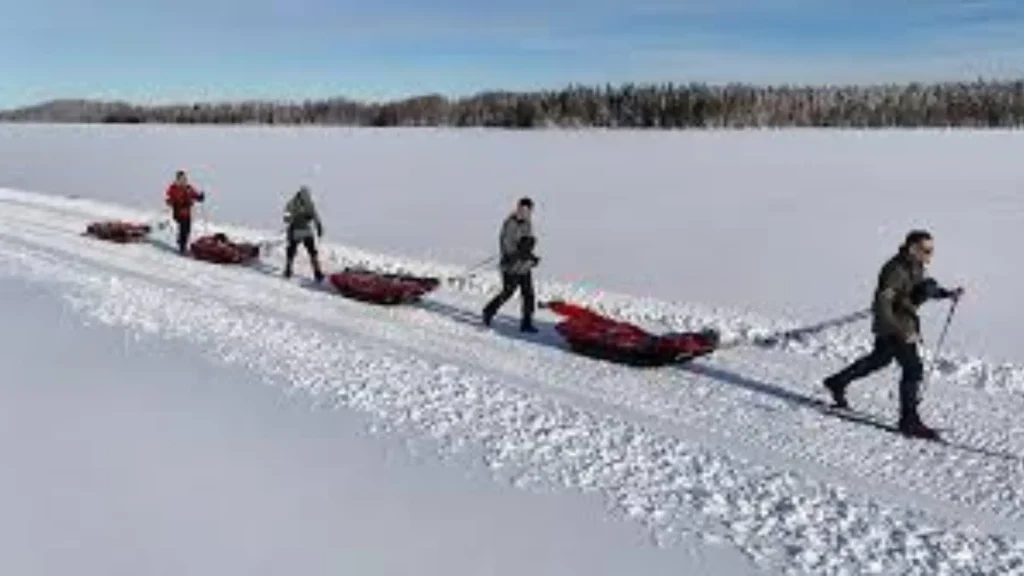
Managing core body temperature requires adjusting clothing layers actively during high-exertion activities like snowshoeing or pulling a sled (pulk).
Read more: The Star Named EOS: Capture Memories Through Photography Puzzles
Sweat is the primary enemy in cold climates because moisture conducts heat away from the body 25 times faster than dry air.
Base Layer (Moisture Management): Synthetic materials or high-grade merino wool worn tight against the skin wick moisture away. Never use cotton, as it retains water and collapses thermally when damp.
Insulating Layer (Thermal Retention): Thick fleece, high-loft down, or synthetic insulation traps stagnant air to preserve core warmth.
Synthetic fills perform better if moisture accumulates, while high-fill down offers superior warmth-to-weight ratios in dry subzero conditions.
++ Shadow Gambit: The Cursed Crew: Use Stealth Skills on Ghostly Missions
Outer Shell (Wind and Weather Protection): Breathable, windproof, and waterproof hard-shell jackets protect the insulation layers from driven snow and gale-force Arctic winds while allowing internal moisture vapor to escape.
Arctic Clothing Layer Comparison
| Layer Type | Recommended Materials | Primary Function | Common Pitfalls |
|---|---|---|---|
| Base Layer | Merino Wool, Polypropylene, Capilene | Wicks sweat from skin | Using cotton; wearing layers too tightly |
| Middle Insulation | 800+ Fill Down, PrimaLoft, Heavy Fleece | Traps warm air pockets | Overheating during active exertion |
| Outer Shell | Gore-Tex Pro, Ventile, Heavy Nylon Shell | Blocks wind and driving snow | Non-breathable coatings trapping moisture |
| Extremity Protection | Vapor Barrier Liners, Leather/Down Mitts | Prevents frostbite on fingers/toes | Tight footwear restricting blood circulation |
Cold-Weather Shelter Construction
When severe storms strike, finding or constructing shelter can mean the difference between safety and severe exposure.
Standard three-season tents will collapse under Arctic snow loads and high wind forces; expedition-grade polar tents or emergency snow shelters are imperative.
Emergency Snow Trench
If caught in an open whiteout without an expedition tent, a snow trench provides fast shelter from high winds.
Locate Deep Snow: Find a drifted snowpack away from avalanche paths and cornices.
Dig the Trench: Excavate a rectangular hole approximately two feet wide, six to seven feet long, and three feet deep.
Build a Cold Trap: Dig a foot-deep depression at the foot of the trench where cold air settles, keeping your sleeping platform elevated and warmer.
Cover the Roof: Lay skis, trekking poles, or sturdy branches across the top of the trench, covering them with a tarp and a thick layer of packed snow.
Ventilate: Punch a small air hole through the snow roof to allow oxygen flow and prevent carbon dioxide accumulation.
Snow Caves and Quinzhees
For long-term shelter during extended polar storms, snow caves carved into hard snowbanks or quinzhees built from piled snow offer stable internal temperatures near 32 degrees Fahrenheit, even when outside ambient temperatures reach minus 30 degrees Fahrenheit.
Proper ventilation holes are required at all times to prevent asphyxiation from carbon monoxide or dioxide.
Water, Hydration, and Nutrition
Dehydration is a subtle hazard in subzero conditions. Cold air holds very little atmospheric humidity, and respiratory water loss increases significantly as your lungs warm dry air with every breath.
Melting Snow for Water
Eating un-melted snow directly lowers internal core temperatures and accelerates hypothermia risks. All drinking water must be melted over a multi-fuel stove.
Always leave a small amount of liquid water at the bottom of the pot before adding fresh snow to prevent burning the pot bottom and scorching the water taste.
Pack double the estimated fuel capacity compared to summer trips to account for constant snow-melting needs.
Insulate water bottles inside foam sleeves or wool socks, and store them upside down in your pack so ice forms at the bottom rather than near the bottle opening.
Caloric Demands in Polar Climates
Maintaining body temperature in extreme cold demands high energy output. A person participating in a heavy Arctic survival adventure or winter expedition can burn between 4,500 and 6,000 calories per day. Meals must prioritize dense fats and complex carbohydrates that break down slowly, generating continuous thermal energy throughout the night.
Medical Hazards: Hypothermia and Frostbite
Recognizing early warning signs of environmental injuries allows for immediate intervention before conditions become life-threatening.
The CDC Guidelines on Hypothermia and Frostbite emphasize early detection of warning signs to prevent severe bodily harm in low ambient temperatures.
Hypothermia Prevention and Stage Awareness
Hypothermia occurs when the body loses heat faster than it can produce it, driving the core temperature below 95 degrees Fahrenheit.
Mild Hypothermia: Symptoms include uncontrollable shivering, slurred speech, and loss of fine motor skills in the fingers (“umbles”: stumbling, mumbling, fumbling).
Treatment involves moving out of the wind, changing into dry clothing, and drinking warm, sweet liquids.
Moderate to Severe Hypothermia: Shivering stops, confusion sets in, irrational behavior emerges, and muscle rigidity develops.
Severe cases require immediate medical evacuation, passive warming with dry insulation, and external heat sources applied carefully to the torso.
Preventing Frostbite
Frostbite is the freezing of body tissue, occurring most frequently on exposed cheeks, nose, ears, fingers, and toes.
- Frostnip (Early Stage): Skin turns pale or red and feels numb or tingling. Immediate rewarming using body heat (e.g., placing cold fingers in armpits) reverses the condition without permanent tissue damage.
- Deep Frostbite: Skin becomes hard, white, or waxy-looking and feels firm to the touch. Do not rub frostbitten tissue or expose it to open flames, as this destroys cell structures. Rewarm only when there is no risk of refreezing the tissue later, as refreezing causes catastrophic tissue loss.
Frequently Asked Questions
What is the most important rule of Arctic survival?
The single most critical rule in Arctic survival is maintaining dry insulation. Sweat, water, and melting snow destroy the thermal efficiency of clothing, rapidly leading to hypothermia in subzero temperatures.
How do you sleep comfortably in subzero temperatures?
Use a dual sleeping pad system (one closed-cell foam pad underneath an insulated inflatable pad) to stop conductive heat loss into the frozen ground.
Pair this with a winter sleeping bag rated at least 10 to 20 degrees below the anticipated minimum ambient temperature, and wear clean, dry base layers to bed.
Why are mittens better than gloves in extreme cold?
Mittens keep your fingers together inside a shared thermal air pocket, reducing surface area heat loss.
Gloves separate your fingers, increasing exposed surface area and significantly raising the risk of frostbite on cold digits.
Can you use standard gas stoves in the Arctic?
Standard canister stoves using butane or propane mixtures often fail in deep subzero temperatures because gas pressure drops significantly as temperatures plunge.
White gas (liquid fuel) stoves are preferred for polar expeditions because they can be manually pressurized and operate reliably in extreme cold.
Final Steps for Polar Preparation
Preparing for an Arctic survival adventure requires rigorous mental readiness, physical conditioning, and thorough equipment testing in controlled cold environments before venturing into remote northern regions.
Gain experience by taking winter wilderness survival courses, testing your gear setup on short overnight winter trips, and ensuring your medical and navigation skills are thoroughly honed.
Proper preparation transforms an intimidating polar environment into a rewarding, life-changing wilderness experience.
++ Being an adventure scientist can be epic, surreal … and perilous