
Death Stranding: Reconnect a Broken World One Step at a Time
Anúncios
Death Stranding stands as a monumental shift in interactive media, challenging our fundamental understanding of what a modern video game can achieve through narrative and mechanical innovation.
Summary
- Defining the unique genre of “Social Strand” games.
- Analyzing the gameplay loop and logistics of Sam Porter Bridges.
- Exploring the impact of the Decima Engine and 2025 updates.
- The philosophy of reconnection in a post-apocalyptic setting.
- Technical specifications and the upcoming sequel’s influence.
What is Death Stranding and its Cultural Impact?
Death Stranding is an ambitious open-world action game developed by Kojima Productions, initially released in 2019 and continuously evolving through its recent Director’s Cut editions.
Set in a United States fractured by a supernatural cataclysm, the game tasks players with delivering essential supplies to isolated colonies known as “Knot Cities.”
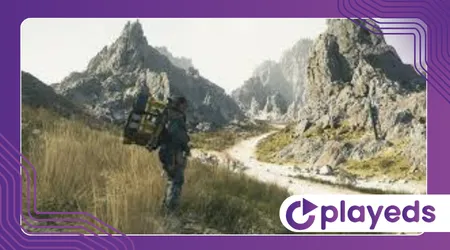
Unlike traditional combat-heavy titles, the core challenge involves navigating treacherous terrain while managing weight distribution, stamina, and the haunting presence of Beached Things (BTs).
The game introduced the concept of the “Social Strand System,” an asynchronous multiplayer feature where players help one another by building roads, bridges, and charging stations.
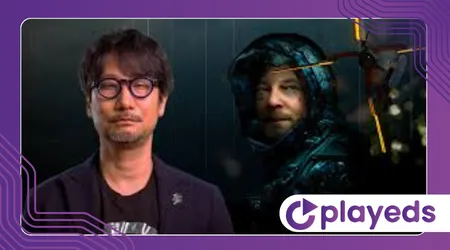
Hideo Kojima designed this experience to reflect the isolation of the modern digital age, emphasizing that true progress requires collective effort rather than individual violence.
By 2025, the game has reached over 16 million players across PlayStation and PC, proving that its unconventional “walking simulator” label was merely a surface-level interpretation.
This title reshaped industry expectations by proving that a high-budget “AAA” game could succeed while prioritizing empathy, logistics, and atmospheric storytelling over mindless action sequences.
How Does the Gameplay Loop Foster Connection?
Every journey in Death Stranding begins with meticulous planning, requiring players to scan topographical maps and select the right equipment for specific environmental hurdles.
You play as Sam Porter Bridges, a courier who possesses a unique physiological condition called DOOMS, allowing him to sense the spectral entities roaming the rainy landscape.
The gameplay revolves around the physical sensation of movement, where every uneven rock or rushing river poses a legitimate threat to your cargo’s integrity and Sam’s balance.
As you traverse the world, the “Chiral Network” expands, slowly revealing the footprints and structures left behind by other players in their own parallel game sessions.
You might find a ladder placed perfectly over a ravine or a generator situated right when your exoskeleton battery hits zero, creating a profound sense of gratitude.
This “Like” system functions as the primary currency, fostering a positive feedback loop that encourages altruism without the toxicity often found in competitive online gaming environments.
The loop is further deepened by “Timefall,” a mysterious rain that accelerates the aging of everything it touches, forcing players to move quickly and repair their gear frequently.
Why is Death Stranding Relevant in 2025?
With the recent release of the game on new platforms and the anticipation for the sequel, Death Stranding remains a focal point for discussions on isolation and infrastructure.
The themes of the game resonated deeply during the global pandemic, as real-world couriers became the vital links keeping a fractured society functioning under extreme biological pressure.
Technological advancements in the Kojima Productions Decima Engine have allowed the 2025 versions to feature stunning photorealism and seamless transitions between diverse biomes.
Players today appreciate the meditative quality of the gameplay, which offers a refreshing counterpoint to the fast-paced, dopamine-driven design common in contemporary live-service battle royale titles.
The narrative also tackles environmental collapse and the ethical implications of a connected hive-mind, topics that have become increasingly relevant in our current era of artificial intelligence.
Sam’s journey represents the human struggle to find meaning in a world that feels increasingly disconnected despite being more digitally linked than ever before in history.
The game’s persistence in the zeitgeist proves that players crave intellectual depth and emotional resonance, even if the mechanics require patience and a slower, more deliberate pace.
Technical Specifications and Performance Data
The evolution of the game has seen significant performance leaps, especially with the integration of DLSS and FSR technologies on modern hardware for ultra-wide monitor support.
++ Outer Wilds
| Feature | Director’s Cut (PS5/PC) | Original Release (PS4) |
| Resolution | Native 4K / Dynamic 4K | 1080p |
| Frame Rate | 60 FPS / Unlocked | 30 FPS |
| Haptic Feedback | DualSense Support | Standard Vibration |
| New Content | Ruined Factory / Racing | Base Game Only |
| Loading Times | < 2 Seconds (SSD) | 30-60 Seconds |
When Did the “Strand” Genre Change Gaming?
The release of Death Stranding marked the birth of a sub-genre where the environment itself acts as the primary antagonist rather than traditional scripted enemy encounters.
By shifting the focus from “how to kill” to “how to navigate,” Kojima forced players to engage with 3D space in a way that feels tactile and consequential.
This shift encouraged other developers to experiment with unconventional traversal mechanics and cooperative systems that do not involve direct combat or competitive leaderboards between players.
The “Strand” philosophy emphasizes that our actions have ripples, often helping people we will never meet, which is a powerful metaphor for social responsibility in reality.
Read more: Detroit
As we look toward the future of adventure gaming, the legacy of this title is found in games that prioritize atmosphere, world-building, and non-violent player interaction.
It proved that the journey is more important than the destination, a mantra that has inspired a new wave of “cozy” yet high-stakes survival games recently.
Which Tools are Essential for Success? Death Stranding
Success in Death Stranding depends on your ability to manage resources, specifically PCC units which allow for the construction of vital infrastructure like zip-lines and safehouses.
Armor plates and blood grenades are necessary for surviving encounters with Mules—rogue porters obsessed with cargo—and the terrifying “Catcher” BTs that emerge during heavy Timefall events.
The “Bridge Baby” (BB) serves as your bridge to the world of the dead, providing visual cues to avoid detection while maintaining a stressful, emotional bond.
Read here: Max Payne 3
Upgrading your boots and skeletons is mandatory for traversing the snowy mountain ranges of the Central Region, where oxygen levels drop and movement becomes significantly more difficult.
Every piece of equipment has a weight and a footprint, requiring a balance between being prepared for danger and maintaining the agility needed for steep mountain climbs.
Seasoned porters often carry repair spray to fix containers damaged by Timefall, ensuring that the “S-Rank” delivery rating is achieved for maximum likes and reputation growth.
Death Stranding
Death Stranding is more than a game; it is a profound commentary on the human condition and our innate desire to bridge the gaps between us.
By turning the simple act of walking into a complex mechanical system, Kojima Productions created an experience that rewards persistence, empathy, and careful strategic planning for every trip.
Whether you are scaling a mountain or driving a truck across a newly built highway, the sense of accomplishment comes from knowing you made the path easier.
As we prepare for the next chapter in Sam’s story, the original masterpiece remains a vital piece of art that everyone should experience at least once.
For more information on the development and future of this franchise, visit the Official PlayStation Death Stranding Hub for the latest updates.
Frequently Asked Questions
Is Death Stranding a horror game?
While it contains intense, suspenseful moments involving supernatural entities called BTs, it is primarily an open-world adventure focused on exploration, logistics, and philosophical storytelling.
Can I play Death Stranding offline?
Yes, the game is fully playable offline, but you will miss the “Social Strand” features, meaning you won’t see structures or helpful tools left by other players.
What is the goal of the game?
The main objective is to travel across the continent, connecting isolated cities to the Chiral Network while uncovering the mystery of the catastrophic event known as the Death Stranding.
How long does it take to finish?
A standard playthrough of the main story typically takes between 40 to 60 hours, though completing all side deliveries and infrastructure can exceed 100 hours of gameplay.
Is the Director’s Cut worth it?
The Director’s Cut is highly recommended as it adds new missions, combat mechanics, structures, and significant performance enhancements that provide a much smoother and more diverse experience.
++ The Beautifully Bizarre Journey I Didn’t Know I Needed
