
Firewatch: Explore the Wilderness and Unravel a Mysterious Story
Anúncios
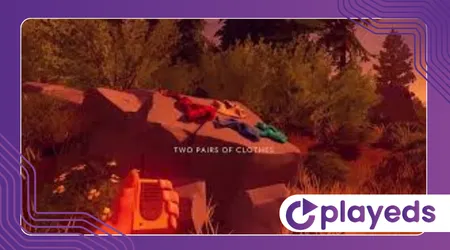
The moment you step into the world of Firewatch, you are immediately enveloped by the stunning, sun-drenched wilderness of the Shoshone National Forest.
This first-person mystery adventure, released by Campo Santo, plunges players into an evocative narrative.
It’s a game that expertly blends exploration, isolation, and a gripping, character-driven story.
What is the Core Experience of Firewatch?
Firewatch centers on Henry, a new fire lookout escaping personal turmoil.
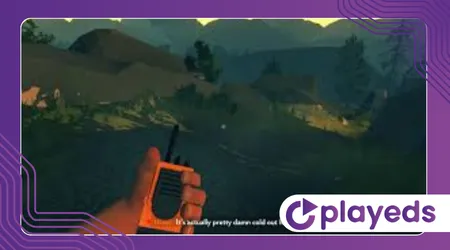
His only direct communication is with Delilah, another lookout miles away, via a handheld radio. The entire experience is a deeply immersive, atmospheric journey.
The Wyoming wilderness becomes a character itself, setting a tone of solitude and creeping unease.
The game mechanics are elegantly simple, focusing on traversal, observation, and dialogue choices. Players spend their days patrolling for smoke and the unexpected.
How Does the Narrative in Firewatch Unfold?
The story begins with a series of seemingly mundane tasks and radio chats with Delilah.
However, small, strange events soon begin to escalate into something far more sinister. This is where the game truly excels in building suspense.
It’s a testament to the writing that the mystery feels genuinely compelling and human.
Henry and Delilah’s relationship develops through their witty, tense, and vulnerable radio conversations.
Their voice acting is exceptionally authentic and helps to anchor the emotional weight.
Why is the Setting of Firewatch So Crucial to the Theme?
The remote setting amplifies Henry’s sense of isolation, making the player feel his vulnerability.
The deep woods act as a mirror to Henry’s internal emotional landscape.
His journey to find answers in the forest parallels his struggle to face his past.
This sense of being utterly alone in a massive, untamed landscape is a powerful storytelling device.
It raises the rhetorical question: Can true escape ever be found by simply running into the wilderness?
The world design employs a vibrant, stylized aesthetic that feels simultaneously nostalgic and awe-inspiring.
It cleverly uses color and light to convey different moods, from peaceful tranquility to unsettling shadows. This visual design is immediately recognizable and impactful.
What Makes the Dialogue and Character Interaction Stand Out?
The brilliance of Firewatch lies in its realistic, spontaneous-sounding dialogue system.
Players make choices that shape Henry and Delilah’s dynamic, lending weight to their exchanges.
It doesn’t rely on overly dramatic cutscenes, instead building intimacy through organic, conversational banter.
Delilah’s voice, filtered through the static of the radio, is often the only human sound for long stretches.
This limited channel of communication paradoxically makes the connection feel more immediate and vital.
Their discussions cover everything from the trivial to deep personal anxieties.
How Does Firewatch Subvert Typical Mystery Game Expectations?
Unlike many thrillers that promise an epic, world-ending confrontation, Firewatch grounds its mystery in human frailties and mistakes.
The resolution is intentionally understated and personal, focusing on consequences rather than grand conspiracy.
Read more: Beyond Two Souls
This approach offers a mature, nuanced exploration of responsibility, fear, and the search for meaning.
It’s an effective dramatic choice, trading explosive action for a quieter, more profound psychological impact. The game leaves you contemplating the difficult realities of life.
What Role Does Exploration Play in the Gameplay Loop?
Exploration is not merely a means of traversal; it’s an active part of the narrative and discovery.
Players navigate using an in-game map and compass, adding a tactile layer to the experience. Finding hidden caches and environmental clues enriches the backstory.
For example, discovering a discarded, half-written note about the forest’s history provides a chilling moment of connection to events past.
Another example is the feeling when you finally climb a ridge, and the entire vast forest opens up beneath you.
These moments connect the player directly to the environment.
A Look at Real-World Context and Impact
Firewatch received critical acclaim for its writing, atmosphere, and art direction.
It’s often cited as a prime example of an “walking simulator” elevating the narrative genre. This success is evident in its commercial performance.
According to data published by Campo Santo and parent company Valve (via Steam Spy historical data, where applicable), Firewatch had sold over 1 million copies by the end of 2016, cementing its status as a commercial success for an independent narrative title.
Read here: My Talking Tom
The game’s distinctive art style, designed by Olly Moss and Jane Ng, has inspired a movement toward simpler, more expressive aesthetics in indie games.
It demonstrates that visual fidelity does not always require photorealism. Instead, an intelligent use of color and stylized forms can be more emotionally resonant.
What is the Lasting Legacy of Firewatch?
Firewatch’s legacy is its proof that a focused, character-driven story can be powerfully immersive.
It operates like a well-crafted piece of literary fiction translated into an interactive medium. It successfully creates a sense of place and personal journey.
Imagine the game as an aging, well-loved vinyl record; the crackle and hiss of the radio static is the comforting imperfection.
It forces the player to slow down and truly listen. It prioritizes emotional truth over elaborate gameplay systems.
What Does the Data Tell Us About Narrative-Focused Games?
The success of titles like this highlights a growing appetite among players for rich, thoughtful storytelling.
| Year | Best-Selling Narrative/Adventure Game (Indie) | Estimated Units Sold (Lifetime) | Focus |
| 2016 | Firewatch | 3.5 Million+ | Character/Mystery |
| 2018 | Return of the Obra Dinn | 1.5 Million+ | Deduction/Mystery |
| 2019 | Disco Elysium | 5 Million+ | RPG/Dialogue |
This data shows a clear market for games where narrative and atmosphere are the primary selling points.
Firewatch remains a benchmark for this particular style of interactive storytelling. It proves that isolation and a compelling mystery are a potent combination.
Firewatch stands as a landmark in modern video game storytelling. It is a stunning, emotionally complex journey into the wilderness and the human heart.
It is an exploration well worth undertaking for anyone who values a sophisticated narrative.
Frequently Asked Questions
What platforms is Firewatch available on?
Firewatch is available on PC (Windows/macOS/Linux), PlayStation 4, Xbox One, and Nintendo Switch.
Is Firewatch a horror game?
No, Firewatch is not a horror game, though it contains strong elements of suspense, mystery, and psychological tension.
How long does it take to finish Firewatch?
A typical playthrough of Firewatch takes approximately 4 to 5 hours, as it is a highly focused narrative experience.
Does Firewatch have multiple endings?
No, Firewatch has a single, definitive ending, though the relationship you build with Delilah subtly affects the emotional impact of the conclusion.
++ Explore Wyoming forest and uncover a mystery in Firewatch
++ Wilderness exploration mystery Firewatch reveals gameplay in debut trailer
