
Tchia: Sail, Climb, and Soul Jump Across a Tropical Paradise
Anúncios
Tchia turns open-world exploration into an active conversation with landscape, wildlife, music, and physics, offering an adventure built around movement rather than conventional combat.
Tchia rewards players who value exploration over combat-heavy worlds in games.
Players can sail across turquoise lagoons, climb trees and cliffs, glide between viewpoints, dive beneath the surface, and temporarily inhabit animals or objects through Soul-Jumping.
Table of Contents
- How does exploration work?
- Why does sailing matter?
- What makes Soul-Jumping different?
- How authentic is the setting?
- What should new players know?
- FAQ
- Conclusion
How does exploration work?
Movement forms the central design language, because almost every destination can support several approaches instead of forcing one prescribed route through the environment.
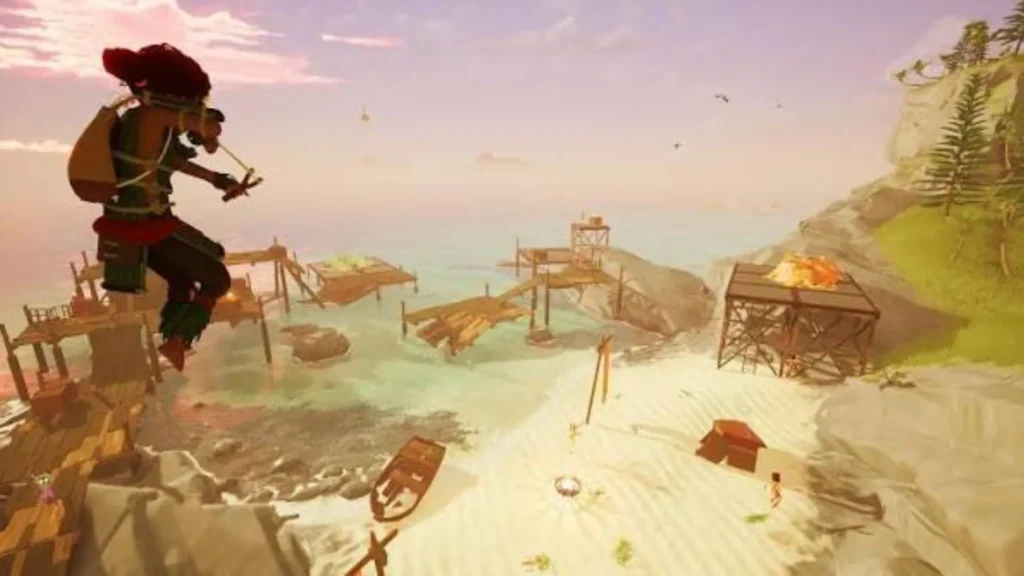
Free climbing lets players scale natural and constructed surfaces, while gliding and jumping create vertical shortcuts that make hillsides, settlements, and coastal landmarks feel interconnected.
Rather than treating traversal as transportation between missions, the game turns movement itself into an activity, rewarding curiosity with collectibles, environmental discoveries, challenges, and scenic viewpoints.
PlayStation’s official game page confirms unrestricted free climbing, customizable boat travel, diving around reefs and shipwrecks, and more than 30 playable animals.
Why does sailing matter?
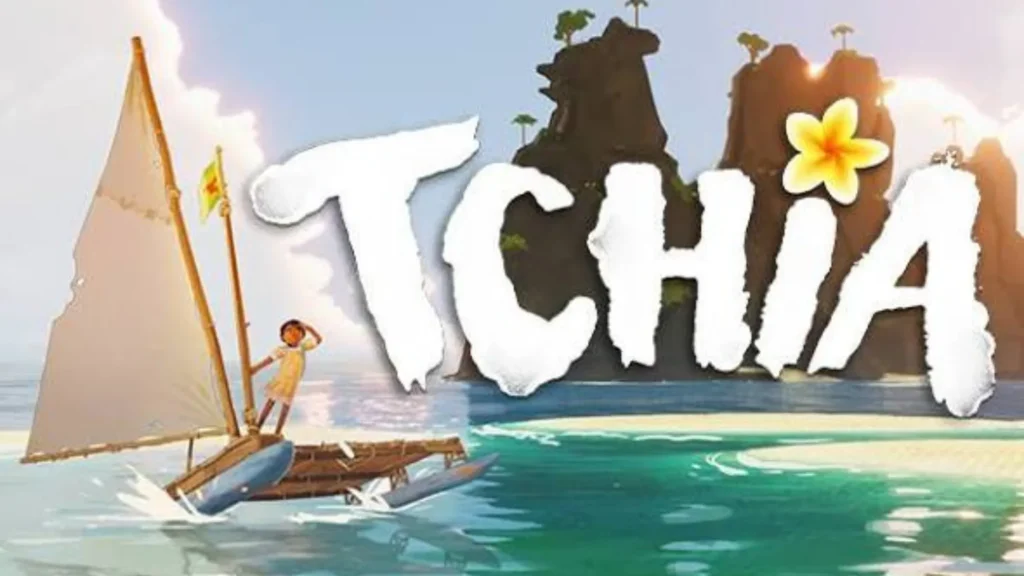
Sailing gives exploration a distinct rhythm because the ocean becomes connective tissue rather than empty space separating islands, beaches, reefs, and hidden locations.
The customizable boat also supports practical exploration, allowing players to travel comfortably across lagoons before jumping overboard to investigate underwater environments or approach shorelines.
That design choice matters for an adventure game: water does not simply mark the edge of the map; it expands the number of routes available.
New Caledonia provides a strong real-world reference point, since its lagoon surrounds Grande Terre and includes extensive reef ecosystems recognized by UNESCO for exceptional biological diversity.
What makes Soul-Jumping different?
Soul-Jumping supplies the game’s most distinctive mechanical idea, allowing Tchia to possess animals and selected objects and temporarily use their physical capabilities.
A bird can transform a difficult climb into aerial travel, while aquatic animals can open underwater routes that would otherwise require a slower approach.
According to the official PlayStation description, the game includes more than 30 playable animals and hundreds of objects, creating a substantial sandbox for experimentation.
++ Temple of Boom: Survive Dangerous Challenges and Discover Hidden Treasures
Importantly, possession is not merely cosmetic. Different creatures change movement possibilities, while objects can interact with puzzles, traversal situations, and encounters in ways that encourage improvisation.
How authentic is the tropical setting?
Authenticity begins with the developers’ connection to New Caledonia. Awaceb founders Phil Crifo and Thierry Boura grew up there, making local geography and culture foundational rather than decorative.
Their development process involved researching landscapes, wildlife, languages, customs, music, and cultural references, according to PlayStation’s development coverage and interviews with the studio.
The fictional setting should therefore not be mistaken for a literal recreation of New Caledonia. Instead, it translates recognizable environmental and cultural influences into a fictional adventure world.
That distinction matters when evaluating representation. A game can draw deeply from a real place without claiming to reproduce its history, communities, or geography with documentary precision.
Music strengthens that connection. The ukulele functions as both an expressive instrument and a gameplay system, letting players learn songs and trigger special musical effects.
Unreal Engine also supports the world’s physicality.
Read more: Spirit of the North 2: Journey Across Ancient Lands with a Fox
Developer interviews describe a physics-driven sandbox alongside climbing, gliding, swimming, sailing, and other locomotion systems designed around player experimentation.
What do the numbers reveal about the setting?
The game’s tropical atmosphere draws credibility from an actual environment with unusually rich marine and terrestrial biodiversity, although game statistics should never be treated as ecological measurements.
| Reference point | 2026-verified fact | Why it matters |
|---|---|---|
| Playable animals | 30+ | Broadens traversal options |
| Playable objects | Hundreds | Expands experimentation |
| New Caledonia reef length | About 1,600 km | Grounds the maritime inspiration |
| UNESCO lagoon area | About 15,000 km² | Demonstrates environmental scale |
| UNESCO listing | 2008 | Confirms international recognition |
These figures separate documented game mechanics from real-world environmental facts, an important distinction for readers who want evidence rather than exaggerated marketing language.
++ The Future of Gaming: Predictions That Could Redefine the Industry
UNESCO identifies New Caledonia’s lagoons and reefs as one of the world’s three most extensive reef systems, with habitats ranging from mangroves to seagrasses.
How should new players approach the adventure?
Start by resisting the urge to optimize every objective. The strongest moments often emerge when players follow an unexpected coastline, climb simply because something looks reachable, or investigate unusual wildlife.
Experiment with Soul-Jumping frequently because each animal effectively becomes a temporary traversal tool, changing how you interpret terrain and solve environmental problems.
Keep the boat available when exploring coastal regions. Sailing reduces unnecessary backtracking and makes remote islands, reefs, and underwater locations easier to connect within a single expedition.
Use the ukulele beyond mandatory moments. Its interactive design contributes to the game’s sense of place, while musical systems provide another layer of experimentation between exploration sequences.
Approach the fictional culture respectfully by remembering its real-world inspirations.
Learning about New Caledonia independently can deepen appreciation without confusing the game’s invented setting with the territory itself.
For environmental context, UNESCO’s official World Heritage overview explains why New Caledonia’s lagoons matter scientifically, including their coral diversity, associated ecosystems, and threatened marine species. (UNESCO World Heritage Centre)
What makes the adventure memorable?
Its strongest achievement comes from integration. Sailing, climbing, gliding, music, animal possession, environmental puzzles, and cultural references reinforce one another instead of operating as isolated features.
A player might sail toward an island, climb a tree for a better view, possess a bird to cross a gap, then use music to alter the environment.
That sequence demonstrates why the game belongs firmly within the adventure genre: discovery drives progression, while mechanics encourage players to treat the world as a toolkit.
FAQ
Is Tchia an open-world game?
Yes. The game presents a large explorable archipelago where players can move across land and water with considerable freedom, using multiple traversal systems to reach destinations.
Can players explore underwater areas?
Yes. Players can dive around coral reefs and shipwrecks, and Soul-Jumping into aquatic animals provides another way to interact with the marine environment.
How many animals can players control?
The official PlayStation listing states that players can control more than 30 animals, alongside hundreds of objects, creating varied options for exploration and puzzle-solving.
Is the setting based on a real place?
The world is fictional but strongly inspired by New Caledonia, the Pacific archipelago where Awaceb’s founders grew up and drew cultural and environmental inspiration.
Conclusion
For adventure fans, Tchia offers a persuasive alternative to checklist-driven open worlds by making movement, experimentation, and environmental curiosity central to the experience.
Its greatest strength is not any single mechanic, but the way sailing, climbing, Soul-Jumping, music, and setting continually create new relationships between player and landscape.
The evidence also supports a more nuanced appreciation: New Caledonia supplies genuine ecological and cultural inspiration, while the game remains a fictional interpretation rather than a geographic simulation.
If you value exploration that rewards observation and experimentation, Tchia deserves consideration, especially when approached with curiosity about both its game systems and its real-world influences.
For authoritative environmental context, explore UNESCO’s World Heritage documentation on the Lagoons of New Caledonia and compare the real ecosystem with the game’s imaginative interpretation, with careful attention to context overall.
++ Tchia Review – A Tropical Paradise with Soul
++ Take control of any animal or object in a tropical open-world adventure
