
The Future of Gaming: Predictions That Could Redefine the Industry
Anúncios
Grab a controller today, and you are holding a completely different medium than you were just five years ago.
Players no longer just consume static stories; they participate in living, breathing ecosystems that adapt to their specific playstyles.
Understanding the future of gaming requires looking past simple hardware upgrades and examining how artificial intelligence, cloud infrastructure, and creator economies are merging to transform entertainment.
As we navigate through 2026, the industry is shifting away from isolated console wars toward universally accessible platforms.
You are likely wondering how these rapid technological advancements will impact your gaming experience, privacy, and wallet.
This article breaks down the verifiable trends and structural changes reshaping the landscape right now.
Key Takeaways:
- Generative AI is replacing scripted NPCs with dynamic, context-aware characters.
- Cloud gaming has moved from a novelty to a primary delivery method due to mature 5G infrastructure.
- User-Generated Content (UGC) is transforming players into compensated developers.
- Interoperability between platforms is breaking down traditional hardware barriers.

What Are the Biggest Technological Shifts Driving the Industry?
Hardware limitations used to define what developers could achieve. Studios spent years optimizing code just to fit a game onto a physical disc or run smoothly on a specific processor. That paradigm is fracturing.
Today’s fundamental shift relies on offloading computational heavy lifting from local devices to massive server farms.
Massive advancements in spatial computing and neural rendering allow developers to push photorealistic environments without demanding players purchase $2,000 graphics cards.
Instead of rendering every pixel locally, artificial intelligence upscales images in real-time, saving bandwidth while maximizing visual fidelity.
To understand how rapidly algorithms are changing interactive media, you can explore recent breakthroughs in machine learning directly through research hubs like MIT’s Artificial Intelligence coverage.
Researchers are continuously proving that machine learning models can generate expansive, logical game worlds on the fly, reducing development time by thousands of hours.
How Does Artificial Intelligence Change Player Experiences?
Artificial intelligence no longer just dictates pathfinding or enemy accuracy. Generative AI models are fundamentally altering how narratives unfold inside game worlds.
Traditional Non-Playable Characters (NPCs) rely on decision trees. You ask a question, and the character responds with a pre-recorded audio file.
Modern implementations use Large Language Models (LLMs) integrated directly into the game engine.
These characters possess memories, react to your specific tone of voice, and generate unique dialogue that fits the lore of the world.
Dynamic difficulty adjustment also benefits heavily from these algorithms. Rather than choosing between “Easy” or “Hard,” the system analyzes your reaction times, strategy, and stress levels.
++ The Evolution of Video Game Easter Eggs Through the Years
The game then subtly adjusts enemy spawn rates, resource availability, and puzzle complexity to keep you in a state of optimal flow.
Why Is Cloud Gaming Finally Becoming the Standard?
Latency killed the first wave of cloud gaming. Early adopters experienced frustrating delays between pressing a button and seeing an action on screen.
Maturing telecommunications infrastructure has largely solved this bottleneck.
With nationwide broadband expansions and widespread cellular upgrades, reliable high-speed internet is far more ubiquitous in 2026.
You can read about the ongoing federal initiatives to ensure low-latency connectivity across the country via the FCC’s official broadband data.
Edge computing plays a massive role in this success. By placing servers physically closer to neighborhoods rather than in centralized coastal data centers, providers have reduced ping times to imperceptible levels.
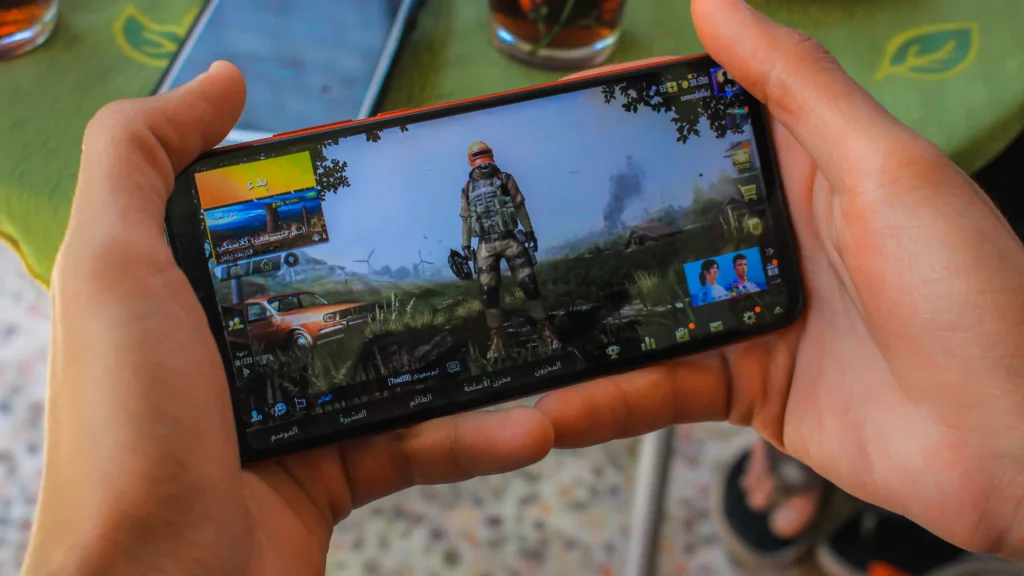
Gamers can now stream AAA titles directly to smart TVs, tablets, or underpowered laptops with the same responsiveness as a local console.
Which Emerging Business Models Will Dominate?
Purchasing a game for $70 and playing it until completion is becoming a niche experience. Studios require continuous revenue to support live-service models, server costs, and massive development teams.
Subscription services have completely altered consumer expectations. Players now expect instant access to a library of hundreds of titles for a flat monthly fee.
This model forces developers to prioritize retention over initial sales. A game must remain engaging for months, or players will simply uninstall it and download something else from the catalog.
Read more: The Best iPhone Games Released This Week
The creator economy represents the other massive financial shift. Platforms like Roblox and Fortnite serve as foundational layers where independent creators build entirely new games within the existing engine.
These platforms share revenue directly with creators based on player engagement, effectively turning teenagers and hobbyists into millionaire studio executives.
How Do Different Gaming Eras Compare?
Visualizing this evolution helps clarify exactly where the industry is heading. Below is a breakdown of how the core pillars of gaming have transitioned over recent years.
++ RoboCop: Rogue City: Protect Detroit and Deliver Cybernetic Justice
| Feature | Traditional Era (Pre-2020) | Current Era (2026) | Primary Benefit |
| Delivery | Physical Discs / Large Downloads | Cloud Streaming / Smart Downloads | Instant access, zero storage anxiety. |
| Monetization | One-time purchase + DLC | Subscriptions + Creator Economies | Lower barrier to entry for players. |
| Narrative | Scripted, linear dialogue trees | AI-driven, dynamic interactions | Highly personalized replayability. |
| Hardware | Walled-garden consoles | Cross-platform, agnostic screens | Play anywhere, with anyone. |
| Development | Manual coding & asset creation | AI-assisted procedural generation | Faster release cycles, richer worlds. |
What Are the Next Steps for Gamers and Developers? future of gaming
Adaptability remains the most crucial skill for anyone involved in this ecosystem.
Developers must learn to prompt and guide AI tools rather than manually animating every frame. Studios failing to embrace cross-platform interoperability will likely alienate their player base.
Gamers should focus on securing robust internet connections rather than continuously upgrading local hardware.
Investing in a high-quality mesh router or upgrading to a fiber-optic tier will yield better gaming performance than buying the latest console mid-cycle.
The medium is expanding beyond a solitary screen in a dark room; it is becoming a pervasive, accessible layer of daily entertainment.
Frequently Asked Questions
Will traditional gaming consoles completely disappear?
Consoles will not disappear entirely in the near future, but their purpose is shifting.
They are evolving into optimized streaming boxes and local network hubs rather than strictly functioning as local rendering machines.
How does spatial computing impact competitive gaming?
Spatial computing and Augmented Reality (AR) introduce physical movement and 3D space into strategy.
While traditional eSports still rely on monitors and high refresh rates, new competitive leagues are emerging that require physical endurance combined with digital accuracy.
Are AI-generated games safe and regulated?
Major platforms enforce strict moderation filters on AI-generated content to prevent toxic or inappropriate material.
However, the technology moves faster than regulation, requiring players to utilize reporting tools when dynamic systems produce unexpected or offensive behavior.
Does cloud gaming require huge amounts of data?
Yes. Streaming a game in 4K resolution can consume upwards of 15 to 20 gigabytes per hour.
Players relying on cellular networks or internet plans with strict data caps must monitor their usage carefully or adjust their streaming resolution.
++ 8 key trends in the games industry from The Game Business
++ 6 predictions for the future of gaming in 2026
