
Overwatch 2: Pick Heroes and Win Matches with Teamwork and Strategy
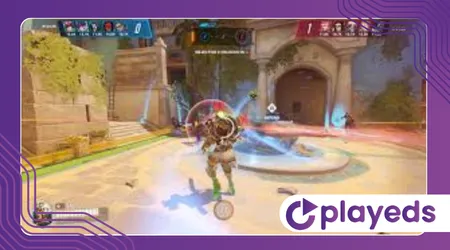
A new wave of strategic gameplay has arrived, and understanding how to pick heroes is the key to winning in Overwatch 2.
Anúncios
This is more than a simple shooter; it’s a dynamic puzzle where individual skill must align with a team’s collective genius.
Victory hinges on a deep understanding of your team’s composition, the enemy’s setup, and the specific challenges of the map. Neglecting this crucial phase is a common mistake.
The Art of Hero Selection: Beyond Personal Preference
You can’t just pick your main and expect to win. Every hero choice must be a calculated response to the situation at hand.
A hero that dominates one map might struggle on another. The game demands adaptability.
This strategic layer is what separates good players from great ones. The true masters of the game are those who read the battlefield before the first shot is even fired.
They analyze the enemy team and anticipate their ultimate abilities.
A solid team composition creates a foundation for success. You need a balanced lineup with the right synergy. A team of damage heroes without a tank or support is a recipe for disaster.
Understanding Roles and Counters
Each of the three roles—Tank, Damage, and Support—has a unique purpose. The Tank’s job is to create space and absorb damage.
Damage heroes focus on eliminating threats. Support heroes keep everyone alive and provide utility.
Counter-picking is a fundamental skill in Overwatch 2. If the enemy has a dominant Pharah, for instance, a hero like Soldier: 76 or Sojourn with strong hitscan abilities becomes a priority.
If they have a dive composition with Winston and Genji, a more defensive hero like Brigitte can disrupt their plan.
The game meta is constantly shifting with new patches and hero changes.
What was strong last season might not be viable now. Staying informed is just as important as having good aim.
The Power of Synergy: Teamwork in Action
Synergy is when heroes work together to amplify each other’s strengths. It is a concept that turns a group of players into a single, cohesive unit.
A prime example is the classic “Gravitic Flux” and “Shatter” combo.
Read more: Apex Legends: Choose Your Legend and Dominate the Battlefield with Skill
Imagine a scenario where a Sigma uses his ultimate, Gravitic Flux, to lift the entire enemy team into the air.
Before they even land, your Reinhardt charges in with his Earthshatter ultimate.
This one-two punch can completely wipe a team. It’s an original combination of a powerful lifting ability with an area-of-effect stun.
Another example involves a hero like Orisa and a hero like Ana.
If Ana lands a successful Sleep Dart on an enemy tank, Orisa can follow up with her Javelin Spin to push the sleeping target into a vulnerable position. The enemy team can then be quickly dismantled.
Communication: The Hidden Stat
Individual skill and hero selection are vital. But communication is the most powerful tool available to a team. A well-placed callout can save a teammate’s life.
It can prevent a surprise flank or coordinate a push. A single voice saying “Tracer behind” can turn a lost fight into a win. It allows for the synchronization of ultimate abilities.
According to a study conducted by the Overwatch 2 community tracking site Overbuff in late 2024, the average win rate for players who actively use voice communication in competitive matches is approximately 5.8% higher than for those who do not.
This small detail can make all the difference.
The Chess Game of Hero Swaps
Winning isn’t just about the hero you start with. It’s about being willing to adapt throughout the match.
Sometimes, a hero swap is necessary to respond to the enemy’s strategy. This is a subtle yet critical aspect of high-level play.
A game of Overwatch 2 can be compared to a high-stakes chess match. Every hero pick is a move, and every counter-pick is a response.
You are not just reacting, but thinking several moves ahead, predicting your opponent’s next action.
Read here: Cloud Gaming Explained: Play Without a Console or PC Anywhere You Go
For example, if the enemy switches to a double-hitscan composition to deal with your Pharah, you might swap to a different damage hero.
The flexibility to change heroes allows teams to outmaneuver their opponents. It’s a dynamic process of adaptation.
What the Pros Know: Analyzing the Meta
The professional scene provides a wealth of data on what works.
Hero win rates and pick rates tell a story about the current state of the game. A look at the meta can inform our own hero selections.
++ Madden NFL 23: Plan Strategies and Dominate the Gridiron Like a Pro
The following table, based on aggregated data from top-tier competitive play from early 2025, shows how certain heroes are currently performing.
| Hero (Role) | Win Rate (%) | Pick Rate (%) |
| Sigma (Tank) | 51.52% | 1.30% |
| Zarya (Tank) | 51.84% | 2.30% |
| Tracer (Damage) | 53.69% | 3.49% |
| Torbjörn (Damage) | 60.16% | 1.69% |
| Kiriko (Support) | 48.38% | 1.49% |
| Ana (Support) | 45.09% | 4.30% |
This data confirms that hero effectiveness is not just about raw power but also about their role in the team composition.
Torbjörn’s high win rate, for example, is often tied to his strong defensive presence on certain maps.
The information is a roadmap for what to practice. It is important to note that a hero with a low win rate might still be powerful in the right hands.

Mastering the Mindset
Victory in Overwatch 2 is not solely about your aim. It’s about a blend of game sense, strategic thinking, and flawless teamwork. Choosing the right hero is just the first step.
The key to climbing the ranks is understanding hero counters, building synergy, and communicating effectively.
It’s a holistic approach to the game. When your team works as one, your individual abilities become exponentially more effective.
The game is a constant test of your ability to adapt and collaborate. How will you elevate your game and lead your team to victory in Overwatch 2?
Frequently Asked Questions
Is it okay to main one hero?
While it’s great to master a hero, being a “one-trick pony” can hurt your team. A flexible hero pool with at least two or three heroes per role is highly recommended.
How do I get better at communication?
Start simple. Call out enemies you see, where they are, and which heroes they are playing. Use simple, direct language like “Tracer behind” or “Winston diving.”
Where can I find up-to-date hero stats?
Websites like Overbuff, Overwatch League, and other community-run stat trackers are excellent resources for staying current with hero performance data.
++ 5 BASIC tips to win more games
Popular Now