
Rocket League: Drive Cars, Score Goals, and Dominate the Arena

Anúncios
Rocket League has firmly established itself as a monumental force in the world of competitive gaming.
This unique fusion of high-octane vehicular combat and the strategic depth of soccer captivates millions.
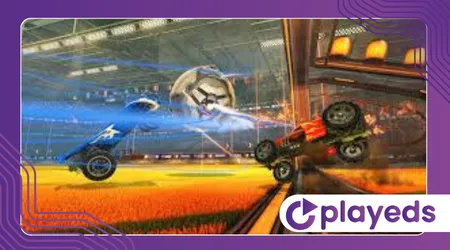
The premise is deceptively simple: two teams of rocket-powered cars clash on an enclosed pitch, vying to knock an oversized ball into the opponent’s net.
However, the execution is anything but easy, demanding hours of dedicated practice.
The game is a masterclass in accessible yet complex design. Anyone can pick up the controller and enjoy a match immediately.
Yet, truly mastering the aerial maneuvers, precision dribbles, and wall-shots requires incredible skill.
This dual nature is the secret sauce behind its sustained relevance in the esports landscape.
The Evolution of the Game: From Indie Hit to Global Phenomenon
Rocket League’s journey from its predecessor, Supersonic Acrobatic Rocket-Powered Battle-Cars, is a fascinating study.
Psyonix, the developer, refined the core concept into a polished, competitive package.
The initial release in 2015 was met with massive critical and player acclaim, fueled by its inclusion in PlayStation Plus.
The game’s sustained growth highlights its brilliant core mechanics. Unlike traditional sports games, it offers a physics-based playground.
Players gain complete control over their vehicle’s momentum and orientation in a 3D space, which allows for breathtaking, improvisational plays.
The acquisition by Epic Games in 2019 and the subsequent transition to a free-to-play model in 2020 injected new life.
This move dramatically lowered the barrier to entry, flooding the servers with new talent. The competitive ladder instantly became deeper and more diverse.
Mastering the Mechanics: Beyond the Boost Pad
Effective boosting and optimal resource management separate the casual player from the elite.
The “boost” mechanic is not merely a speed increase; it’s the engine for aerial maneuvers. Learning to conserve and collect boost pads strategically is as crucial as knowing when to shoot.
The learning curve is often described as vertical, but consistently rewarding.
Players must internalize complex mechanics like half-flips for rapid recoveries and wave-dashes to maintain speed. These advanced techniques fundamentally alter the pace of high-level matches.
Consider the complexity of a well-executed air dribble.
Read here: NHL 23: Skate, Pass, and Score Goals in Fast-Paced Ice Hockey Action
A player must maintain continuous contact with the ball using their car’s nose, guiding it toward the goal while opponents scramble to defend.
This requires micro-adjustments and exceptional car control, an impressive feat of digital athleticism.
The Art of Positional Play Rocket League
Individual mechanical skill is essential, but proper team rotation is the bedrock of competitive success. Players must fluidly transition between offense, defense, and midfield support.
This dynamic three-person rotation mirrors the off-the-ball movement seen in top-tier soccer or hockey.
Poor positioning often results in the dreaded double-commit, leaving the net completely undefended.
A strong team understands that the player farthest back dictates the defense’s tempo and coverage. Every player must trust their teammates to fill the void they leave when attacking.
Check this out: Madden NFL 23: Plan Strategies and Dominate the Gridiron Like a Pro
Imagine a tightly choreographed ballet, but with rocket cars instead of dancers. Each move, boost, and jump must be in harmony for the team to succeed.
The positional discipline required elevates the game far beyond a mere destruction derby.
Rocket League in the Esports Arena: A League of Its Own
The Rocket League Championship Series (RLCS) represents the pinnacle of professional competition. It showcases the highest level of skill, strategy, and teamwork on a global stage.
The consistent, high-stakes tournament format keeps the professional scene vibrant and engaging for spectators.
The RLCS ecosystem, featuring open qualifiers and regional majors leading to a World Championship, provides a clear path to pro status.
This accessibility has fostered incredible regional talent development worldwide.
| RLCS Season (Example Year) | World Championship Prize Pool (Approx.) | Global Regions Represented | Unique Viewers (Example Event) |
| RLCS 2024-2025 | $6,000,000 | North America, Europe, MENA, SAM, APAC, OCE, Sub-Saharan Africa | 1.1 Million |
Psyonix/Epic Games official RLCS announcements and publicly reported viewership data for major events.
The prize pool growth reflects the title’s increasing commercial and cultural value within esports.
The professional players are now legitimate sporting icons, celebrated for their jaw-dropping aerial prowess.
++ Assassin’s Creed Odyssey: Sail the Seas and Forge Your Path in Ancient Greece
One relevant statistic highlights this growth: The peak concurrent viewership for the 2024-2025 RLCS World Championship saw an increase of nearly 30% over the previous year’s finals, underscoring its escalating mainstream appeal.
This massive increase demonstrates that the game’s competitive future is incredibly bright.
The Community and Creativity: Beyond the Competitive Grind
While competition is the headline, the community’s creative side is the heart. The game’s workshop maps and training packs provide endless opportunities for skill improvement and casual fun.
These community-driven creations extend the game’s shelf-life immeasurably.
For example, players create custom rings maps that test extreme car control, requiring incredibly precise micro-adjustments to pass through tight circular gates mid-air.
Another original example is the “Dribbling Challenge” map, which forces players to maintain continuous ball control over an intricate obstacle course.
This dedicated community engagement, paired with the constant stream of cosmetic content, ensures that Rocket League remains fresh. It’s like a digital Swiss Army knife: a competitive sport, a casual pastime, and a platform for creative expression, all rolled into one.
Driving Forward Rocket League
Rocket League is much more than a simple video game; it is a dynamic, fast-paced sport with an established global infrastructure.
Its blend of physics, strategy, and raw mechanical skill provides a perpetual challenge that keeps the player base engaged.
It has cemented its position in the sports world by consistently evolving and rewarding dedication.
Will any other title ever manage to so perfectly combine the joy of driving with the thrill of scoring? Time will tell, but for now, the rocket-powered cars reign supreme.
Frequently Asked Questions
What is the current platform status for Rocket League?
Rocket League is currently free-to-play and available on all major platforms, including PC (Epic Games Store and Steam), PlayStation 4, PlayStation 5, Xbox One, Xbox Series X/S, and Nintendo Switch, featuring full cross-platform play.
How long does a typical Rocket League match last?
A standard competitive match lasts five minutes of regulation time. If the score is tied, the game enters sudden death overtime, which continues until one team scores a goal.
What are the different competitive ranks in the game?
The competitive ranks, from lowest to highest, are Bronze, Silver, Gold, Platinum, Diamond, Champion, Grand Champion, and the elite Supersonic Legend.
Each rank is further divided into three divisions.
Is a strong internet connection necessary for competitive play?
Yes, due to the fast-paced, physics-based nature of the game, a stable, low-latency internet connection is critical for competitive integrity and optimal performance, especially for aerial play.
++ Scoring 1 AMAZING Goal With Every Car
