
Solitaire: Enjoy the Classic Card Game Anytime, Anywhere
Anúncios
Solitaire serves as a quiet rebellion against the loud, over-stimulated landscape of modern gaming, offering a deliberate pace that rewards the patient mind.
While most digital hobbies demand twitch reflexes or constant social interaction, this century-old ritual remains a solitary sanctuary.
Mastering the deck isn’t just about moving cards; it’s about navigating the tension between the luck of the shuffle and the logic of the solve.
Summary of Contents
- The psychological rhythm of card sorting.
- What is the actual win condition?
- How does the initial layout dictate your strategy?
- Why does this game remain a cognitive powerhouse?
- Which variations provide the steepest learning curves?
- Data-driven comparison of gameplay modes.
- Common player inquiries answered.
What is the primary goal of Solitaire?
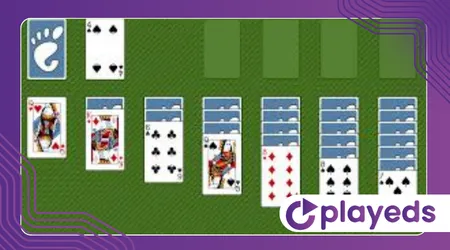
The objective feels deceptively simple: transport a chaotic mess of fifty-two cards into four orderly foundation piles.
These piles must be built by suit, starting with the elusive Ace and climbing toward the King.
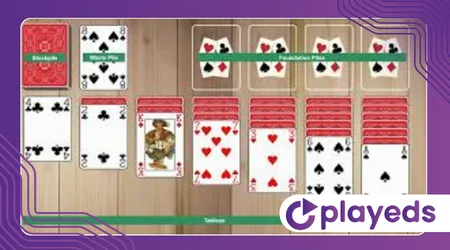
However, the true game happens in the tableau, where you must manipulate seven columns to uncover face-down cards that hold your progress hostage.
Success requires a sharp eye for sequences. You are essentially untangling a knot that the deck has tied for you, shifting red and black cards in alternating order.
It is a game of visibility—the more cards you reveal, the more control you regain over a seemingly random fate.
How does the initial setup affect your winning chances?
Every round begins with a specific geometry: twenty-eight cards arranged in a cascading staircase.
Only the top card of each stack is visible, leaving the majority of the deck shrouded in mystery.
This setup is the game’s greatest hurdle because a “bad” distribution can bury essential low cards under heavy Kings and Queens.
Smart players don’t just move cards because they can; they move them to expose the largest hidden stacks.
++ Wordscapes: Relax While Solving Beautiful Word Puzzles
Clearing the right-most columns early is often more beneficial than scoring quick points, as it creates the maneuverability needed for the late game. Without open space, your strategy will eventually suffocate.
Why has Solitaire remained popular in 2026?
There is something deeply satisfying about bringing order to chaos.
In a year defined by digital noise, the rhythmic clicking of cards provides a grounding experience that few other apps can replicate.
It isn’t just a time-killer; it’s a mental reset that helps synchronize focus and breathing, acting as a low-stakes puzzle for a high-stress world.
Accessibility plays a massive role here, too. Whether you are using a physical deck or a minimalist app, the barrier to entry is non-existent.
For those curious about how such simple mechanics affect our brains, exploring the psychological benefits of casual gaming offers a fascinating look at why our minds crave these patterns.
When should you use the stockpile during a match
The stockpile is your secondary lifeline, used only when the tableau has reached a temporary dead end.
Drawing cards—either one by one or in blocks of three—introduces new variables into the equation.
Yet, many players lean on the draw pile too early, missing subtle opportunities already sitting right in front of them.
Ideally, the stockpile should be treated as a surgical tool rather than a crutch. Exhaust every possible move on the board before reaching for the deck.
Read here: Piano Tiles 2: Test Your Reflexes with Fast Music Challenges
This disciplined approach prevents you from cycling through the cards too quickly and accidentally burying a card you desperately need.
Which variations of Solitaire provide the most variety?
If Klondike is the gateway, then Spider and FreeCell are the deep ends of the pool.
Spider utilizes two full decks, creating a sprawling, intimidating landscape that demands intense concentration.
FreeCell, conversely, removes much of the luck, providing four “open cells” that act as temporary storage, making almost every single deal a solvable logic puzzle.
Switching between these modes prevents the experience from becoming mechanical.
While one rewards intuition and risk-taking, the other demands cold, calculated foresight.
++ Kingdom Hearts III: Join Sora and Friends to Save Magical Worlds
This variety ensures that the game evolves alongside the player’s skill level, shifting from a relaxing pastime to a rigorous mental workout.
What are the key differences between popular versions?
The choice of version usually reflects how much “chaos” a player is willing to tolerate. Some prefer the gamble of a difficult shuffle, while others want a game where every loss is purely their own fault.
Solitaire Variant Comparison Table
| Feature | Klondike | Spider | FreeCell |
| Deck Count | 1 Deck (52 cards) | 2 Decks (104 cards) | 1 Deck (52 cards) |
| Skill Level | Intermediate | Advanced | High / Strategic |
| Solvability | Approximately 80% | Approximately 18-50% | Over 99% |
| Primary Goal | 4 Foundation piles | 8 Sequence columns | 4 Foundation piles |
Effective Strategies for Consistent Success
A common pitfall is the urge to clear a column just because it’s possible. Empty spots are valuable real estate; don’t vacate a space unless you have a King ready to move into it.
Without a King, that empty column is a dead zone that actually limits your ability to rearrange sequences.
Always move your Aces and Twos to the foundations the moment they appear. These cards have no utility in the tableau and only serve to block other moves.
By clearing them out, you streamline the board and make it much easier to see the path toward a complete solve.
The Evolution of Digital Card Gaming
The transition from green felt to glass screens hasn’t stripped the game of its soul. Modern iterations in 2026 feature haptic feedback that mimics the weight of a card and “undo” buttons that allow for tactical experimentation. T
hese quality-of-life improvements turn a frustrating stalemate into a learning opportunity, encouraging players to analyze their mistakes.
Social features have also crept in, allowing for daily challenges and global time-trials.
While the game remains a solitary pursuit at its core, knowing that thousands of others are struggling with the exact same “Daily Deal” creates a subtle sense of community.
To understand the cultural heritage behind these symbols, the International Playing Card Society provides an incredible archive of how these decks conquered the world.
Final Thoughts
The beauty of the game lies in its quiet resilience. It doesn’t need flashy graphics or complex narratives to hold our attention.
It simply asks us to sit down, look at the mess in front of us, and find a way to fix it—one card at a time.
Whether you’re killing ten minutes or unwinding after a long day, the deck is always ready, offering a small, solvable victory in an unpredictable world.
FAQ: Frequently Asked Questions
Is it possible to lose a game of Klondike through no fault of your own?
Yes. Unlike FreeCell, Klondike shuffles can occasionally result in “unwinnable” states where essential cards are blocked by their own foundations. It’s part of the game’s inherent gamble.
Why do some versions draw three cards instead of one?
Drawing three cards is the traditional “hard mode.” It forces you to plan several moves ahead, as you can only access the top card of the three, potentially skipping over what you need.
What is the fastest way to improve my win rate?
Focus on uncovering the face-down cards in the tableau before worrying about the stockpile. Information is your most valuable resource; the more you know about the board, the better your decisions.
Does playing digital card games help with brain aging?
Many studies suggest that regular engagement with logic puzzles and pattern recognition tasks can help maintain cognitive flexibility and memory as we age.
Can I play professionally?
While there isn’t a “Pro Circuit” in the traditional sense, high-level players compete in speed-running communities, aiming to clear complex shuffles in under sixty seconds.
++ Solitaire Classic – Card Game
++ Classic Solitaire, Designed for Your Daily Rituals
