
Spin the Wheel (H5): The Game That Transforms Luck into Strategy in the Digital World
Anúncios
Have you ever spun a wheel with the fervent expectation of winning a prize? The H5 (HTML5) version of Spin the Wheel intensifies that emotion with modern graphics, agile gameplay, and engagement possibilities far beyond mere luck. Therefore, those who approach this experience believing they’re just betting on a random number soon realize that each spin can be part of a much broader and more addictive strategy.
In this article, we’ll deeply explore the game’s inner workings, its engaging mechanics, monetization opportunities, and even the behavioral trends it provokes. Get ready to dive into a digital universe that blends randomness, statistics, and a lot of adrenaline.
What Is Spin the Wheel (H5)?
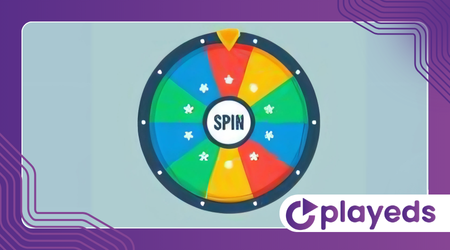
In simple terms, Spin the Wheel represents a digital roulette game. However, the HTML5 version takes the concept far beyond the visual simplicity of older versions. Now, developers create responsive interfaces with immersive sounds and dynamic animations that heighten the tension of each spin.
While many associate this game with casinos, the H5 version has spread across different niches. Productivity apps, educational platforms, and digital marketing campaigns already use the format to engage users. Therefore, the game isn’t limited to a specific audience: it adapts, transforms, and appeals to various player profiles.
Why Does Spin the Wheel (H5) Captivate So Many People?
- Instant Gratification Human psychology responds strongly to immediate reinforcement. The wheel spins for a few seconds and instantly reveals a prize or a loss. This short time between action and result activates the dopamine system, reinforcing the desire to keep playing.
- Responsive Design Because it uses HTML5, the game runs directly in the browser, on both mobile devices and desktops. This means players don’t face barriers like lengthy downloads or complex installations. Access it, play it.
- Infinite Customization Unlike fixed versions of the past, H5 Spin the Wheel allows for the configuration of prizes, winning percentages, and even graphic design. Therefore, companies can create unique experiences based on their needs.
Game Mechanics: Simple, Yet Calculated
Although it seems like a matter of luck, the H5 Spin the Wheel game involves much more. Results don’t appear in purely random fashion. Developers embed mathematical probabilities into each segment of the wheel. This way, the game maintains the feeling of unpredictability but avoids exploitation or balance flaws.
For example, a rare prize might appear with only a 2% chance, while common giveaways hit 40%. This balancing creates an illusion of luck, but with total control by the developer. Still, from the player’s perspective, the system remains exciting.
Practical Applications of Spin the Wheel H5
The game doesn’t just live on entertainment websites. It crosses different industries with varied purposes. Let’s examine how some areas strategically use Spin the Wheel:
Digital Marketing E-commerce companies use the wheel as bait to capture emails. “Spin and win 10% off!” — this simple phrase increases conversions, reduces bounce rates, and turns visits into leads.
Education Educational platforms gamify the experience with the wheel. Students spin to answer questions of different levels or choose random review topics. Therefore, learning becomes interactive.
Events and Fairs Promotional booths display giant digital wheels to attract participants. Each spin offers everything from giveaways to exclusive coupons. Thus, the audience directly engages with the brand.
Variations and Themes of Spin the Wheel
The great strength of H5 lies in its flexibility. Therefore, the themes of the wheel change according to the occasion. See some popular variations:
- Halloween Wheel: monsters, treats, and challenges.
- Christmas Wheel: prizes with snow, lights, and reindeer.
- Risk Wheel: where the player can win or lose double points.
- Knowledge Wheel: each segment brings a question; if you answer incorrectly, you lose your turn.
This diversity keeps the game fresh, preventing the player from falling into monotony.
Data and Statistics: What Do the Numbers Reveal?
Recent research on platforms offering H5 games points to some curious patterns:
- Average Session Time: users play an average of 3.7 minutes per session, above the average for casual games.
- Frequent Return: about 48% of players return in less than 24 hours for a new round.
- Share Rate: campaigns with integrated Spin the Wheel show 27% more shares on social media.
This data shows how the wheel’s dynamic can capture attention and stimulate recurring engagement.
Monetization Strategies
Those who wish to profit from Spin the Wheel can adopt different models:
- Integrated Advertising Banners or short videos are inserted between spins. The player agrees to watch to earn extra spins or multipliers.
- Virtual Currency System Free spins quickly run out, which encourages users to buy coins. This freemium model works very well.
- Prize Sponsorship Companies can offer real giveaways like T-shirts or coupons in exchange for promotion. Thus, the game owner monetizes without their own costs.
The Psychology Behind the Wheel
The visual elements of the wheel are not there by chance. Each color, sound, and vibration provokes a specific brain reaction. Consequently, the experience feels more real, even if it’s purely digital.
- Rotation sound: increases tension.
- Sudden stop: generates surprise.
- Virtual confetti: creates a sense of celebration, even for small prizes.
Additionally, human behavior tends to ignore low probabilities when they see someone winning. Therefore, just one rare prize appearing is enough to stimulate hundreds of new spins.
Risks and Addictions: Is There a Dark Side?
Although fun, the game can become addictive. Therefore, it’s essential for developers and companies to adopt limits:
- Warnings about usage time.
- Access controls for minors.
- Daily purchase limitations.
Still, when used well, Spin the Wheel strengthens engagement without compromising players’ mental health.
Tools to Create Your Own Spin the Wheel
If you want to develop a custom Spin the Wheel, several HTML5 libraries facilitate the process:
- Winwheel.js: one of the most popular, with excellent documentation.
- GSAP (GreenSock): for smooth and professional animations.
- Pixi.js: ideal for high-performance 2D graphics.
Therefore, with a little knowledge of JavaScript and HTML5, anyone can launch their own custom wheel in a few hours.
Unusual Curiosities about Spin the Wheel
- AI Experiments: some developers have already tested wheels that learn from player behavior, adjusting prizes according to the profile.
- Versions for the Deaf: some wheels use enhanced tactile feedback and visuals to offer complete accessibility.
- Wheels in the Metaverse: immersive experiences with augmented reality already incorporate virtual wheels in 3D environments.
These applications show how the simple spin of a wheel can generate unexpected innovations.
Final Considerations: Much More Than Luck
Spin the Wheel H5 stands out not by relying on chance, but by exploring deep human emotions: expectation, desire, victory, frustration. Every visual and sound element has been meticulously designed to deliver an immersive experience.
Therefore, contrary to what many think, it’s not just a little game of chance. It’s a versatile, scalable, and incredibly engaging tool. Those who know how to use it wisely — whether to entertain, teach, or sell — will gain more than rounds: they will gain the real attention of an increasingly difficult audience to engage.
