
The Influence of Japanese Games on Global Gaming Culture
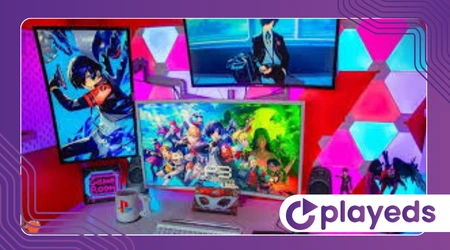
The profound and enduring Influence of Japanese Games on Global Gaming Culture is undeniable, shaping everything from how we play to the stories we experience. Japan’s inventive spirit forged a cornerstone for the entire video game industry.
Anúncios
Its impact transcends mere novelty; it established foundational genres and design philosophies.
From the arcade era to the current console generation, Japanese developers have consistently pushed boundaries.
They introduced mechanics that became standard worldwide. Their narrative complexity captivated millions of players globally.
This deep-rooted creative drive continues to inspire new generations.
How Did Japan First Shape Global Gaming?
The earliest arcade hits from Japan revolutionized player engagement. Titles like Space Invaders and Pac-Man defined what a successful video game could be.
They weren’t just simple diversions but cultural phenomena. The introduction of home consoles solidified this influence permanently.
Nintendo’s NES revived a struggling Western market single-handedly. This era cemented Japanese dominance in hardware and software design.
What Genres Were Pioneered by Japanese Developers?
Japanese creators practically invented the role-playing game (RPG) as we know it.
Series like Final Fantasy and Dragon Quest established complex narratives and turn-based combat. These games set the template for countless Western successors.
They also championed the platformer and the survival horror genres. Super Mario Bros.
created the blueprint for 2D side-scrolling mastery. Resident Evil masterfully blended tension and puzzle-solving into a terrifying experience.
Why Are Japanese Narrative Styles So Captivating?
Japanese games often prioritize deeply personal character development. They excel at crafting epic, emotionally resonant stories over dozens of hours.
The storytelling is frequently ambitious, addressing complex themes and mythology. This dedication to narrative depth fosters a strong player connection.
The visual style, often influenced by anime, adds unique charm and flair. Who hasn’t been moved by the dramatic stakes of a JRPG?
How Did Japanese Games Establish Foundational Design Principles?
The design philosophy often favors polished, intricate mechanics and gameplay loops.
The Legend of Zelda popularized non-linear exploration and layered puzzle design.
Read more: The Top Gaming Accessories Every Player Should Own
Japanese games often achieve a perfect balance between challenge and reward.
Their approach to difficulty and progression is highly refined. They taught the world the importance of responsive controls and tight level design.
What Evidence Highlights the Global Reach of Japanese Gaming?
The sheer market performance and cultural permeation speak volumes about the Influence of Japanese Games on Global Gaming Culture.
Consider the console war: Nintendo and Sony (PlayStation) are Japanese hardware giants.
Their devices define the global gaming landscape. The top-selling franchises often have Japanese origins.
| Franchise | Primary Origin | Units Sold (Approx.) |
| Pokémon | Japan | 480 Million |
| Super Mario | Japan | 780 Million |
| Final Fantasy | Japan | 185 Million |
| Grand Theft Auto | USA/UK | 410 Million |
Source: Publisher/Industry Reports, 2024 Estimates. This table clearly illustrates the massive global scale of Japanese-originated IPs.
How Has Pokémon Defined the Modern Collectible Game?
Pokémon is an astonishing example of lasting cultural ubiquity. It masterfully blended the RPG structure with a “gotta catch ’em all” collecting mechanic.
This simple yet brilliant formula became an international phenomenon. It created a massive, multi-generational multimedia franchise empire.
Read here: The Golden Age of Arcades – When Gaming Became a Social Experience
The core gameplay loop is arguably one of the most successful game designs ever conceived. It proved that a game could successfully merge deep combat with social collecting.
What Is an Original Example of Mechanics Influenced by Japan?
Many modern Western action games owe a debt to titles like Devil May Cry and Bayonetta.
These Japanese “character action” games perfected stylish, combo-heavy combat systems.
Original Example: The flow and “style meter” tracking in games like DmC: Devil May Cry (2013) directly stems from this lineage.
Western developers adapted this focus on technical skill and visual spectacle. This demonstrates a clear line of mechanical evolution.
What Is the Significance of Japanese Arcade Culture on Global Trends?
Japanese arcades were vibrant laboratories for game development innovation.
They introduced competition and high-score chasing to the world. Many iconic fighting games, like Street Fighter, were born there.
See how interesting: Subnautica
A study by Newzoo in 2024 noted that 40% of global gamers aged 18-35 expressed familiarity or active engagement with a Japanese-developed IP annually.
This sustained engagement highlights their ongoing market relevance.
How Did Dark Souls Influence Modern Game Design Philosophy?
The Influence of Japanese Games on Global Gaming Culture continues with contemporary classics. The Dark Souls series ignited a global trend in demanding action-RPGs.
It championed opaque storytelling and environmental narrative. Its challenging difficulty model, often called “Souls-like,” became a new subgenre.
Example: Many modern indie and AAA games now incorporate the “bonfire” checkpoint system and the risk-reward of losing currency upon death.
This demonstrates direct mechanical borrowing and adaptation.
What Is a Good Analogy for Japanese Gaming’s Impact?
Think of the impact of Japanese games like the influence of the Roman alphabet on global writing systems.
While many languages have evolved independently, the underlying structure and fundamental characters provide a universal basis.
Japanese games provided the fundamental “alphabet” for many core genres and design principles. Developers worldwide continually build upon these foundational structures.
Does the Influence of Japanese Games on Global Gaming Culture Continue to Evolve?
Absolutely, the impact is not confined to history; it is a living, breathing evolution.
Japanese developers consistently surprise the market with innovative concepts. They continue to set high benchmarks for quality and design polish.
Their creative output ensures a diverse, exciting future for the entire medium. Their legacy is one of continuous, powerful innovation.

Influence of Japanese Games on Global Gaming Culture
From the pixels of Pac-Man to the immersive worlds of Elden Ring, the Influence of Japanese Games on Global Gaming Culture is monumental.
They didn’t just contribute; they fundamentally built the house we call gaming.
Their impact touches our narratives, our mechanics, and our hardware.
They remain a constant source of innovation and creativity globally. Will any other region ever achieve such universal, long-lasting influence?
Frequently Asked Questions
What is the best-selling Japanese game of all time?
The best-selling game overall is Minecraft, created by the Mojang studio (originally Swedish, now owned by Microsoft).
However, the Pokémon and Super Mario franchises (entirely Japanese) hold the highest total franchise sales.
What is the main difference between Japanese RPGs (JRPGs) and Western RPGs (WRPGs)?
JRPGs typically focus more on linear narratives, predefined characters, and stylized turn-based or action combat systems.
WRPGs frequently emphasize player choice, deep character customization, and non-linear open worlds.
How has Japan influenced console technology?
Japanese companies like Nintendo, Sony (PlayStation), and, in the past, Sega, were the main driving forces behind almost every console innovation, from cartridges and D-pads to CDs, analog sticks, and the introduction of 3D graphics.
++ How Cultural Authenticity Powered Japan’s Global Gaming Resurgence
++ Japan’s Contemporary Media Culture between Local and Global
Popular Now