
EA Sports WRC: Conquer Challenging Rally Stages Across the Globe
Anúncios
Precision driving demands absolute concentration, split-second reactions, and a willingness to dance on the edge of disaster.
The official FIA World Rally Championship simulator, EA Sports WRC, captures that raw intensity better than any title in recent memory.
Whether you are battling slick ice on Nordic mountain passes or kicking up clouds of dust through baking Australian gravel, mastering these virtual stages takes real-world technique.
Navigating complex physics, dynamic surfaces, and intricate stage layouts requires more than basic racing instincts. Every corner tests your patience and vehicle setup.
This comprehensive guide walks you through essential mechanical systems, driving adjustments, and stage strategy needed to dominate the leaderboard.
Key Takeaways
- Master dynamic weather physics: Understand how changing grip levels demand different throttle control and braking points.
- Optimize vehicle setups: Adjust differentials, suspension travel, and gear ratios to match specific terrain demands.
- Decipher co-driver pacenotes: Turn auditory cues into rapid steering inputs before corners come into view.
- Develop stage management skills: Balance raw speed with mechanical preservation over long, multi-stage rallies.
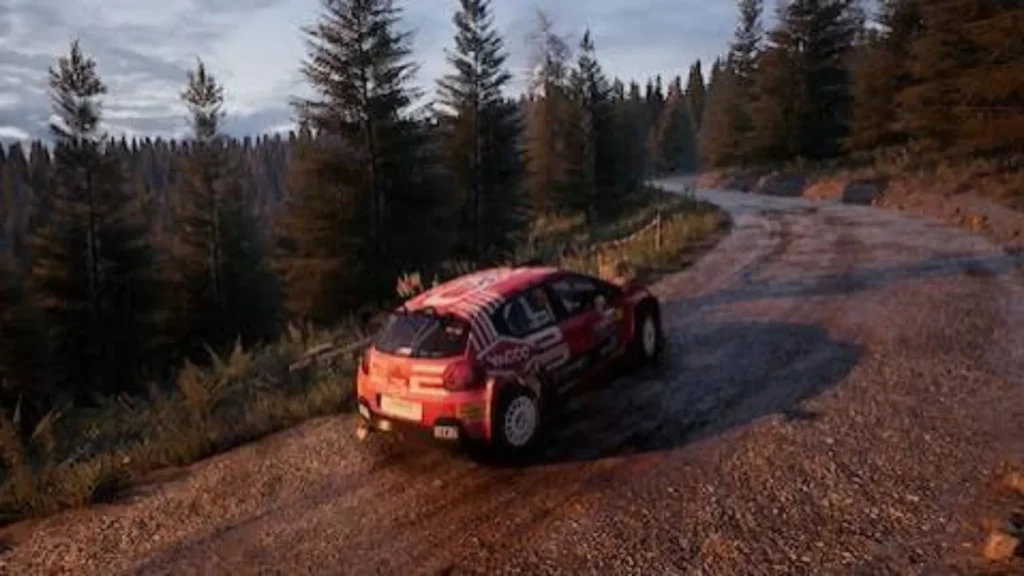
What Makes EA Sports WRC the Ultimate Stage Rally Simulator?
Modern rally simulation lives and dies by its physics engine. Codemasters built EA Sports WRC on an evolution of the widely acclaimed Ego engine handling mechanics, paired with Unreal Engine stage scaling capabilities.
This combination allows for massive, unbroken point-to-point stages that test endurance alongside sprint speed.
Surface diversity plays a crucial role in how cars behave. Transitioning from dry asphalt to loose gravel changes your tire contact patch instantly.
Drivers must adjust input force, steering angles, and weight transfer techniques within milliseconds to keep powerful Rally1 hybrid machinery on the road.
Pro Tip: Disable artificial stability controls early. Learning weight transfer on raw physics builds far better muscle memory for high-speed technical sections.
How Do Dynamic Weather and Surface Types Impact Vehicle Handling?
Terrain conditions dictate every choice you make behind the wheel. Dirt packs down differently depending on start position, while rain transforms rutted roads into unpredictable mud baths.
Understanding surface resistance helps you anticipate grip loss rather than simply reacting to collisions.
A study on tire friction models published by the National Institute of Standards and Technology illustrates how shifting pressure distributions dramatically alter surface traction dynamics.
Applying these physical concepts inside the simulator helps explain why subtle setup tweaks produce massive lap time changes.
| Surface Type | Primary Challenge | Essential Setup Adjustment | Driving Style Priority |
| Loose Gravel | Low traction, deep ruts | Softer anti-roll bars, higher ride height | Smooth weight transfer, early turn-in |
| Dry Asphalt | High grip, sudden snapping | Stiffer suspension, lower ride height | Precise racing lines, trail braking |
| Packed Snow/Ice | Near-zero lateral grip | Studded tires, open differentials | Gentle inputs, momentum management |
| Heavy Mud | Variable drag, deep sliding | Long suspension travel, aggressive differentials | Constant throttle modulation |
Why Is Pacenote Timing Critical for Long-Stage Survival?
Rallying differs from circuit racing because you rarely see what lies beyond the next crest. Your co-driver serves as your primary optic system.
Learning the standard 1-to-6 callout scale (where 1 represents an extremely tight corner and 6 indicates a near-flat-out sweep) lets you visualize the road ahead.
++ Cricket 24: Lead Your Nation to Victory in Authentic Cricket Matches
Tune your pacenote delivery settings within the audio menu. Setting calls to trigger slightly earlier gives your brain adequate processing time to set up weight transfer, particularly on high-speed downhill sections.
How Can You Tune Rally1 Cars for Maximum Efficiency?
Modifying suspension, differential, and gear settings transforms how a vehicle responds to driver inputs. While default setups offer decent baseline stability, custom configurations unlock vital seconds across grueling stages.
[Corner Entry] -> Trail Brake -> Compress Front Springs -> Rotate Rear -> Power Out
Suspension Stiffness and Ride Height
Lower ride height improves aerodynamic flow and lowers center of gravity on smooth tarmac.
Read here: Bike Hop: Pedal, Launch, and Fly to Reach Crazy Distances
Conversely, rough stages in places like Kenya or Sardinia require maximum suspension travel to absorb violent compression impacts without damaging steering racks.
Differential Tuning
Locking differentials provide predictable power delivery on loose dirt by spinning both wheels at identical speeds.
Opening differentials slightly on asphalt prevents power-understeer, allowing crisp rotation into tight hairpin turns.
++ Match Factory: Sort Everyday Items Quickly and Master Every Challenging Level
Which Driving Techniques Yield the Fastest Stage Times?
Fast stage times stem from consistency rather than reckless aggression. Pushing past physical grip limits leads to heavy frame damage, punctured tires, and costly time penalties.
- Scandinavian Flick: Pitch the car away from the turn briefy before snapping back inward to initiate rotation on loose surfaces.
- Left-Foot Braking: Keep the turbo spooled by applying slight brake pressure while maintaining partial throttle through long sweepers.
- Trail Braking: Carry light braking force into the entry apex to keep front tires loaded for sharper turn-in precision.
Where Should You Focus Practice Efforts to Improve Consistency?
Building elite pace requires deliberate practice habits. Rather than jumping directly into online championship events, dedicate time to isolation testing on varied surfaces.
Select a single, technical stage and run it repeatedly with identical car setups to analyze telemetry changes.
Data collected by sports safety research from the U.S. Department of Transportation emphasizes that driver reaction time degrades significantly under high visual fatigue.
Taking short breaks between intensive multi-stage rallies maintains sharp reaction speeds and keeps focus locked on subtle co-driver cues.

Summary of Next Steps for Drivers
- Calibrate your force feedback: Eliminate deadzones so wheel torque clearly communicates tire scrub and surface changes.
- Practice pacenote mental mapping: Spend ten minutes before sessions purely listening to callout rhythms without driving at maximum pace.
- Review stage telemetry: Identify sectors where late braking compromises exit speed and adjust entry points accordingly.
Frequently Asked Questions
What is the best control method for EA Sports WRC?
A dedicated force feedback steering wheel and pedal setup offers the highest level of precision.
However, modern gamepads with custom thumbstick sensitivity and trigger vibration mapping deliver highly competitive control on all surfaces.
How do Rally1 hybrid systems work in-game?
Rally1 vehicles feature an electric motor alongside standard internal combustion engines. Boost maps automatically deploy extra horsepower during acceleration based on chosen power curves select before stages begin.
How does tire wear affect multi-stage rally strategy?
Hard compounds offer durability over long events but take longer to heat up. Soft compounds deliver maximum immediate grip but suffer severe degradation on hot asphalt or abrasive gravel stages.
Can you create custom rally stages in EA Sports WRC?
The game features a comprehensive “Builder” mode, allowing players to design custom cars according to specific class regulations rather than building physical stage geography from scratch.
++ EA Sports WRC EA Sports™ WRC – stage maps
++ EA WRC has the best rally stages of all time, and here’s why.
