
Harold Halibut: Experience a Handmade Adventure Beneath the Ocean
Anúncios
Handcrafted gaming experiences rarely reach the scale of a decade-long passion project.
Entering the submerged world of this indie title reveals a narrative adventure built entirely by hand using physical clay models, 3D scanning, and stop-motion animation techniques.
Developed by Slow Bros., Harold Halibut stands out as a monument to patience, artistic dedication, and narrative depth.
Navigating the corridors of the FEDORA I—a city-ship trapped on an alien ocean planet—players guide a soft-spoken lab assistant through an introspective journey about belonging, purpose, and community.
This article explores why the game represents a monumental achievement in stop-motion design, its core narrative mechanics, and its place in contemporary adventure gaming.
Key Takeaways
- Handmade Craftsmanship: Every character, asset, and environment was sculpted physically before being digitally scanned into the game engine.
- Atmospheric Narrative: The game prioritizes deliberate, character-driven storytelling over fast-paced action or complex puzzle-solving.
- Distinct Visual Style: Combining physical stop-motion aesthetics with modern motion capture creates a unique cinematic experience.
- Exploration of Belonging: The storyline addresses existential themes of home, isolation, and human connection in a retro-futuristic setting.
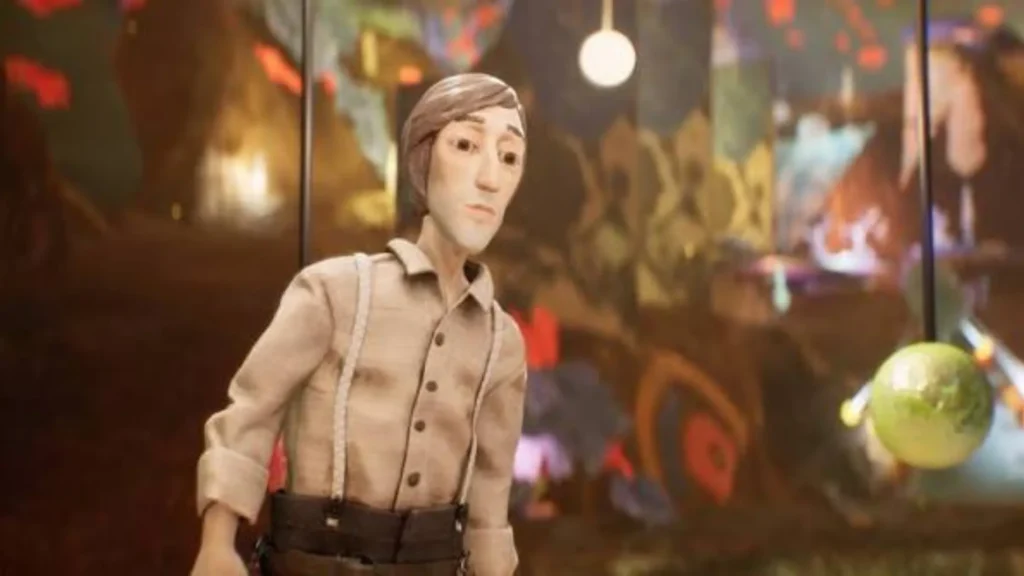
What Makes the Art Style Unique?
Creating an interactive world out of tangible materials presents enormous technical challenges.
Slow Bros. spent over ten years physically crafting every element seen on screen. Artists sculpted miniature furniture, sewed tiny cloth costumes, and molded figures out of clay.
Photogrammetry technology allowed the team to scan these physical objects into high-resolution 3D models.
Developers then applied motion capture data to animate characters naturally within digital environments.
This hybrid workflow preserves the raw texture of physical clay, wood, and metal while maintaining smooth digital camera movements and interactive gameplay.
Unlike traditional digital render pipelines, the textures in Harold Halibut reflect real-world imperfections.
Dust specs, visible fingerprint ridges, and slight inconsistencies in physical paint application create a tactile universe rarely seen in digital media.
What Is the Story and Setting?
The narrative unfolds onboard the FEDORA I, a massive colony ship that fled Earth during the Cold War in search of a new home.
After crashing into a toxic ocean on an alien planet, the vessel became a permanent underwater habitat.
++ Tchia: Sail, Climb, and Soul Jump Across a Tropical Paradise
Decades later, the descendants of the original crew have adapted to life trapped beneath the waves.
| Feature Aspect | Description |
| Protagonist | Harold, a polite and unextraordinary lab assistant to lead scientist Jeanne Mareaux. |
| Primary Setting | FEDORA I, a retro-futuristic underwater city-ship with distinct sub-districts. |
| Core Conflict | Finding a way to launch the ship off the ocean planet versus accepting the habitat as home. |
| Gameplay Style | Narrative-driven adventure featuring dialogue choices, fetch tasks, and exploration. |
| Visual Aesthetics | Physical stop-motion aesthetic heavily inspired by mid-century sci-fi and Wes Anderson films. |
Harold serves as a general handyman, performing daily maintenance tasks while assisting Dr. Mareaux in her quest to find a viable energy source to reignite the engines.
Read more: Lost Records: Bloom & Rage: Relive a Summer Filled with Secrets
An unexpected encounter with an alien creature shifts his perspective, sparking a series of events that challenge the ship’s rigid social structure and redefine what “home” truly means.
How Does Gameplay Work Beneath the Waves?
Gameplay focuses heavily on narrative immersion rather than mechanical difficulty.
Players navigate the multi-layered ship using a transit system, talking with quirky citizens, running errands, and completing light tasks.
Interactive elements rely on conversations and environmental engagement. Instead of complex inventory puzzles common in traditional point-and-click adventure games, the title emphasizes character development and thematic resonance.
For players seeking detailed historical context on tactile animation methods, exploring the archive on The Museum of Modern Art, offers deep insights into stop-motion art history.
Conversations feel organic, featuring rich voice acting that brings out the subtle humor and melancholy of the ship’s residents.
Every non-player character possesses a distinct personality, daily routine, and personal philosophy regarding life aboard the FEDORA I.
Why Is Tactile Game Design Gaining Popularity?
Modern visual design frequently leans toward ultra-realistic graphics, procedural generation, or stylized cel-shading.
While impressive, these digital methods can occasionally feel uniform. Tactile design offers a refreshing alternative that highlights human craftsmanship.
By bringing physical art into digital spaces, indie developers create worlds that feel tangible and grounded.
Projects of this scale demonstrate that players increasingly value artistic intention and unique aesthetic identity over raw graphical power.
Understanding the broader artistic impact of tactile media reveals a growing demand for deliberate, slow-paced interactive storytelling.
Gaming publications regularly document how physical modeling influences digital art directions; for instance, coverage across major cultural outlets like NPR, frequently highlights the intersection of independent video games and traditional art forms.

Is the Experience Worth Playing?
Choosing to play Harold Halibut depends heavily on what an individual values in interactive entertainment.
Players seeking high-speed combat, skill-based challenges, or open-world mechanics may find the slow pacing restrictive.
++ Mobile vs Console vs PC: Which Platform Reigns Supreme?
However, narrative enthusiasts, art lovers, and fans of cozy, atmospheric experiences will discover a rich, unforgettable journey.
The game stands as a love letter to cinematic storytelling, stop-motion artistry, and thoughtful character writing.
Pros
- Astonishing physical craftsmanship and visual presentation.
- Charming voice acting and memorable character writing.
- Relaxing, low-stress gameplay focused on storytelling.
- Thoughtful exploration of community, isolation, and identity.
Cons
- Slow narrative pacing that requires patience.
- Minimal mechanical challenge or puzzle variety.
- Backtracking through ship districts can feel repetitive.
Frequently Asked Questions
What platforms is Harold Halibut available on?
The game is available on PC (Steam), PlayStation 5, Xbox Series X/S, and featured on select subscription services like Xbox Game Pass.
How long does it take to complete the game?
A typical playthrough focusing on the main story and side interactions takes approximately 12 to 15 hours to complete.
Is the game suitable for younger audiences?
The experience features a mild tone, charming humor, and low violence, making it approachable for teens and adults, though the slow pacing appeals primarily to older players interested in narrative stories.
Was the entire game really made out of clay?
Yes, the team built physical models using clay, wood, metal, and textiles, which were then digitally scanned and animated using 3D technology.
++ Harold Halibut is a handmade narrative game about friendship
++ Harold Halibut is a beautiful, plodding journey under the sea.
